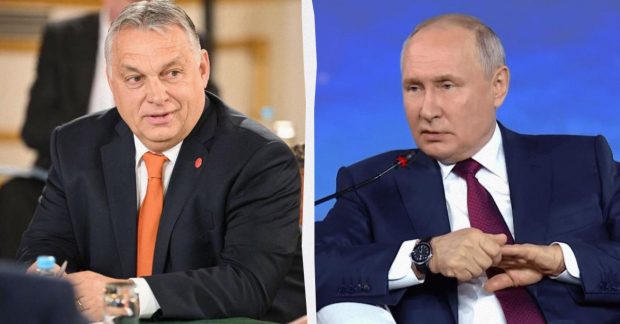
In a significant escalation of hostilities, Russian forces have launched a series of attacks on Ukraine’s Transcarpathia region, a previously secure area that has now become a focal point of military aggression. This shift in strategy follows the recent electoral defeat of Hungarian Prime Minister Viktor Orbán, raising concerns about the implications for Ukraine’s security.
Transcarpathia, known for its mountainous terrain and distance from the front lines, has long been a contentious area in Ukraine-Hungary relations due to its substantial Hungarian community. The Times reports that Orbán had utilized the ongoing war in his election campaign, warning voters in Transcarpathia that a victory for his opponent, Péter Mándi, would lead to “war instead of peace.” However, Mándi’s victory on May 9 marked a turning point, coinciding with a surge in Russian military activity in the region.
Residents of Uzhhorod, the regional capital, expressed shock at the recent attacks. One local described the area as historically peaceful, stating, “Now the war is closing in on us, and there is no place in Ukraine that feels safe anymore.” Another young resident from Berehove linked the attacks directly to the political changes in Hungary, noting, “Of course, this happened because of the change in government in Hungary. Since then, we no longer feel secure here.”
The ethnic Hungarian population in Transcarpathia has traditionally supported Orbán, who provided Hungarian citizenship and funded educational and cultural initiatives in exchange for electoral backing. Following the recent assaults, Mándi condemned the attacks and announced plans to summon the Russian ambassador for an explanation, a move that his predecessor had not undertaken.
Ukrainian President Volodymyr Zelensky praised Mándi’s statement, while Zoltan Babjak, the mayor of Berehove, expressed optimism that the new Hungarian government could signify a fresh start in bilateral relations.
Despite these developments, experts caution against making hasty conclusions. Analyst Botond Feledi emphasized that Mándi’s victory was primarily a protest against Orbán rather than a clear endorsement of Ukraine among the Hungarian populace.
Shifts in Hungarian Foreign Policy
The new Hungarian Foreign Minister recently announced that Budapest would no longer leverage its veto power to exert political influence within the European Union. The government aims to restore trust among its EU and NATO partners while asserting that Hungary will support Ukraine’s EU integration only in alignment with its national interests. Additionally, Hungary plans to continue advocating for the rights of its ethnic minority in Ukraine.
Reports indicate that the new administration is also considering revisiting its agreements with Russia regarding the completion of the Paks Nuclear Power Plant, which has been a symbol of close ties between Budapest and Moscow during Orbán’s tenure. The government intends to scrutinize existing contracts and assess the project’s actual costs.
In summary, the recent Russian attacks on Transcarpathia reflect a complex interplay of political changes in Hungary and ongoing military aggression in Ukraine. As the situation develops, both nations will need to navigate the evolving dynamics of their relationship amidst the backdrop of the conflict.
Recent Russian military strikes on Ukraine's Transcarpathia region have raised alarms following the electoral defeat of Hungarian Prime Minister Viktor Orbán. This shift in hostilities highlights the intricate ties between political changes in Hungary and the ongoing conflict in Ukraine.
Source: The Times