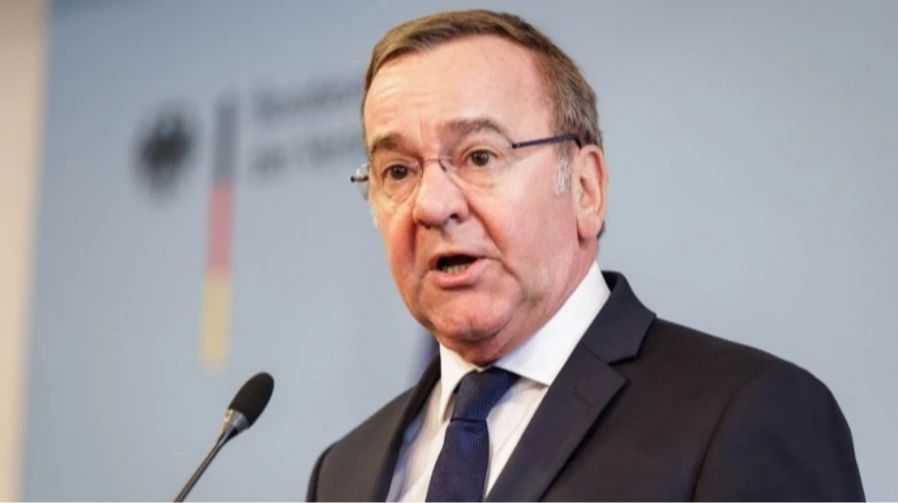
The German Defense Minister, Boris Pistorius, has introduced a groundbreaking military strategy aimed at bolstering the Bundeswehr in response to perceived threats from Russia. This strategy outlines Germany’s ambition to establish its armed forces as the strongest conventional military in Europe.
Under the new plan, the target for active military personnel remains set at 260,000, despite calls from military leaders for an increase due to the escalating Russian threat. When including reservists, the total number of military personnel is expected to reach at least 460,000.
“Our ambition must be to become the strongest conventional army in Europe,” Pistorius stated during the announcement. The primary focus of this military strategy is to counteract threats posed by Russia, which the document claims is creating conditions for potential military aggression against NATO member states.
The strategy outlines several key recommendations for addressing these threats, including the enhancement of both offensive and defensive capabilities, particularly in space, cyberspace, and the information domain. It emphasizes the need for the Bundeswehr to collaborate with all branches of government, while concentrating on tasks that necessitate military action.
Additionally, the strategy indicates that the German armed forces will receive more advanced long-range precision weapons, including air defense systems. This move aligns with Germany’s broader efforts to modernize its military capabilities.
In December, Germany passed legislation aimed at modernizing military service, which includes provisions for a voluntary draft. Last year, the country also relaxed its so-called “debt brake” to allow for increased investments in defense and infrastructure.
Germany's new military strategy, introduced by Defense Minister Boris Pistorius, aims to strengthen the Bundeswehr in response to Russian threats. The plan includes increasing personnel and enhancing military capabilities, particularly in advanced weaponry and defense systems.