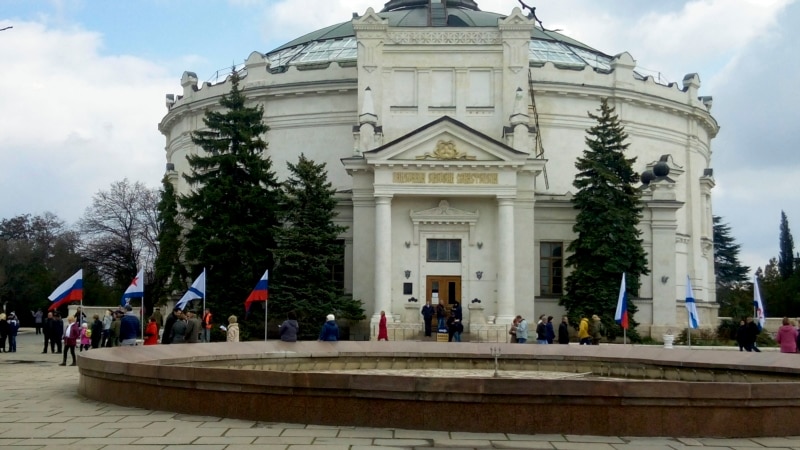
A fire broke out in Sevastopol following a reported drone attack, targeting a building housing the panorama “Defense of Sevastopol 1854–1855.” This panorama depicts a significant episode from the Crimean War, which ended in a defeat for the Russian Empire against a coalition that included the Ottoman Empire, Great Britain, France, and the Kingdom of Sardinia.
Mikhail Razvozhayev, the governor appointed by Russia, claimed that the Ukrainian drone struck the building. He described the situation as dire, asserting that a major work by artist Franz Roubaud has been nearly destroyed. Razvozhayev accused Ukraine of deliberately targeting a site of cultural heritage.
Images shared online show smoke rising from the roof of the building, while its walls appear intact. Meanwhile, the Telegram channel “Crimean Wind” suggested that the fire may have resulted from Russian air defense activities, noting the proximity of Russian military installations to the site. As of now, independent verification of the incident’s cause and the extent of the damage remains unattainable.
Air raid alerts were issued in Sevastopol four times during the early morning hours, with reports of two powerful explosions heard in the city. No casualties have been reported.
The panorama, created by Roubaud in the early 20th century, was originally destroyed during World War II and later reconstructed by Soviet restorers.
Recently, the occupied region of Crimea has experienced an increase in drone strikes attributed to Ukraine. In response, the occupying authorities have altered train schedules in Crimea. On June 10, Sergey Aksyonov, the head of Crimea appointed by Russia, announced that passenger trains would only operate during daylight hours, while night trains from Russia would arrive in Kerch, with passengers then transported by bus.
Additionally, Crimea is facing a fuel crisis, with the free sale of gasoline suspended again in Sevastopol as of June 10.
A drone attack in Sevastopol resulted in a fire at a historical panorama site, raising concerns over cultural heritage and security in the region. The incident reflects ongoing tensions and military activities in occupied Crimea.