Gold prices have dipped below the 200-day moving average, a key technical indicator, signaling a potential shift in market momentum. Currently trading under $4,300 per ounce, this marks the first time since October 2023 that gold has fallen below this threshold.
The decline follows a significant rally where gold prices surged nearly 200%, climbing from below $2,000 in October 2023 to a peak of $5,600 in January 2026. This increase was largely attributed to concerns over inflation and currency debasement, prompting investors to seek refuge in gold as a stable asset.
As of now, gold has officially entered bear market territory, having dropped over 20% from its all-time high. This downturn coincides with a stronger-than-expected U.S. jobs report released last Friday, which has led markets to anticipate tighter monetary policy from the Federal Reserve. The CME FedWatch Tool currently indicates a 25 basis point rate hike in December, potentially raising the federal funds rate to a range of 3.75% to 4.00%.
In parallel, silver is also experiencing pressure, testing its own 200-day moving average near $67 per ounce. Silver is often seen as a more volatile counterpart to gold, and its movements can reflect broader trends in precious metals.
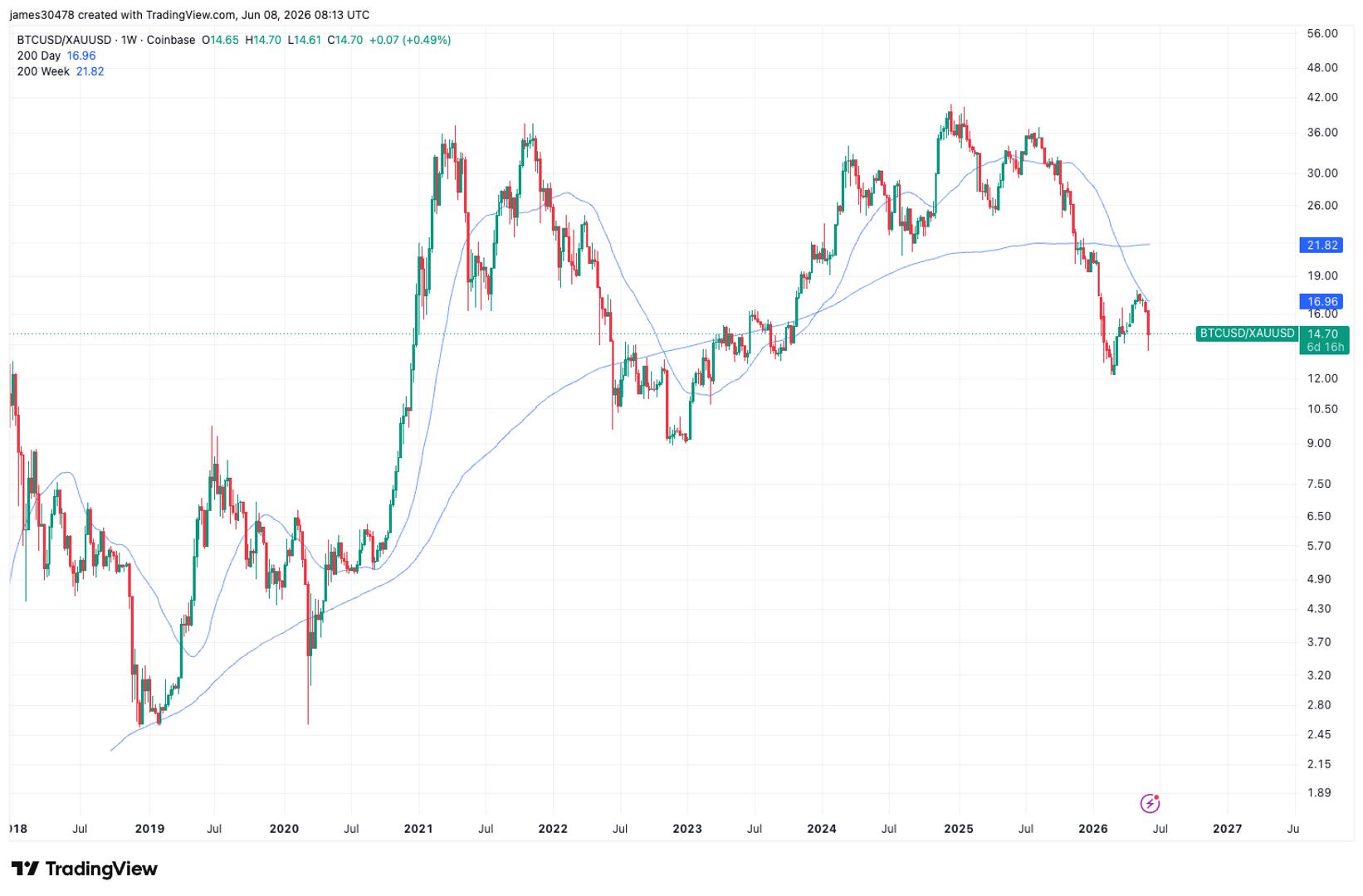
In the cryptocurrency market, the bitcoin-to-gold ratio has increased by 3% in the last 24 hours, now standing at 14.72 ounces of gold per bitcoin. This recovery occurs as bitcoin approaches the $63,000 mark, although the ratio remains significantly below its December 2024 peak of approximately 41 ounces. Last month, the ratio faced resistance at its 200-day moving average, which preceded a decline in bitcoin prices below $60,000.
Moreover, the U.S. Dollar Index has risen above 100, adding further pressure to risk assets. A stronger dollar typically impacts commodities and cryptocurrencies negatively, as it tightens financial conditions and raises costs for international investors holding dollar-denominated assets.
The current market dynamics suggest a cautious outlook for gold and other risk assets, with investors closely monitoring economic indicators and Federal Reserve policy decisions.
Gold has fallen below its 200-day moving average, entering bear market territory amid a stronger U.S. dollar and expectations of tighter monetary policy. This shift follows a significant rally and highlights the ongoing volatility in both precious metals and cryptocurrencies.