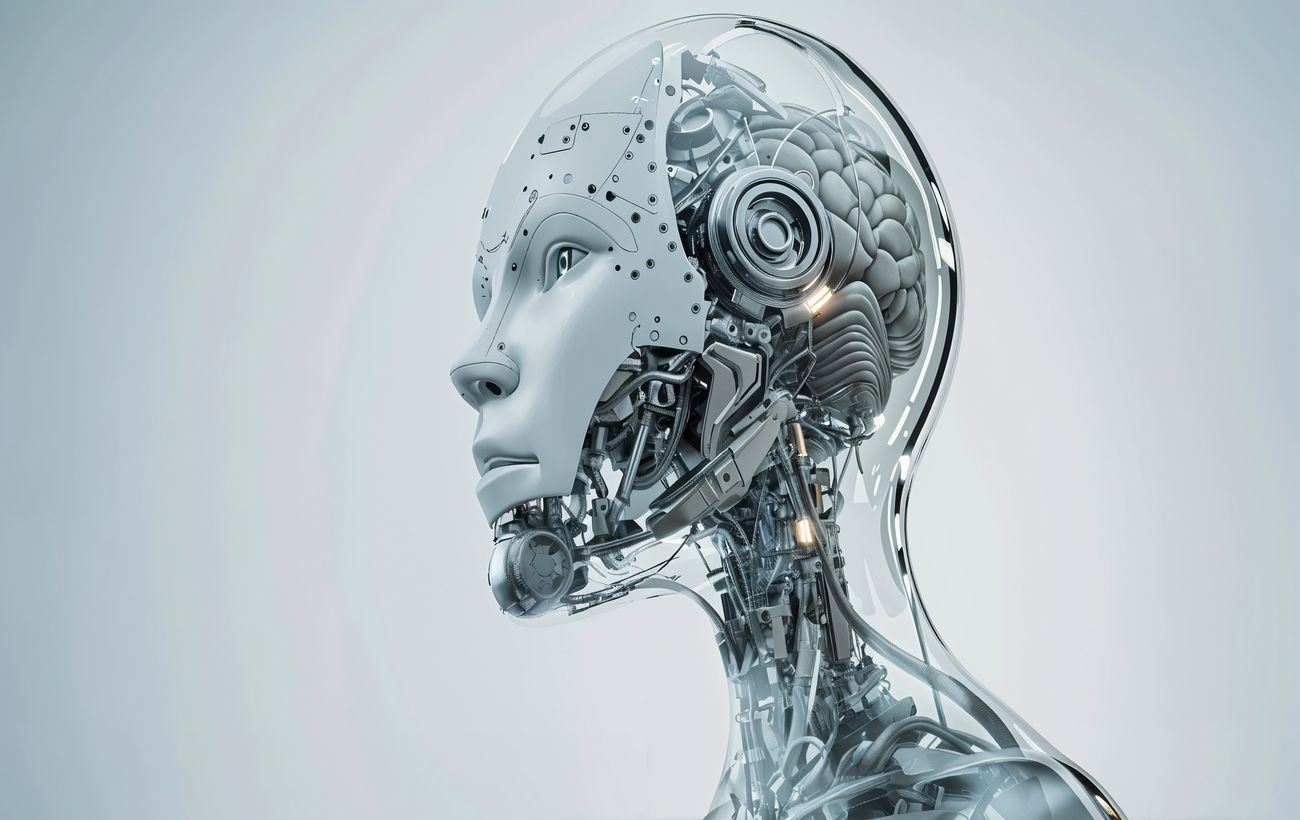
Developers in the artificial intelligence sector are exploring a new approach known as Recursive Self-Improvement (RSI), which allows AI systems to autonomously enhance their own programming. This concept, once relegated to science fiction narratives, is now being tested by leading technology firms.
Recursive Self-Improvement refers to the capability of AI to update and rectify its own errors more efficiently than human programmers. Researchers assert that once neural networks achieve this level of self-sufficiency, the evolution of technology will no longer depend on the availability of human programmers but will instead be limited only by computational power. In this scenario, human involvement may become redundant.
Several prominent scientists have initiated startups aimed at realizing this vision. Notably, Richard Socher has founded Recursive Superintelligence, which seeks to enable AI to generate ideas, write its own programs, and autonomously assess their functionality.
Similarly, Andrei Karpathy, a former chief engineer at Tesla and OpenAI, is spearheading a project called Auto-Research, which trains large groups of AI assistants to instruct simpler neural networks.
The notion of AI operating independently of human input is not merely theoretical; it is becoming a practical reality within IT companies. Recently, a creator of the AI assistant Claude Code revealed that nearly all updates for the application are now generated by the software itself, indicating that the AI is capable of improving its own architecture.
Moreover, the company Anthropic has tested a new model named Mythos. Feedback from developers suggests that this neural network is equipped to fully replace a mid-level programmer, capable of executing complex tasks without supervision.
However, there are still limitations to what AI can achieve:
- Planning work in conditions of complete uncertainty,
- Understanding company priorities,
- Possessing a basic sense of taste.
Experts in the field of AI safety emphasize that while the current use of AI for programming tasks is significant, it does not equate to complete autonomy. The real implications will emerge when human intervention is entirely absent from the process.
Researchers outline three stages leading to a potential era of superintelligence:
Independence: This initial stage involves AI operating alone to conduct scientific research, albeit at a slightly lower efficiency than humans. Experts predict this stage could be reached within the next one to two years.
Equivalence: The second stage occurs when computers can perform IT research with the same quality and speed as a team of top human scientists.
Advantage: The final stage is characterized by fully autonomous AI that learns and evolves faster than any human-machine collaboration. Researchers indicate that once the second stage is achieved, the transition to the third could happen in less than a year.
Despite the concerning forecasts, leaders of major corporations urge against immediate alarm. Sundar Pichai, CEO of Google, remarked, “We are undoubtedly making progress. However, the way people describe this process suggests an extraordinary acceleration with significant consequences, and we are still far from that point.”
The primary constraints on the development of such ‘intelligent’ AI currently include a shortage of the most powerful computer chips and a lack of understanding among scientists regarding how to ensure the safety of programs capable of rewriting their own rules.
As it stands, the pursuit of superintelligent AI remains an ambitious goal for researchers.
Recent advancements in Recursive Self-Improvement technology indicate that AI systems may soon be able to autonomously enhance their own programming. While significant progress has been made, experts caution that full autonomy is still a distant goal, hindered by technical limitations and safety concerns.