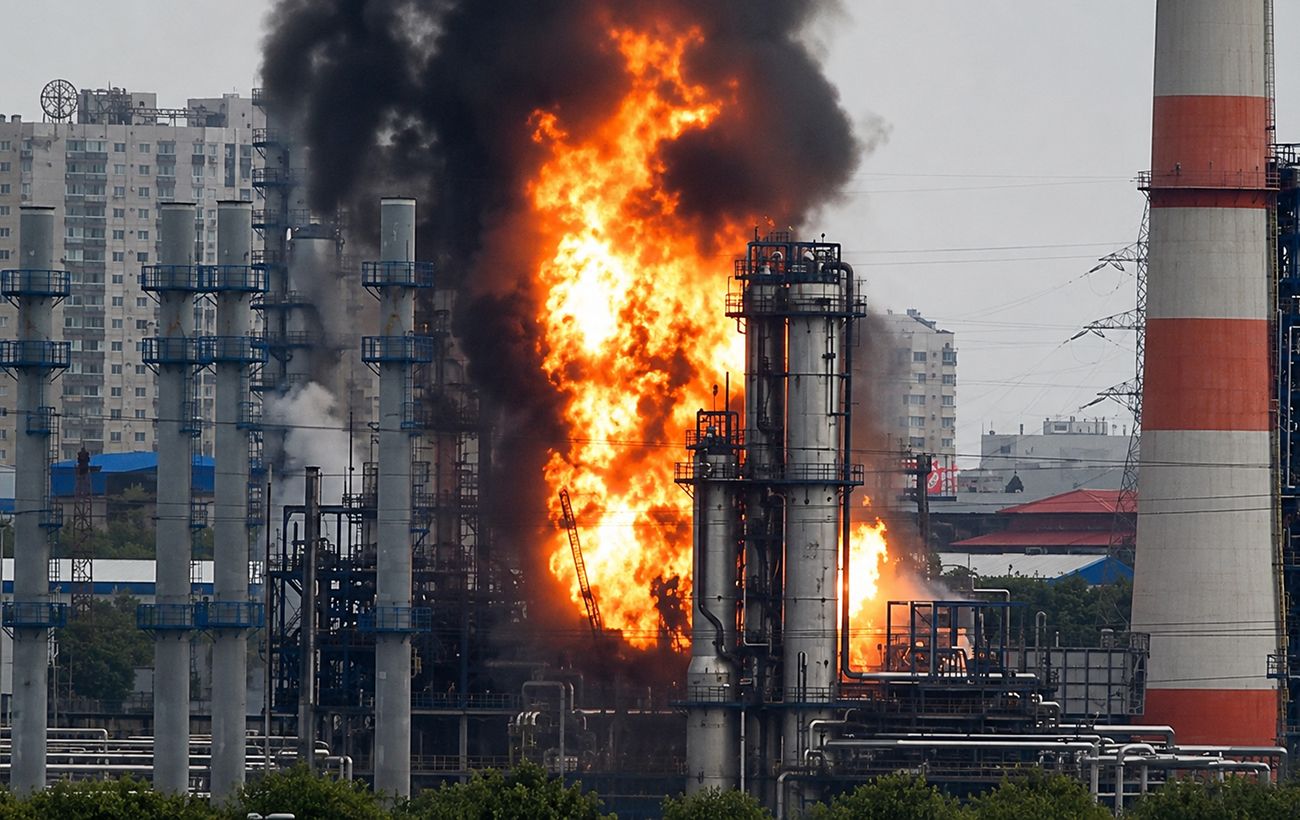
A recent attack on a Moscow oil refinery has resulted in significant damage and a subsequent fire, leading to a temporary suspension of operations at the facility. The strike targeted the Gazprom Neft refinery located in the southeastern part of the city, which is a crucial supplier of fuel for the Moscow region.
According to industry sources, the assault damaged the primary processing unit, responsible for 53% of the refinery’s total capacity. Eyewitnesses reported a large fire and thick black smoke billowing from the site. Moscow’s Mayor Sergey Sobyanin confirmed that one of the refinery’s structures was damaged; however, emergency services claimed the fire was extinguished and had not affected the refinery’s operations.
Contrary to these assertions, sources from Reuters have indicated that production at the refinery has indeed ceased. This facility is the largest fuel supplier in the Moscow area. In 2024, the refinery processed 11.6 million tons of crude oil, producing 2.9 million tons of gasoline and 3.2 million tons of diesel fuel, according to the latest available data.
The ongoing conflict has led to a significant decline in the Russian fuel and energy sector. As reported by the General Staff of the Ukrainian Armed Forces, long-range weapons have systematically targeted the enemy’s fuel infrastructure, resulting in technological and logistical paralysis among Russian forces. To date, 16 major refineries and terminals in Russia have been hit, disabling over 40 technological installations.
This situation has been exacerbated by international sanctions, which hinder the enemy’s ability to restore these facilities. The consequences of these attacks have been severe:
- Oil production in Russia has dropped to its lowest annual level, now at 9.009 million barrels per day.
- Gasoline production has fallen to a 16-year low.
- Due to empty fuel tanks at major Russian airports, restrictions have been imposed on refueling aircraft with aviation fuel.
The recent strike on a Moscow oil refinery has led to significant operational disruptions and a fire, contradicting official claims of minimal impact. This incident reflects the broader decline in Russia's fuel production capabilities amid ongoing military actions and international sanctions.
Source: Reuters