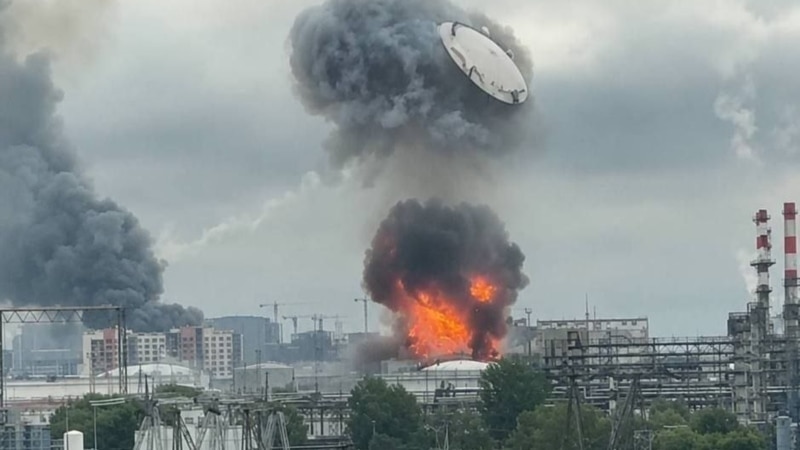
In the early hours of June 18, Ukrainian military forces struck the Moscow Oil Refinery, a facility crucial for supplying fuel to the Russian military. The attack resulted in significant damage, with reports indicating multiple fires erupting at the site.
The Moscow Oil Refinery, located in the Kapotnya district, has a processing capacity exceeding 12 million tons of oil annually. According to the Ukrainian General Staff, the strikes led to at least five separate fire locations, affecting various processing units and storage tanks.
Additionally, Ukrainian forces targeted an oil depot in the Rostov region, specifically the Gukovo facility, which is used for storing and transferring fuel essential for military and transportation operations in Russia. The General Staff confirmed that the attack resulted in significant damage and subsequent fires.
In a broader offensive, Ukrainian forces also targeted critical infrastructure in occupied territories, including a road bridge over the Kalka River in the Donetsk region and a railway bridge across the North Crimean Canal in the occupied Crimea. These structures are vital for military logistics and transportation.
Ukrainian President Volodymyr Zelensky commented on the strikes, describing them as a justified response to Russian attacks on Ukraine. He emphasized the effectiveness of Ukraine’s military operations and called for diplomatic efforts to conclude the conflict.
In response to the attacks, Moscow’s Mayor Sergey Sobyanin reported a drone assault on the Moscow Oil Refinery, claiming that a significant number of drones were intercepted before reaching the city. However, some drones successfully penetrated defenses, leading to the damage at the refinery.
Eyewitness accounts from Russian Telegram channels corroborated reports of fires and smoke in Moscow following the attacks. There were also reports of incidents in the Rostov and Belgorod regions, with fires breaking out at an oil facility in Gukovo and a storage area in Shebekino.
This recent attack follows a similar strike on the Moscow Oil Refinery just two days prior, on June 16, which had already disrupted operations at the facility. Sources indicated that the refinery, owned by Gazprom Neft, had halted production due to damage sustained from the earlier strike.
Ukrainian forces have consistently targeted Russian oil infrastructure throughout the conflict. Reports from late May indicated that nearly all major refineries in central Russia had to suspend or reduce production due to Ukrainian drone attacks.
Consequently, residents in various regions, including Belgorod and Ryazan, have reported fuel shortages at gas stations, prompting authorities to impose restrictions on fuel sales. Limitations on gasoline availability have been noted in major gas station networks in Moscow.
Ukrainian forces have intensified their strikes on Russian oil infrastructure, targeting the Moscow Oil Refinery and other facilities. These attacks are part of a broader strategy to disrupt military logistics and have resulted in significant damage and ongoing fuel shortages in various regions of Russia.