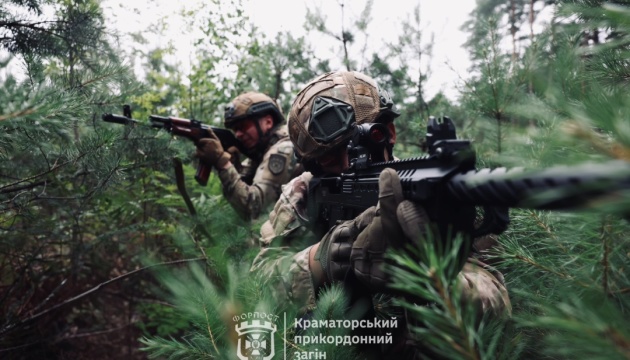
On May 31, 2026, President Volodymyr Zelensky confirmed that Ukrainian forces successfully targeted the Saratov oil refinery in Russia, situated approximately 700 kilometers from the front lines. This operation is part of a broader strategy aimed at disrupting enemy logistics.
According to the General Staff of the Armed Forces of Ukraine, the strike also affected a linear production and dispatch station in the Kirov region, located about 1,200 kilometers from Ukraine’s borders. This facility serves as a crucial hub for major oil pipelines transporting resources from Siberia to Europe. Additional targets included the Agroprom product oil depot in the Rostov region and other military installations.
In a separate development, on May 30, Ukraine received a launch system for the IRIS-T air defense missile system from Germany, as announced by President Zelensky on social media.
In his statement, Zelensky emphasized the necessity of sustained pressure on Russia through military, political, and economic means to achieve genuine security. He stated, “Our long-range sanctions, sanctions from partners, and all forms of political and economic pressure on Russia must work to achieve real security. Only pressure will lead to peace.”
The situation on the ground remains dynamic, with the Third Army Corps reporting that Ukrainian drones have established control over parts of Luhansk, executing strikes against Russian logistics in temporarily occupied territories. They reached the Izvarine checkpoint, penetrating more than 205 kilometers into enemy-controlled areas.
Ukrainian drone operations have reportedly targeted over 18 oil facilities in Russia during May, according to military sources. As of the latest updates, 77 clashes occurred on the front lines, with the Pokrovsk direction identified as the most active.
The Ukrainian Armed Forces also dismissed claims regarding the capture of Riasne by Russian troops, asserting that the situation remains under their control. Additionally, Ukrainian air defense units have intercepted 212 out of 229 Russian drones since the evening prior.
May has been noted as the most intense month of 2026 so far, with the Ukrainian Air Force reporting the detection of 210 missiles and 8,150 drones of various types in the skies over Ukraine.
In terms of losses, President Zelensky reported that Russia launched over 2,300 attack drones, nearly 1,560 guided bombs, and 108 missiles against Ukraine in the past week. The ongoing conflict has severely impacted Ukraine’s infrastructure, with 462 tourist facilities and approximately 4,500 educational institutions reported damaged or destroyed since the onset of the full-scale invasion.
Recent strikes have also targeted critical infrastructure in the Zhytomyr region, leading to fires and damage to civilian production facilities. In Sloviansk, a drone strike caused damage to a postal service facility, resulting in injuries to a child and their mother. A logistics company warehouse in Dnipro was also set ablaze due to enemy attacks.
On the energy front, the city of Konotop in the Sumy region experienced power outages due to enemy shelling, affecting surrounding areas.
In cultural terms, the ongoing war has led to the destruction of significant sites, including the Church of the Nativity of the Blessed Virgin Mary in the Donetsk region, which was damaged by incendiary munitions.
In diplomatic news, Ukraine’s Ministry of Foreign Affairs has firmly rejected Russian accusations of an alleged attack on the Zaporizhzhia Nuclear Power Plant, labeling them as disinformation. The International Atomic Energy Agency (IAEA) has confirmed that radiation levels remain within normal limits despite reported damage to the external structure of the turbine building at the plant.
As the conflict continues, the international community remains focused on the implications of these developments, with ongoing discussions regarding sanctions and military support.
Ukrainian forces executed a successful strike on a Russian oil refinery and received advanced air defense systems from Germany. The ongoing conflict has seen intensified military actions and significant impacts on infrastructure and civilian life in Ukraine.
