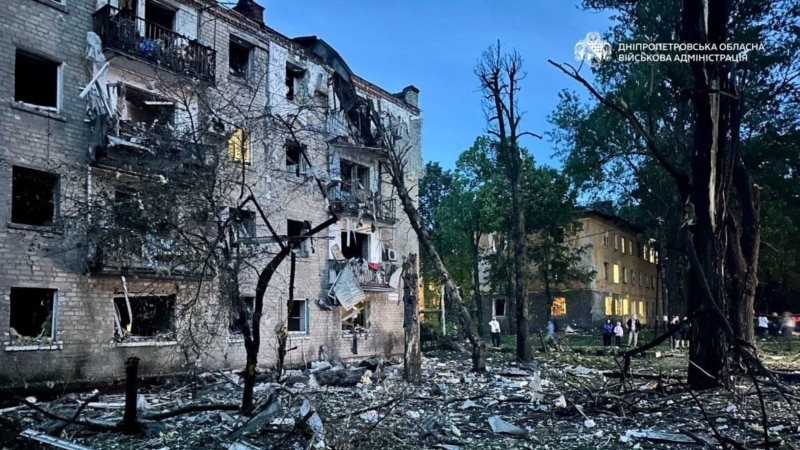
A recent series of Russian attacks in the Dnipropetrovsk region has left one person dead and nine others injured, according to regional military administration head Oleksandr Hanzha. The assaults occurred throughout the day, with Russian forces reportedly launching nearly 40 strikes across four districts using drones, artillery, and aerial bombs.
Hanzha noted that the city of Dnipro and the Synelnykove district were among the hardest hit. In Synelnykove, several apartment buildings and vehicles sustained damage, resulting in five injuries, including three women who were hospitalized in moderate condition.
In the Nikopol district, infrastructure was severely impacted, with a school, a multi-story building, an administrative facility, a gas station, and several vehicles damaged. A 50-year-old woman was killed, and four others were injured, including two men aged 50 and 67 in critical condition, while two women aged 48 and 78 are receiving outpatient treatment.
Russian military forces have been persistently targeting Ukrainian cities and civilian infrastructure with various types of weaponry, including drones, missiles, and artillery systems. Ukrainian authorities and international organizations classify these attacks as war crimes, emphasizing their deliberate nature.
The systematic targeting of essential services and healthcare facilities aims to deprive civilians of electricity, heating, water supply, communication, and medical assistance, which some legal experts and human rights advocates characterize as genocidal actions. They argue that Russia’s military campaign against Ukraine includes numerous acts that could be classified as genocide, including public declarations of intent to eliminate Ukrainians as an ethnic group.
According to the 1948 United Nations Convention on the Prevention and Punishment of the Crime of Genocide, which has 149 signatory nations, member states are obligated to prevent and punish acts of genocide during both wartime and peacetime. The Convention defines genocide as actions intended to destroy, in whole or in part, a national, ethnic, racial, or religious group.
Signs of genocide include the killing of group members, causing serious bodily or mental harm, deliberately inflicting living conditions calculated to destroy a group, preventing births within the group, and forcibly transferring children from one group to another.
Despite these allegations, Russian leadership denies that its military is intentionally targeting civilian infrastructure, claiming that its operations are focused on military objectives.
Recent Russian attacks in the Dnipropetrovsk region have resulted in casualties and significant damage to civilian infrastructure. Ukrainian authorities are classifying these strikes as war crimes, citing a pattern of targeting essential services and civilian areas.