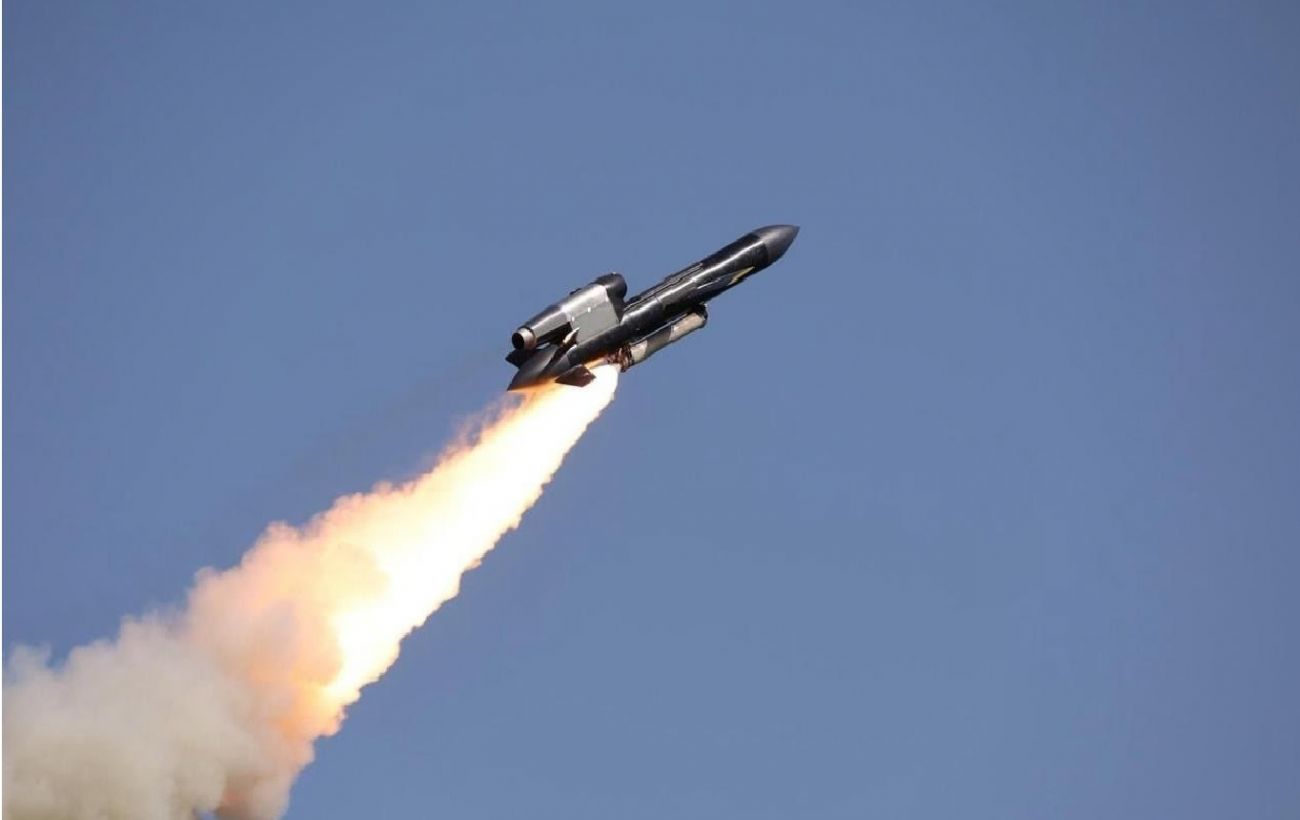
Recent footage has surfaced showing extensive damage to the Russian facility VNIIR-Progres in Cheboksary, following a missile strike identified as “Flamingo.” The attack rendered the site’s defensive structures ineffective.
Images released depict the aftermath of a precise missile strike, with one building completely destroyed. Above the wreckage, anti-drone nets intended to provide protection are clearly visible.
To establish this defensive system, the occupying forces constructed specialized towers around the factory. OSINT analysts estimate that approximately 15 of these structures were captured in the footage.
Interestingly, these towers were not present at the facility as recently as 2025; they were hastily erected later to support the anti-drone nets. However, this significant engineering effort failed to prevent the impact of the Ukrainian missile.
The attack on this strategic site resulted in injuries to at least three individuals. The successful strike and the presence of casualties were confirmed by Oleg Nikolaev, the head of Chuvashia, as well as Ukrainian President Volodymyr Zelensky.
The VNIIR-Progres factory plays a crucial role in Russia’s military-industrial complex. It specializes in the production of high-tech electronics for the Russian army, including GNSS satellite receivers and interference-resistant antennas for navigation systems such as Glonass, GPS, and Galileo (Comet-type modules).
These components are essential for Russian weaponry, with widespread integration into kamikaze drones like the Shahed, guided aerial bombs equipped with UMPK modules, and ballistic and cruise missiles from the Iskander-M and Kalibr systems.
A missile strike on the VNIIR-Progres facility in Cheboksary has resulted in significant destruction and injuries, raising concerns about the effectiveness of Russian defenses. The factory is vital for producing advanced military electronics.