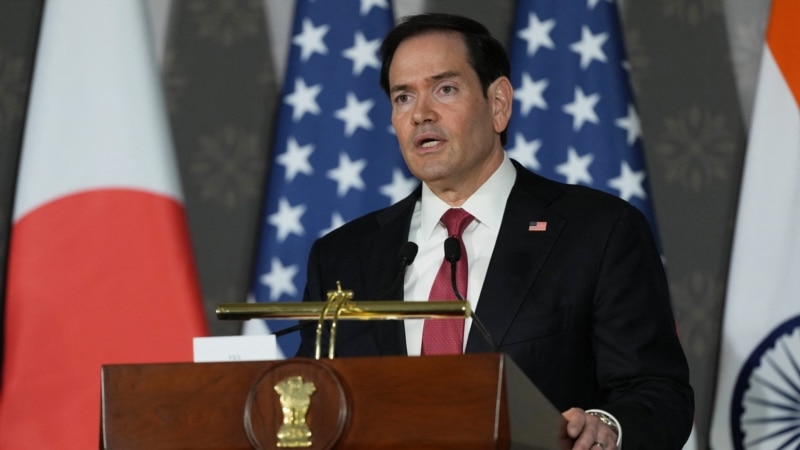
In a recent phone call, Russian Foreign Minister Sergey Lavrov informed U.S. Secretary of State Marco Rubio about impending systematic military strikes targeting sites in Kyiv associated with the Ukrainian armed forces. This communication was confirmed by the Russian Foreign Ministry, which stated that Lavrov officially conveyed this information during their conversation on May 25.
The U.S. State Department acknowledged the discussion, noting it took place at Lavrov’s request. According to spokesperson Tommy Pigott, both parties exchanged views on the ongoing Russia-Ukraine conflict, bilateral relations, and the situation in Iran.
Following the call, Rubio addressed reporters, indicating that the U.S. remains prepared to act as a mediator in the resolution of the conflict between Russia and Ukraine. He remarked, “Currently, there are no active negotiations planned with Ukraine, but the U.S. is always ready to play a constructive and beneficial role if the opportunity arises.”
Rubio also commented on Russia’s warning, suggesting that the Kremlin had sent notifications to all embassies, stating, “I believe he simply called me personally to convey that they had informed all embassies that Kyiv would be a very dangerous place. Kyiv has been a very dangerous place for several years now.”
The Secretary of State further elaborated that Russian strikes on Ukraine, particularly the recent bombardment of Kyiv, underscore the urgent need for the war to conclude. He stated, “Each time you see significant strikes from either side, it serves as a reminder of why this is a horrific war that has lasted longer than World War II, and it must end. The U.S. is prepared to assist and do everything possible to facilitate the conclusion of this war. We hope that an opportunity will arise for us to play this role again.”
On the same day, the Russian Foreign Ministry announced its intent to target “decision-making centers and command posts” in Kyiv. The ministry also warned foreign nationals, including diplomatic staff and representatives of international organizations, to leave the city as soon as possible.
In response to these developments, Ukrainian Foreign Minister Andrii Sybiha highlighted that on May 25, over 70 representatives from foreign diplomatic missions visited locations in Kyiv that had recently been struck by Russian missiles during an attack on the night of May 24. He emphasized, “We are currently discussing with our partners that we should not succumb to this Russian intimidation.”
Katarina Maternova, Head of the EU Delegation in Kyiv, remarked that Russia’s warning aims to instill panic. She stated, “Russia wants fear, panic, and the isolation of Ukraine. This will not work. The EU is not going anywhere. We remain in Kyiv. We stand with Ukraine.”
The recent communication between Russian and U.S. officials highlights escalating military tensions in Kyiv, as Russia announces planned strikes. Both nations express a willingness to engage diplomatically, while Ukraine and the EU reject intimidation tactics.