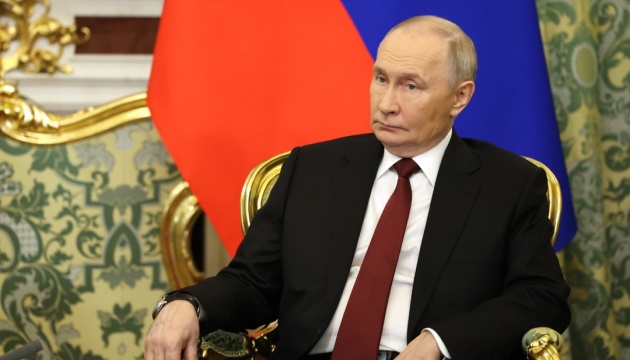
The recent Victory Day parade on May 9 has prompted speculation regarding a potential shift in Russian President Vladimir Putin’s stance on the ongoing conflict in Ukraine. Observers have noted a marked change in his demeanor and rhetoric, leading to discussions about whether he is experiencing fatigue from the war that began on February 24, 2022.
During the parade, Putin’s comments to Russian journalists suggested a departure from his previous narrative. For the first time since the onset of the conflict, he stated that the “war with Ukraine will soon end” and hinted at possible negotiations with Ukrainian President Volodymyr Zelensky. This shift has not gone unnoticed, as it contrasts sharply with the rhetoric that has characterized his administration since the invasion.
Market reactions also reflect a growing sense of uncertainty regarding the conflict’s duration. A significant majority of bets on the Polymarket platform indicate that many believe the war will conclude by 2026. Concurrently, leading Western defense companies have experienced a sharp decline in market capitalization, with the German firm Rheinmetall losing 25% in a single day. This downturn is not limited to traditional military suppliers but also affects manufacturers of advanced technologies such as drones and robotics.
While the fluctuations in market values are often driven by emotional responses from investors, they highlight a broader sentiment of war fatigue among the public. Analysts suggest that the war’s toll on Russian society may be influencing Putin’s recent statements, as he seeks to reassure a populace increasingly disillusioned with the conflict.
Supporters of the view that Putin is indeed fatigued point to his visibly aged appearance at the parade and his willingness to discuss Ukraine as a negotiating partner rather than merely an object of aggression. However, skeptics argue that such observations may be superficial, emphasizing that Putin’s history of resilience and adaptability should not be underestimated.
Political analysts remain divided on the implications of Putin’s rhetoric. Some contend that his recent comments are merely a strategic maneuver to placate domestic dissent, while others argue that they signify a genuine shift in policy. Kremlin advisor Yuri Ushakov has reiterated that any cessation of hostilities would require the withdrawal of Ukrainian forces from the Donbas region, suggesting that Russia’s position remains largely unchanged.
Experts like political scientist Volodymyr Fesenko assert that while there may be minor changes in rhetoric, the fundamental objectives of the Russian government have not shifted. He notes that internal dissatisfaction with the war is growing, but the Kremlin’s priorities remain focused on maintaining control and projecting strength.
In contrast, political expert Vadim Denisov argues that there are no compelling reasons for Putin to end the war without achieving his goals in Donbas. He points to the lack of external pressure and the ongoing geopolitical dynamics that may allow Putin to sustain his current approach.
The potential for a change in Putin’s rhetoric raises questions about the future of the conflict. Some analysts propose three possible scenarios: a genuine desire for peace, a calculated shift in strategy, or a combination of both. Each scenario carries its own implications for the trajectory of the war and the stability of the Russian regime.
In conclusion, the developments following the May 9 parade indicate a complex interplay of factors influencing Putin’s leadership. While some observers see signs of fatigue, others caution against reading too much into recent statements. The ongoing conflict continues to shape the political landscape in Russia, and the ultimate outcome remains uncertain.
Recent statements by Vladimir Putin following the May 9 Victory Day parade have sparked debate about a potential shift in his approach to the Ukraine conflict. Analysts remain divided on whether these changes signal genuine fatigue or strategic maneuvering, as market reactions reflect growing public disillusionment with the war.
