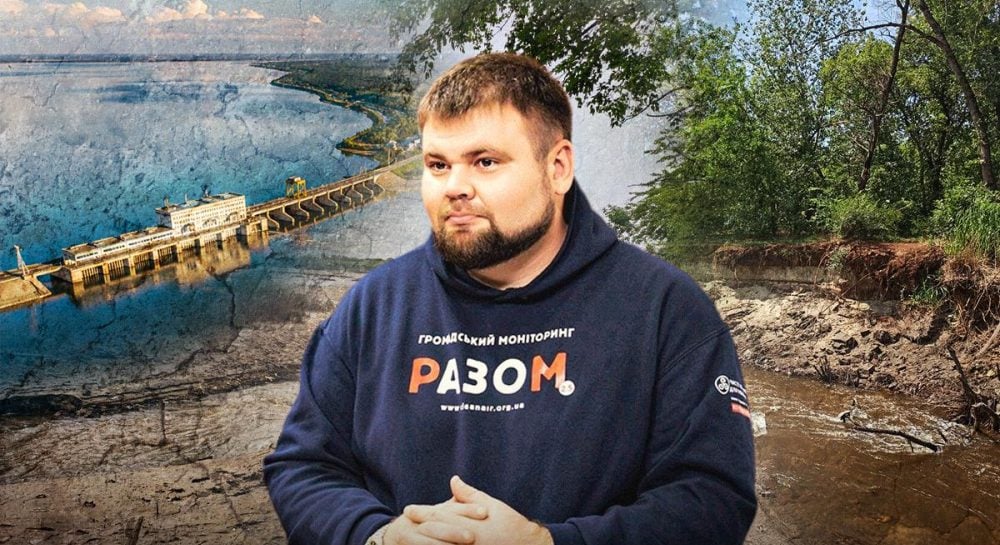
Three years after the Kakhovka dam was destroyed by Russian forces on June 6, 2023, the region is witnessing significant ecological changes while facing a severe water crisis. The explosion led to the flooding of 80 settlements and left 16,000 people homeless, with estimated damages reaching $14 billion.
Maxim Soroka, an environmental expert, discussed the ongoing transformation of the former Kakhovka reservoir area, highlighting the emergence of a unique ecosystem characterized by rapid growth of willow and poplar forests. Despite the ecological recovery, the region is grappling with the long-term consequences of losing a vital freshwater resource.
Research teams have been monitoring the area using remote sensing, but access remains limited to certain territories. Soroka noted that the former reservoir is gradually returning to its natural ecological state, with positive biological changes and increased biodiversity. Notably, endangered plant species have been recorded, and sturgeon species have been spotted in the Dnipro River for the first time since the dam’s construction.
While the ecological recovery is evident, the absence of the Kakhovka reservoir has created significant socio-economic challenges. The loss of a reliable freshwater source has left many agricultural areas without irrigation, threatening local economies and food production.
International aid has led to the construction of two water supply systems, which currently meet the domestic needs of some cities. However, smaller towns and agricultural sectors remain critically underserved, relying on saline groundwater that jeopardizes soil fertility.
In areas like Kryvyi Rih, residents are facing high levels of water mineralization, with some areas exceeding safe limits. The situation is exacerbated by ongoing military conflicts, which have damaged infrastructure and disrupted water supply.
As local farmers struggle with water scarcity, many are resorting to using saline water for irrigation, which poses long-term risks to soil health. Soroka emphasized that without a reliable water source, the viability of agriculture in the region is at stake.
Despite the environmental changes, Soroka stated that the original ecosystem of the Great Meadow will not be restored. Instead, a new ecosystem is forming, but it is unclear what its long-term implications will be for local communities.
In light of the ongoing crisis, discussions about restoring the Kakhovka dam have emerged. Soroka argues that rebuilding the dam may be necessary for the region’s survival, but acknowledges the challenges posed by current conditions, including the presence of landmines and the need for extensive demining efforts.
As the war continues, the prospect of restoring the Kakhovka reservoir remains uncertain. Soroka advocates for preparing communities for a future without guaranteed freshwater supplies, emphasizing the need for sustainable solutions to address the ongoing water crisis.
The Kakhovka dam's destruction has led to ecological recovery in the region but also a severe water crisis, threatening agriculture and local communities. Experts call for sustainable solutions as the prospect of restoring the dam remains uncertain amid ongoing conflict.