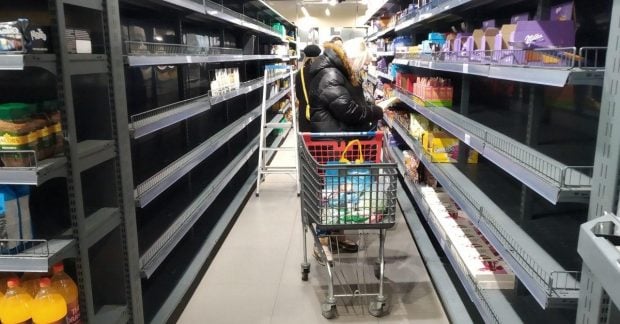
Residents in occupied Crimea are facing new challenges in accessing essential goods, with reports indicating a significant shortage of basic food items. Following recent fuel shortages, locals have increasingly voiced concerns about the availability of various products in stores.
Local Telegram channels and community groups have reported a surge in panic buying, with consumers rushing to purchase staples such as sugar, rice, buckwheat, salt, flour, oil, and pasta. This heightened demand has resulted in empty shelves at some retail outlets, and certain items have temporarily disappeared from sale.
To manage the overwhelming demand, some stores have implemented purchase limits on essential products, allowing customers to buy no more than three units of a single item at a time.
The situation has been attributed to both increased consumer demand and logistical challenges in delivering products to the peninsula. Videos circulating on social media show partially empty shelves in Crimea’s supermarkets, further illustrating the growing concern among residents.
Shortages in Occupied Crimea
Previously, it was reported that Crimea was already experiencing restrictions on fuel sales. The Russian occupying authorities have set limits on purchases of AI-95 and AI-92 gasoline, prioritizing supplies for municipal and social transport needs.
Additionally, it has been revealed that attacks on Russian oil refining infrastructure have exacerbated fuel shortages, affecting at least 15 regions in Russia, including major cities like Moscow and St. Petersburg.
Related News:
- Experts suggest that draft evaders who fled across the Tisza may be returned to Ukraine.
- The Ombudsman discusses another reason for the prolonged presence of soldiers at the front.
- Approximately 7% of mobilized individuals had deferments that were overlooked by the military enlistment office, according to the military ombudsman.
Residents in occupied Crimea are experiencing significant shortages of essential food items, driven by panic buying amid fuel supply issues. Stores are responding by limiting purchases to manage the situation, as logistical challenges further complicate access to goods.