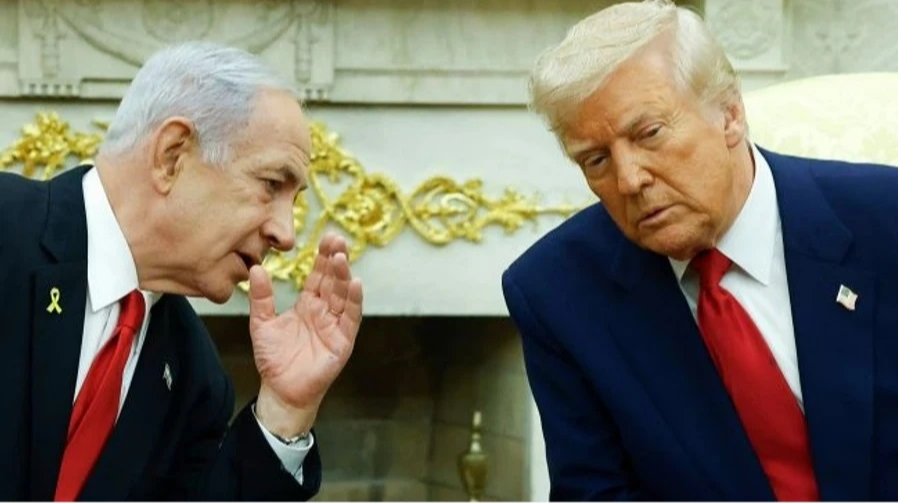
U.S. President Donald Trump engaged in a contentious discussion with Israeli Prime Minister Benjamin Netanyahu on Tuesday, highlighting their differing views on how to address the ongoing conflict with Iran.
This conversation followed a previous exchange on Sunday, where Trump indicated that new military actions against Iran could commence early in the week. The planned operation was reportedly to be named ‘Sledgehammer.’
However, just a day later, Trump announced the cancellation of these strikes, attributing the decision to requests from Gulf allies, including Qatar, Saudi Arabia, and the United Arab Emirates. These nations have since been in close contact with the White House and Pakistani intermediaries to negotiate a framework that might facilitate further diplomatic discussions.
On Wednesday, Trump informed reporters, “We are in the final stages of negotiations regarding Iran. We’ll see what happens next.” He also noted, “Either we reach an agreement, or we will have to take some actions that will be somewhat unpleasant. But hopefully, it won’t come to that.”
Netanyahu expressed his frustration during the call, arguing that delaying the anticipated strikes would only benefit Iran. According to sources within the Trump administration and Israeli officials, Netanyahu believes that postponing military action is a mistake and urged Trump to adhere to the initial plan.
Israeli sources revealed that Netanyahu remains skeptical about the potential for a successful agreement, especially given Iran’s refusal to halt its uranium enrichment activities, a critical issue for the U.S. During their hour-long conversation, Netanyahu insisted on resuming military operations, revealing a clear divide: while Trump seeks a diplomatic resolution, Netanyahu is pushing for a more aggressive stance.
Following the call, concerns among Israeli officials grew, reflecting a strong desire within the upper echelons of Israeli power to resume military actions. There is increasing frustration with what they perceive as diplomatic delays from Iran.
Sources familiar with their discussions noted that Netanyahu’s dissatisfaction with the U.S. approach—characterized by threats followed by hesitations—is not a new development. Historically, American officials have acknowledged the differing objectives of the U.S. and Israel in this conflict.
When asked about his remarks to Netanyahu the previous evening, Trump asserted his control over the situation, stating, “He will do whatever I demand of him.” Despite Netanyahu’s pressure to return to active military engagement, Trump continues to advocate for a diplomatic solution, emphasizing on Wednesday that the situation with Iran is “at the brink,” and suggesting that a few more days of diplomacy could save lives.
It remains unclear whether any significant differences between the parties have been resolved. According to a regional source, Iran has not deviated from its core demands, and issues surrounding its nuclear program and frozen assets remained unresolved at the beginning of this week.
Trump has reiterated that military options remain on the table, stating, “If we don’t get the right answers, everything will happen very quickly. We are all prepared to act.”
In context, Trump had earlier postponed a planned military strike against Iran following appeals from leaders in Qatar, Saudi Arabia, and the UAE.
- The U.S. Department of Defense has prepared several military plans regarding Iran should President Trump decide to resume strikes.
- On May 12, Trump expressed confidence that he could secure a deal with Iran on favorable terms “peacefully or otherwise.”
President Trump's recent call with Israeli Prime Minister Netanyahu revealed significant disagreements over military strategy against Iran. While Trump seeks a diplomatic resolution, Netanyahu advocates for immediate military action, highlighting ongoing tensions between the U.S. and Israel regarding their approach to Iran.
Source: CNN