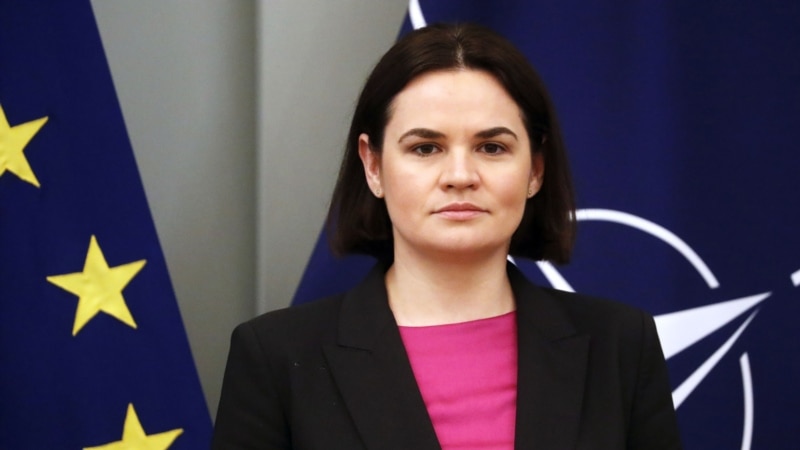
Svetlana Tikhanovskaya, a prominent Belarusian opposition leader, has publicly stated that the government of President Alexander Lukashenko remains in power largely due to substantial political and economic backing from Russia. This acknowledgment highlights the intricate relationship between Belarus and Russia, particularly in the context of ongoing regional tensions.
During a recent interview, Tikhanovskaya emphasized that the Lukashenko administration’s survival is heavily contingent on Moscow’s support. This dependency has raised concerns among many observers regarding Belarus’s sovereignty and the implications for its future governance.
The political landscape in Belarus has been fraught with challenges since the disputed presidential election in August 2020, which led to widespread protests against Lukashenko’s regime. Many Belarusians view Tikhanovskaya as a symbol of resistance against authoritarian rule, and her insights into the government’s reliance on Russia provide a critical perspective on the current situation.
Russia’s involvement in Belarus has been multifaceted, encompassing military, economic, and political dimensions. The Kremlin’s support has included financial assistance and strategic military partnerships, which have bolstered Lukashenko’s hold on power amid international isolation.
As Belarus navigates this complex relationship, the implications for its citizens and the broader region remain significant. Tikhanovskaya’s remarks serve as a reminder of the challenges facing those who oppose the current regime and the ongoing struggle for democratic reforms in Belarus.
Svetlana Tikhanovskaya has highlighted the Belarusian government's dependence on Russian support for its continued existence. This relationship raises questions about Belarus's sovereignty and the future of its political landscape amid ongoing tensions.