The launch of Pump.fun’s new bounty platform has sparked a wave of controversy, raising ethical questions about the nature of tasks users are willing to undertake for cryptocurrency rewards. One user, known as Arivu, recently shared his experience of completing a bounty that required him to tattoo the ticker symbol ‘$boutywork’ on his forehead, a task that has drawn significant criticism.
Arivu claimed he followed the instructions precisely, despite a typo in the bounty description. He stated, “Guys I have followed everything exactly what the name mentioned in the line,” emphasizing that the error was not his fault. Following the tattoo, a Solana token trading under the name BOUTYWORK saw a rapid increase in market activity, reaching a market cap exceeding $600,000 within hours of its launch.
In a surprising turn, Arivu reported receiving $20,000, which he attributed to trading fees from the newly launched token. He expressed gratitude to the community, stating they had changed his life.
Pump.fun’s new initiative, dubbed Pump.fun GO, allows users to create and complete bounties for a variety of tasks, ranging from light-hearted dares to potentially harmful activities. The platform promotes itself as a way to “pay anyone to do anything,” a concept that has raised alarms as some bounties veer into exploitative territory.
Critics have quickly voiced their concerns. One user claimed to have contacted the tattoo shop and suggested that the individual who received the tattoo might have been manipulated by someone looking to profit from the token’s price surge. Attempts to reach the tattoo shop for comment were unsuccessful.
Nikita Bier, a prominent figure in the tech community, expressed his dismay, stating, “It’s sad that all the rich people left crypto and now the entire industry is just teenagers in America forcing poor people to do shameful things.” This sentiment reflects a growing unease about the ethical implications of such bounties.
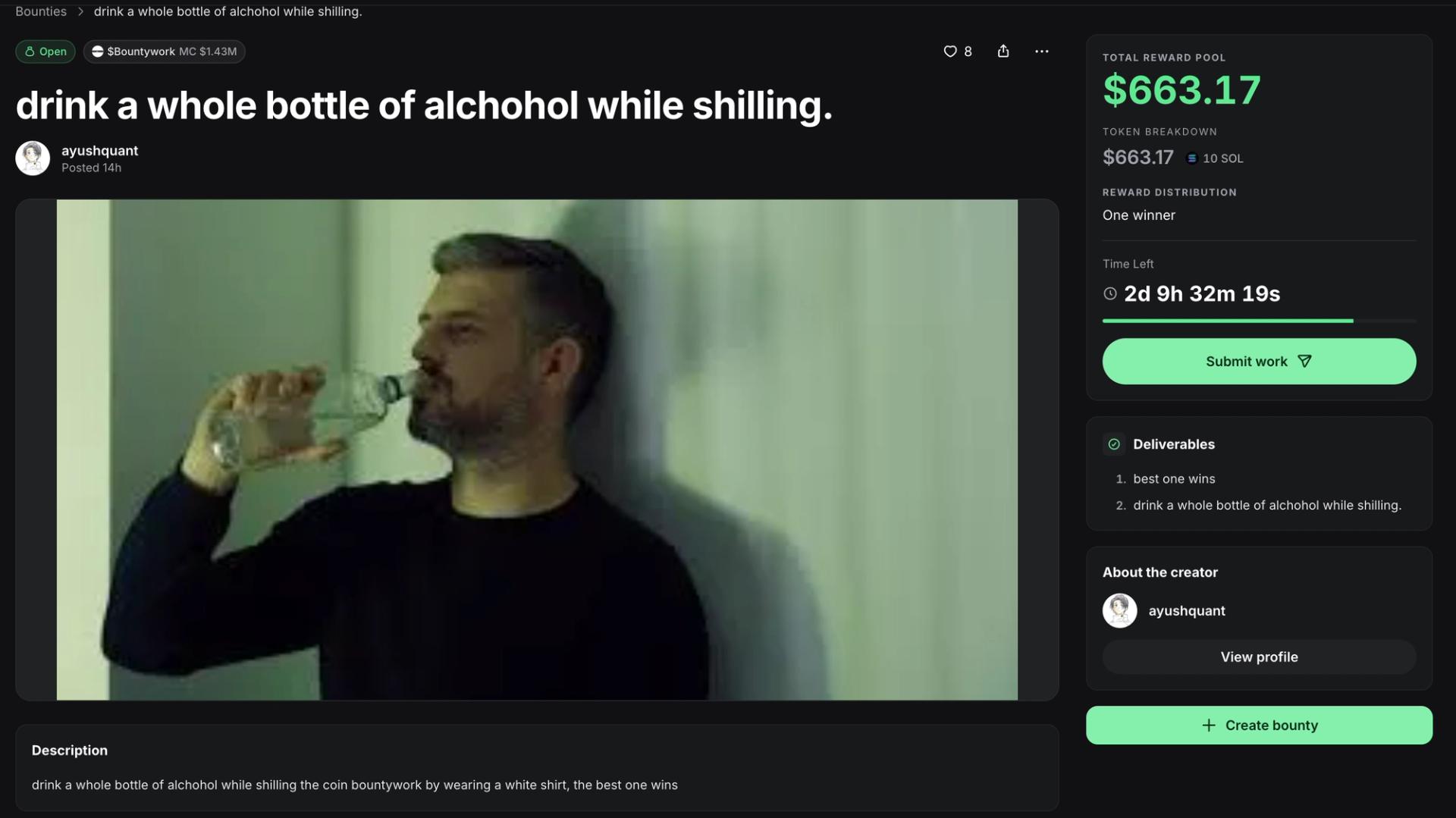
Other bounties on the platform have included a range of dares, from a watermelon-eating challenge with a $93 reward to a task that offered $663 for interviewing homeless individuals in Los Angeles’ Skid Row about their voting preferences. Some tasks have raised safety concerns, such as a bounty that encouraged participants to consume an entire bottle of alcohol while promoting a token.
The underlying mechanism of Pump.fun GO is troubling for many observers. The platform transforms attention into bounties, bounties into content, and content into token trades. While participants may receive small payouts, the creators of these bounties can reap far greater rewards if their tokens gain traction in the market.
Despite the backlash, Pump.fun maintains that it does not control the types of content users create and has a moderation team in place to remove harmful material. The company has faced scrutiny in the past for its approach to social experiments, which have included disturbing live streams that have drawn public outrage.
This latest incident underscores a dual narrative within the cryptocurrency space. On one hand, it illustrates the chaotic and unpredictable nature of memecoins, where a simple typo can lead to significant financial consequences. On the other hand, it raises serious concerns about the potential for exploitation and the impact of such activities on the broader perception of cryptocurrency as a legitimate financial alternative.
The launch of Pump.fun's bounty platform has ignited controversy over extreme user dares, including tattoos and alcohol challenges. Critics raise ethical concerns about exploitation as the line between fun and harmful activities blurs in the memecoin craze.