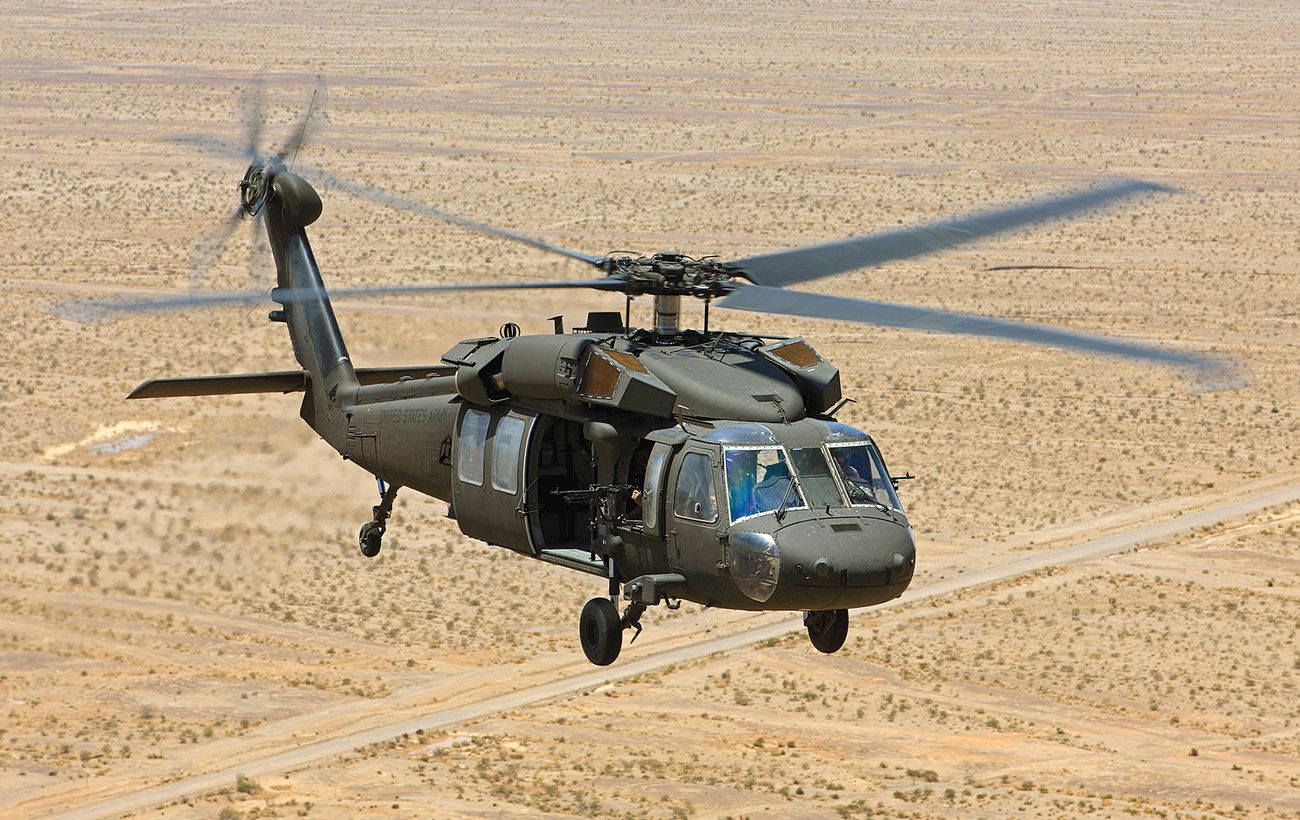
The United States Army is currently evaluating cutting-edge 3D audio systems designed to enhance communication for helicopter crews. This innovative technology aims to replace outdated audio channels that previously merged all alerts and communications into a single sound stream.
During combat missions, helicopter crews must manage multiple information channels simultaneously, including:
- internal communication among crew members,
- various tactical radio networks,
- auditory cues from navigation systems,
- automated alerts from onboard safety systems.
For decades, pilots received these audio signals through a single monophonic channel in their headsets, leading to overlapping messages and increased cognitive load. This situation forced pilots to interpret audio streams in real-time, determining which messages were most critical.
Research indicates that this method of managing communication significantly raises the workload for crews, potentially compromising situational awareness and increasing the risk of errors during high-pressure scenarios.
To address this challenge, the U.S. Army Aeromedical Research Laboratory (USAARL) has integrated 3D spatial audio systems into two UH-60 Black Hawk helicopters. The installation and evaluation of this equipment required over 231 hours of engineering work.
The technology leverages the human ability to locate sound sources in space.
Special aviation headsets recreate sound parameters so that each communication channel or radio frequency occupies a distinct position within the pilot’s auditory field. This channel distribution allows voices from different radio stations to be perceived as coming from various directions rather than a single source.
The practical benefits of this system were highlighted by test pilot Captain Brandon Allen, who noted that the spatial audio effectively separates communications from four different radio stations, making it easier to identify who is addressing the crew.
The testing program involves collaboration among several U.S. Army entities, including the Combat Capabilities Development Command (DEVCOM) and the Air Warrior project office, which focuses on crew equipment.
Colonel Thomas Summers, commander of USAARL, explained that the goal of the trials is to gather feedback from actual pilots to refine the system further. The data collected will inform the design of future aircraft.
Currently, the U.S. Army is developing the MV-75 Cheyenne, a high-speed vertical lift assault platform under the Future Long-Range Assault Aircraft (FLRAA) program, intended to replace some UH-60 Black Hawk units. The integration and testing of the new audio system on existing helicopters will help developers establish precise technical requirements for the cockpits of future aircraft before their mass production begins.
The U.S. Army is testing advanced 3D audio systems in UH-60 Black Hawk helicopters to improve communication for crews during missions. This technology aims to enhance situational awareness and reduce cognitive load by spatially distributing audio signals.