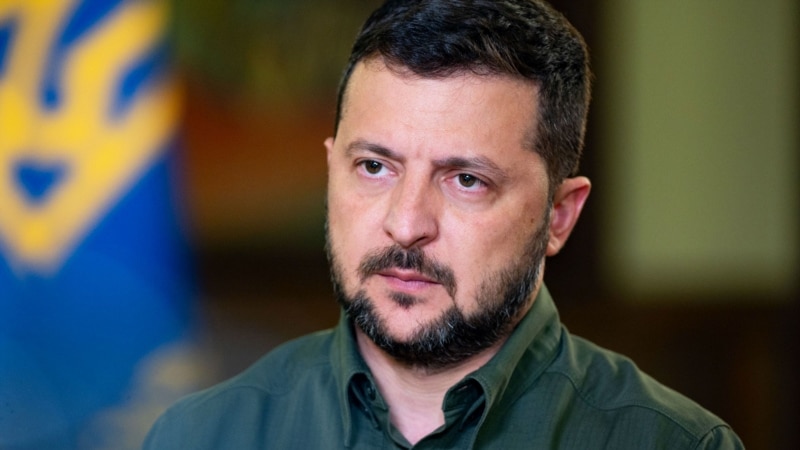
Ukrainian President Volodymyr Zelensky has issued a warning regarding the possibility of further Russian attacks on Ukraine, particularly during the night of April 15. His remarks followed a recent strike on the city of Dnipro, which resulted in civilian casualties.
During a joint press conference with Norwegian Prime Minister Jonas Gahr Støre in Oslo, Zelensky reported that the attack on Dnipro targeted a fuel station, leading to multiple injuries and fatalities. “My condolences to the families of the victims. Approximately 30 individuals were injured in this incident,” he stated. He also cautioned that the night could see additional assaults, mentioning the presence of numerous drones and potential missile launches in Ukrainian airspace.
Zelensky emphasized the necessity for Ukraine to bolster its air defense systems in light of these threats. He expressed gratitude to Norway for its readiness to assist Ukraine, noting discussions on cooperation in drone production and usage.
Russian military forces have been consistently launching attacks on Ukrainian cities and civilian infrastructure using various types of weaponry, including drones, missiles, and artillery systems. These strikes are characterized by Ukrainian authorities and international organizations as war crimes, aimed at undermining essential services and civilian life.
Ukrainian officials and legal experts have raised concerns about the nature of these attacks, describing them as genocidal actions. They argue that the systematic targeting of critical infrastructure, such as energy, healthcare, and water supply systems, serves to deprive the population of basic necessities.
Legal scholars and human rights advocates have pointed out that the ongoing conflict has seen a range of actions that could be classified as genocide, including public declarations by Russian officials denying the existence of Ukraine as a nation and calls for the destruction of its people. Other alleged acts include the persecution of pro-Ukrainian individuals in occupied territories, the targeting of educators and cultural figures, and the forced deportation of children.
The 1948 United Nations Convention on the Prevention and Punishment of the Crime of Genocide outlines the obligations of member states to prevent and punish acts of genocide during both wartime and peacetime. The Convention defines genocide as actions intended to destroy, in whole or in part, a national, ethnic, racial, or religious group.
Signs of genocide include the killing of group members, causing serious bodily or mental harm, deliberately inflicting conditions calculated to bring about destruction, and public incitement to commit such acts. Despite these allegations, Russian leadership continues to deny targeting civilian infrastructure and insists that its military operations are not aimed at harming non-combatants.
Ukrainian President Volodymyr Zelensky has warned of potential Russian strikes following an attack in Dnipro that resulted in civilian casualties. He emphasized the need for enhanced air defense and highlighted ongoing concerns about the nature of Russian military actions as potentially genocidal.