In a series of nighttime strikes on May 29, Ukrainian defense forces targeted key oil facilities in Russia and occupied territories, according to a report from the General Staff of the Armed Forces of Ukraine.
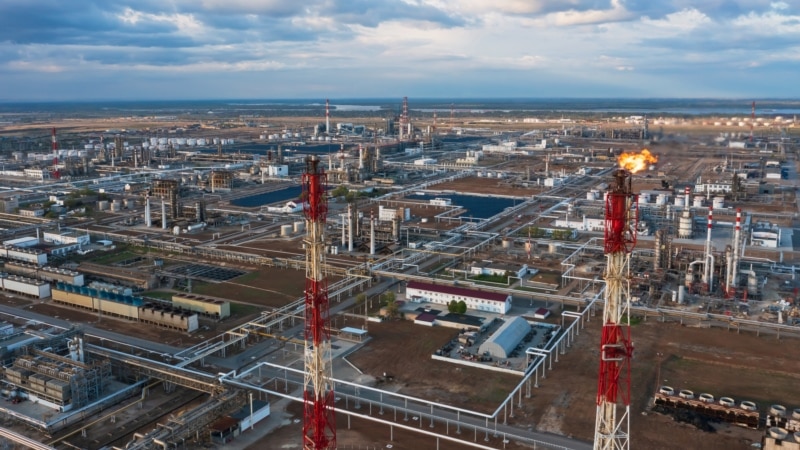
Among the significant targets was the Volgograd Oil Refinery, which suffered damage leading to a fire on-site. The facility, part of the Lukoil oil company, is one of the largest refineries in southern Russia, with an annual processing capacity of approximately 14 million tons of crude oil. The refinery produces various petroleum products, including gasoline and diesel, which are critical for military logistics.
The General Staff reported that primary processing units AВТ-1, AВТ-3, AВТ-5, and AВТ-6 were affected, halting production processes as assessments of the damage continue.
Additionally, strikes were confirmed at the Yaroslavl-3 oil pumping station in the Yaroslavl region, where two oil tanks, with capacities of 50,000 and 20,000 cubic meters, were reported to be on fire. This station is a crucial node in the Surgut-Polotsk pipeline, transporting oil from Siberia to Baltic ports and Belarus, and is operated by the state-owned company Transneft.
The Ukrainian military also reported multiple strikes on occupied territories and Russian border areas. Targets included:
- a Russian Tor-M2 missile system near Berdyansk in the Zaporizhzhia region,
- command and observation posts in the vicinity of Lyman Pershyi in Kharkiv, as well as drone control points in Tyotkino in Kursk, Komar in Donetsk, and Nesterianka in Zaporizhzhia,
- a logistics supply depot for the Russian army in Aidar, Luhansk,
- concentrations of Russian troops in Novopetrivka and Novohryhorivka in Zaporizhzhia, Rodynske in Donetsk, Klevne in Kursk, Sichneve in Dnipropetrovsk, and Basivka in Sumy.
The General Staff emphasized that Ukrainian forces will continue to take systematic measures to weaken Russian occupation forces and compel Russia to cease its military aggression against Ukraine.
In a related development, on the morning of May 29, the governor of Yaroslavl, Mikhail Evraev, reported a drone attack on fuel storage facilities in Yaroslavl, which temporarily halted traffic heading out of the city towards Moscow.
The authorities in Volgograd also reported a “terrorist drone attack” that damaged a kindergarten, although details regarding the impact on the refinery remain unclear.
Local monitoring channels, such as ASTRA, cited residents reporting explosions in Volgograd, marking at least the tenth attack on the oil refinery since the beginning of the full-scale war.
Radio Free Europe/Radio Liberty has been unable to independently verify the extent of the damage from these strikes.
Meanwhile, the Russian Ministry of Defense claimed that during the previous night, 208 Ukrainian drones were shot down over Russian territory, including occupied Crimea and the Sea of Azov.
Since the onset of the full-scale invasion, various sites in Russia and territories occupied by Russia have been subjected to airstrikes, with the General Staff of Ukraine confirming most of these attacks as part of ongoing efforts to diminish the combat capabilities of Russian occupation forces.
Ukrainian forces have launched significant strikes on Russian oil infrastructure, including the Volgograd Oil Refinery and Yaroslavl oil pumping station. These actions are part of Ukraine's strategy to weaken Russian military logistics amid ongoing hostilities.