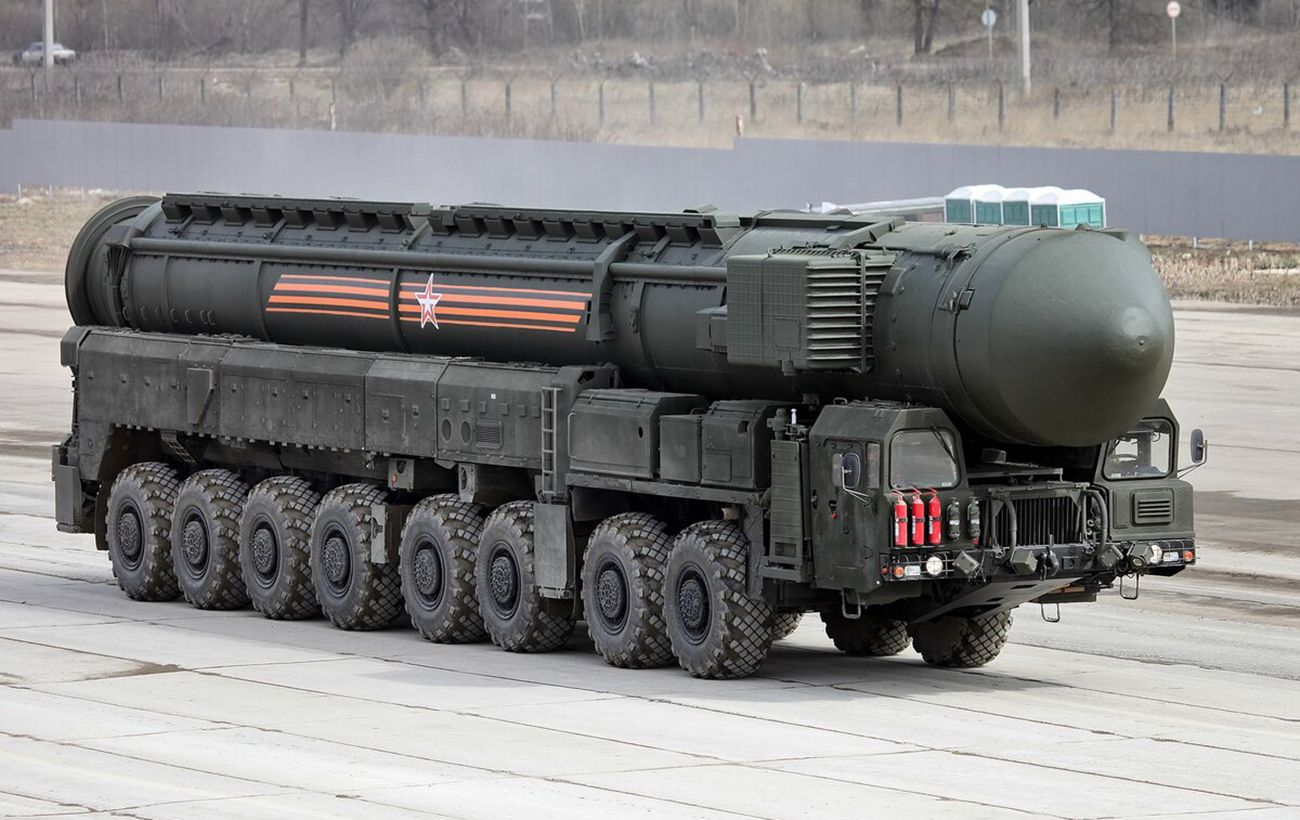
Ukraine currently lacks the technological capabilities to independently monitor the launches of the Russian ‘Oreshnik’ missile. Despite this limitation, Ukrainian military forces are still able to receive timely warnings about potential threats.
According to Anton Zemlyany, a senior analyst at the Ukrainian Center for Security and Cooperation, the primary issue lies in the absence of detection systems capable of identifying ballistic missiles at elevated altitudes. Existing radar systems, such as the AN/MPQ-65, can detect targets only during the final phase of their flight, specifically at distances of 160-180 kilometers and altitudes of 30-36 kilometers.
As the medium-range ballistic missile ascends to significantly higher altitudes, it can only be detected once it enters the operational range of radar stations. Zemlyany noted, “This essentially corresponds to the final part of its flight.”
Information regarding the preparation for ‘Oreshnik’ launches and other ballistic threats is promptly relayed to Ukraine by Western partners through their intelligence systems. This advance notice enables the Ukrainian Air Force to alert both the public and military personnel before the missile enters Ukrainian airspace or crosses the frontline.
Additionally, Ukrainian intelligence operations contribute to this situational awareness, allowing military and political leadership to be informed about enemy plans ahead of time. Zemlyany emphasized, “However, at the technical level, we cannot currently track the missile itself.”
In terms of public safety during alerts, Zemlyany advises reliance on official communications from the Ukrainian Air Force, government representatives, and foreign partners. He cautions against information from monitoring Telegram channels, which often misinterpret data. He cited an instance where the Air Force reported a ballistic threat without specifying the type, while monitoring channels inaccurately attributed it to the ‘Oreshnik’ missile.
Ukraine faces significant challenges in tracking the Russian 'Oreshnik' missile due to technological limitations. While the country receives timely warnings from Western intelligence, it cannot independently monitor missile launches, highlighting the importance of relying on official sources for accurate information.