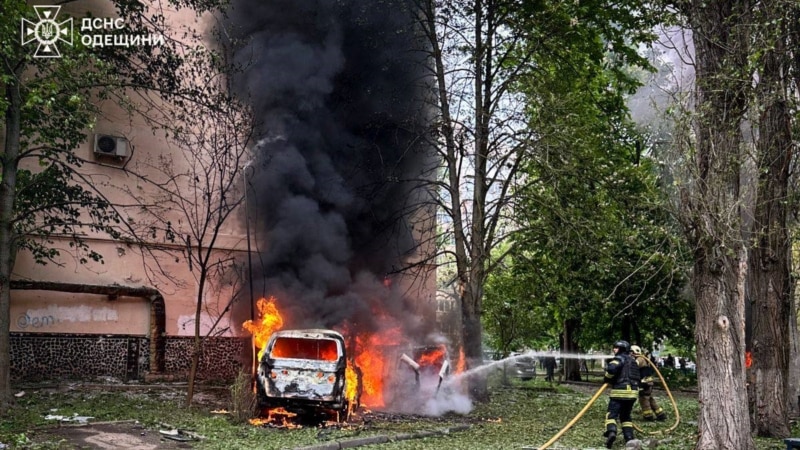
On May 13, President Volodymyr Zelensky reported that Russia launched at least 800 drones in one of the largest coordinated attacks on Ukraine to date, resulting in six fatalities and numerous injuries.
Zelensky detailed that waves of Iranian-made Shahed drones targeted various regions, particularly those near NATO borders. Strikes were confirmed in areas including Zakarpattia, Lviv, Volyn, Ivano-Frankivsk, and Rivne, among others. He noted that the attacks had also affected regions such as Vinnytsia, Chernivtsi, Khmelnytskyi, Dnipropetrovsk, Kirovohrad, Zaporizhzhia, Zhytomyr, Kyiv, Mykolaiv, Odesa, Sumy, Cherkasy, Kharkiv, and Kherson, with reports of dozens injured, including children.
The president emphasized that the drone assault was ongoing, with new drones entering Ukrainian airspace. He indicated that intelligence suggested further missile strikes could follow the drone attacks.
Earlier on the same day, Zelensky had warned of over a hundred Russian drones in the skies above Ukraine and anticipated additional waves of attacks throughout the day.
Local authorities reported casualties and destruction across several regions, including Odesa, Khmelnytskyi, Rivne, Lviv, Zakarpattia, Ivano-Frankivsk, Volyn, Cherkasy, and Sumy.
Russian forces have consistently targeted Ukrainian cities and civilian infrastructure using various weaponry, including drones, missiles, and artillery. Ukrainian officials and international organizations classify these strikes as war crimes, asserting their deliberate nature.
Attacks on critical infrastructure, including energy and healthcare facilities, are viewed as attempts to deprive civilians of essential services, which some legal experts and human rights advocates argue may constitute genocidal actions. They cite statements from Russian officials questioning the existence of Ukrainians as a distinct ethnic group and advocating for their elimination.
The 1948 United Nations Convention on the Prevention and Punishment of the Crime of Genocide obligates signatory nations to prevent and punish acts of genocide during both wartime and peacetime.
According to the Convention, genocide is defined as actions intended to destroy, in whole or in part, a national, ethnic, racial, or religious group. Indicators of genocide include the killing of group members, causing serious bodily or mental harm, and deliberately inflicting living conditions aimed at the group’s destruction.
The Russian government denies targeting civilian infrastructure and insists that its military operations do not intentionally harm civilians or destroy essential services.
The recent drone attacks on Ukraine have resulted in significant casualties and widespread destruction, drawing international condemnation and raising concerns over potential war crimes. The ongoing conflict continues to escalate, with implications for both regional security and humanitarian conditions.