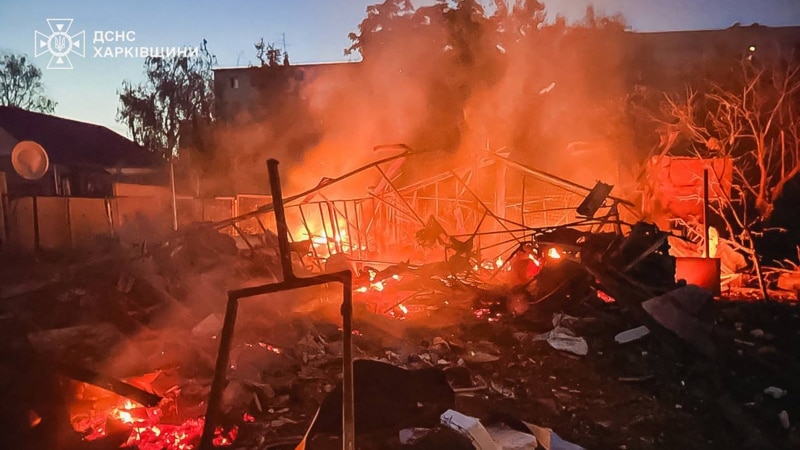
In the early hours of June 19, Russian forces launched an attack on the Kholodnogirskyi district of Kharkiv, employing guided aerial bombs. The city’s mayor, Ihor Terekhov, reported that six individuals sustained injuries, and over forty private homes were damaged as a result of the assault.
Oleh Syniehubov, head of the Kharkiv regional military administration, confirmed that among the injured were three children: two 11-year-old girls and a 14-year-old boy, all of whom experienced acute stress reactions. Emergency services are currently working to address the aftermath of the strike.
This incident is part of a broader trend, as Russian military operations frequently target Ukrainian cities and civilian infrastructure using various weaponry, including drones, missiles, and multiple rocket launch systems. Such attacks have been characterized by Ukrainian authorities and international organizations as war crimes, emphasizing their deliberate nature.
Critics highlight that these strikes are aimed at crippling essential services and healthcare facilities, effectively depriving civilians of electricity, heating, water supply, communication, and medical assistance. Legal experts and human rights advocates argue that these actions may constitute genocidal behavior, given the systematic targeting of the Ukrainian populace.
The ongoing conflict has seen numerous allegations of crimes against humanity, with claims that the Russian government has made public statements denying the existence of Ukrainians as a distinct ethnic group. Such rhetoric, along with targeted attacks on infrastructure and cultural institutions, raises serious concerns about the intent behind these military actions.
The 1948 United Nations Convention on the Prevention and Punishment of the Crime of Genocide obligates its 149 member states to prevent and punish acts of genocide during both wartime and peacetime. The convention defines genocide as actions intended to destroy, in whole or in part, a national, ethnic, racial, or religious group.
Indicators of genocide include the killing of group members, causing serious bodily or mental harm, deliberately inflicting living conditions aimed at destroying the group, and public incitement to commit such acts. Despite these serious allegations, Russian leadership continues to deny that its military is deliberately targeting civilian infrastructure, asserting that its operations are aimed at military objectives.
The Russian military's recent attack on Kharkiv's Kholodnogirskyi district resulted in injuries and significant damage to civilian structures. This incident reflects ongoing concerns regarding the targeting of civilian infrastructure in Ukraine, which has been condemned as potential war crimes by both Ukrainian authorities and international observers.