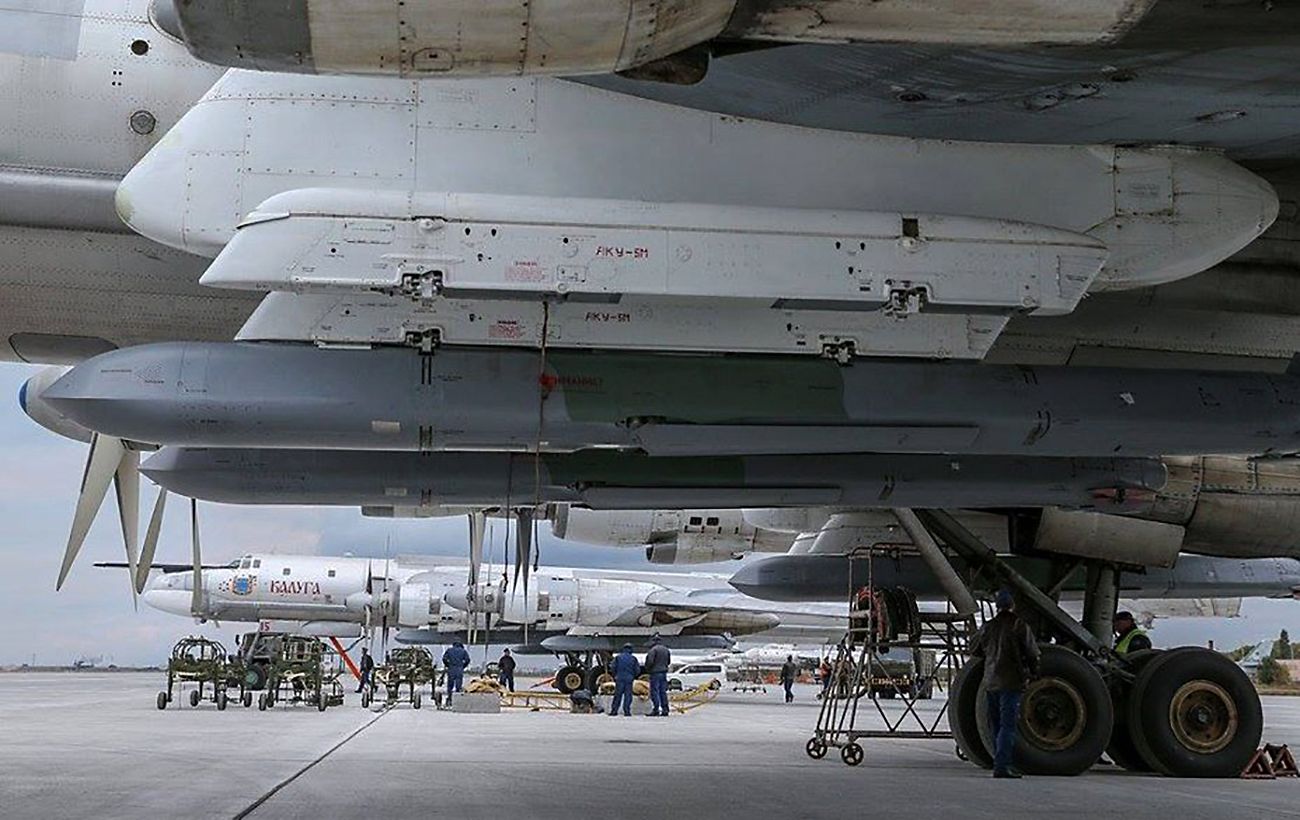
Russia is ramping up its production of Kh-101 cruise missiles, with estimates indicating the country manufactures between 40 and 50 missiles each month. These missiles are reportedly deployed in attacks on Ukraine shortly after their production, according to Colonel Oleksandr Zaruba, a leading researcher at the State Research Institute for Testing and Certification of Arms.
Recent analyses of missile strikes have shown that many of the Kh-101 missiles used in these attacks were manufactured just weeks prior. This rapid deployment reflects a significant shift in Russia’s military strategy.
The Kh-101 missile, while not new, has undergone extensive modernization. Enhancements have been made to make the missile harder to detect and intercept. Key improvements include:
- A new surface coating that absorbs radar waves, making detection more challenging;
- An onboard defense system that activates automatically when the missile enters the range of air defense radars;
- The ability to deploy decoy heat targets and dipole reflectors to mislead interception systems;
- A dual guidance system to ensure functionality even if one system is jammed.
Zaruba noted that the warhead weight has increased from 450 kg to approximately 800 kg, allowing for a secondary warhead to be deployed or detonated at a height of 100-200 meters above the target. This increase in payload has been made possible by reducing the fuel tank size, thus freeing up space for a larger warhead. Additionally, there has been a shift from civilian chips to specialized microelectronics sourced from Asian countries.
According to Zaruba, a significant portion of the critical components used in these missiles is imported. He stated, “Up to 80-90% of critical microelectronics come from manufacturers in the United States, Taiwan, Japan, Switzerland, the Netherlands, and Germany. These components are often dual-use, applicable in both civilian and military sectors, and are procured through a network of intermediaries.”
In addition to missiles, Russia is also increasing its use of modernized aerial bombs. These bombs are based on Soviet designs that have been converted into guided aerial bombs (KAB) equipped with a guidance module. The use of cluster bombs has also been reported.
Simultaneously, there are ongoing developments of intermediate munitions that bridge the gap between KABs and drones. Overall, Russia’s military-industrial complex is significantly enhancing its production capabilities for aerial attack systems.
Russia is significantly increasing its production of Kh-101 cruise missiles, deploying them shortly after manufacture in ongoing attacks on Ukraine. The modernization of these missiles, along with an uptick in the use of guided bombs, reflects a strategic shift in Russia's military approach.
Source: RBK-Ukraine