During the St. Petersburg International Economic Forum (SPIEF), Russian ultra-nationalists unveiled a series of extreme future scenarios for Russia, including the occupation of key Ukrainian cities and the potential disintegration of the European Union. Analysts from the U.S.-based Institute for the Study of War (ISW) suggest that these declarations may serve as a means for the Kremlin to portray President Vladimir Putin as a moderate figure.
The scenarios were introduced by Konstantin Malofeev, a Kremlin-affiliated oligarch, and Alexander Dugin, a prominent ideologue of Russian ultra-nationalism. The report outlines three potential trajectories for Russia leading up to 2036 and 2050: a “good” scenario, an “inertial” scenario, and a “bad” scenario.
The “good” scenario envisions Russia capturing Kyiv, Odesa, Kharkiv, and other Ukrainian cities, alongside the EU’s disintegration by 2036. Conversely, the “bad” scenario anticipates a Russian defeat in the ongoing war against Ukraine, Ukraine’s accession to NATO, and a decline in Moscow’s influence over the post-Soviet space, according to the ISW report.
Additionally, the “inertial” scenario suggests the possible use of nuclear weapons by Russia if the current frontline situation persists. ISW analysts emphasize that such rhetoric from Russian radicals effectively constitutes a nuclear threat should the war continue along its current path.
Experts assert that Malofeev and Dugin represent a faction of the Russian ultra-nationalist community that consistently advocates for an extended war against Ukraine. The Kremlin may leverage these overtly unrealistic scenarios to position Putin’s rhetoric as more moderate and rational in comparison.
The ISW notes that the Russian government is compelled to balance the expectations of ultra-nationalists with the realities on the battlefield, as Putin seeks to maintain their support.
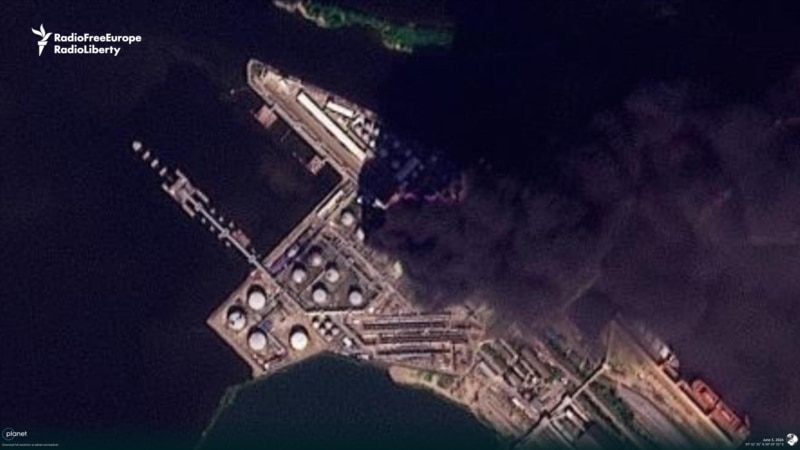
On the same day as the SPIEF opening, Ukrainian forces conducted a series of long-range strikes against Russian military and energy facilities in St. Petersburg. The Ukrainian General Staff reported that they successfully targeted the corvette “Boyky,” stationed at a naval base in Kronstadt, as well as a major oil terminal in St. Petersburg.
According to ISW, Ukraine has significantly intensified its attacks on Russian oil infrastructure deep within enemy territory, adversely affecting oil exports and the operation of Russian refineries.
Traditionally, the St. Petersburg Economic Forum serves as a platform for showcasing Russia’s economic strength. However, the attacks on St. Petersburg on the forum’s opening day undermined this propagandistic narrative.
Furthermore, ISW analysts believe that Russian authorities have recently intensified their practice of blaming Ukraine for strikes on civilian targets to justify widespread attacks on Ukrainian cities. They contend that Moscow is attempting to frame these assaults as acts of “retaliation,” despite indications that such attacks were likely pre-planned, independent of Ukrainian actions.
Satellite imagery released by Radio Free Europe/Radio Liberty’s project “Schemes” captured a significant fire at the St. Petersburg oil terminal, accompanied by a plume of black smoke.
On June 3, Ukrainian forces reportedly executed drone strikes on targets within Russia, as confirmed by the General Staff of the Armed Forces of Ukraine and the Security Service of Ukraine. Among the targets was the oil terminal in St. Petersburg, coinciding with the economic forum’s commencement. Additionally, the Kronstadt naval base was struck, along with a factory in Michurinsk, Tambov region, which produces components for Russian missiles.
The Russian government has not confirmed any damage to the aforementioned facilities.
Since the onset of the full-scale invasion, various sites within Russia and Russian-occupied territories in Ukraine have been subject to airstrikes. The General Staff of Ukraine has affirmed most of these attacks, stating that Ukrainian defense forces are systematically implementing measures aimed at diminishing the combat potential of Russian occupation troops and compelling Russia to cease its armed aggression against Ukraine.
The St. Petersburg International Economic Forum featured extreme scenarios for Russia's future, including military ambitions and potential EU disintegration. Concurrently, Ukraine intensified its strikes against Russian military assets, undermining Kremlin narratives of economic strength.