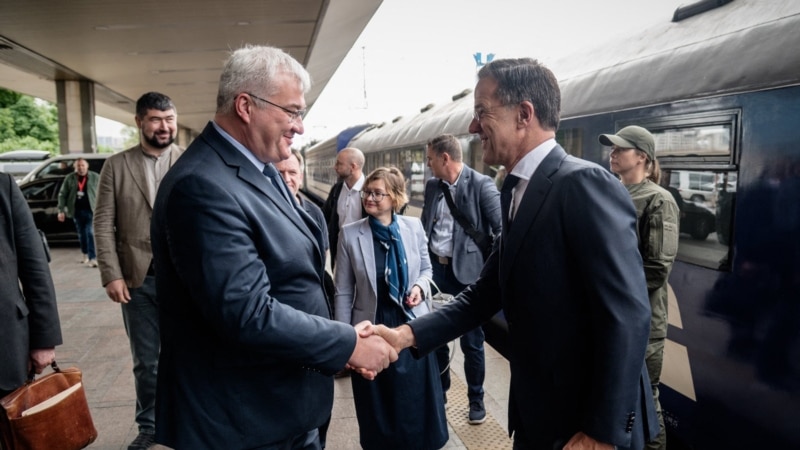
On June 3, NATO Secretary General Mark Rutte arrived in Kyiv for discussions with Ukrainian officials, as confirmed by Ukraine’s Foreign Minister Dmytro Kuleba. The visit, which was not publicly announced beforehand, underscores NATO’s ongoing support for Ukraine amidst escalating Russian attacks.
Rutte’s arrival was initially reported by Ukrainian Railways, although the announcement was later removed. Kuleba expressed gratitude for NATO’s unity and strength in supporting Ukraine, highlighting the importance of transatlantic security.
The backdrop of Rutte’s visit includes intensified Russian military actions in Ukraine, particularly in Kyiv, as well as threats from the Kremlin to continue such operations systematically. This situation has complicated diplomatic efforts, with trilateral talks involving Ukraine, the United States, and Russia postponed indefinitely due to escalating tensions in the Middle East.
According to sources cited by the Financial Times, both Moscow and Kyiv currently see little value in resuming peace negotiations. Ukraine perceives the talks as having stalled since February, following a lack of effective pressure from Washington on Russian President Vladimir Putin.
Officially, Russian authorities have stated that the transfer of the entire Donbas region is a key condition for any peace settlement, suggesting that such an agreement was implied during a prior meeting between Putin and U.S. President Joe Biden in Anchorage last year.
Since the U.S. began acting as a mediator last year, Ukraine has proposed a ceasefire along the front lines, which would effectively leave most of the Donbas region under Russian control. However, Ukraine maintains that it will not legally recognize this arrangement.
U.S. Secretary of State Marco Rubio indicated on May 22 that Washington remains willing to mediate between Russia and Ukraine, although no negotiations are currently taking place. He noted that previous discussions had not yielded productive outcomes.
In a recent interview with CBS News, Ukrainian President Volodymyr Zelensky emphasized the need to find a path for negotiations with Russia before winter, contingent on increased pressure on Moscow.
On May 21, the American Institute for the Study of War (ISW) reported that Ukrainian forces are regaining tactical initiative in various sectors along the front lines. Analysts suggested that Russia’s warnings of systematic attacks on Ukraine are attempts to mask its vulnerabilities, particularly in the wake of the May 9 Victory Day parade.
NATO Secretary General Mark Rutte's visit to Ukraine highlights ongoing military tensions with Russia and the complexities surrounding peace negotiations. As diplomatic efforts stall, both Kyiv and Moscow express skepticism about the potential for renewed talks, complicating the search for a resolution to the conflict.