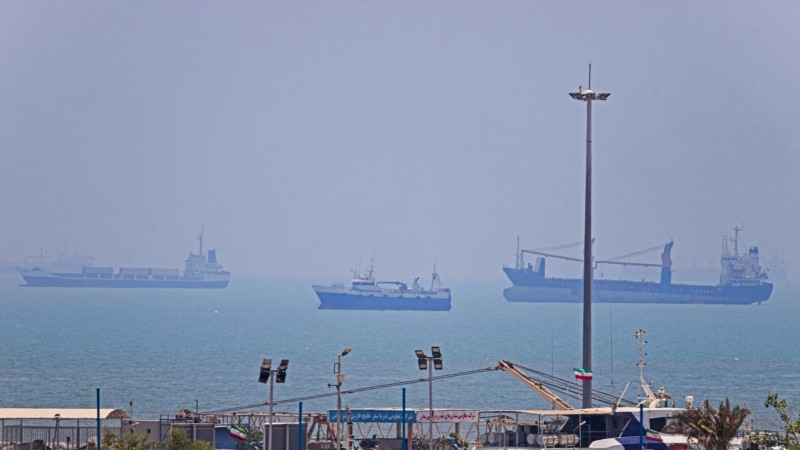
The Iranian military has announced the closure of the Strait of Hormuz, attributing the decision to alleged violations of ceasefire agreements by the United States. This move is framed as a response to recent Israeli strikes in Lebanon and ongoing tensions regarding the occupation of southern Lebanon.
According to Iranian officials, the United States has breached the initial terms of a memorandum aimed at ending hostilities between the two nations. The Iranian military’s statement emphasized that this action is a direct consequence of what they describe as enemy aggression, warning that further measures would be taken if hostilities continue.
In contrast, U.S. officials, including Vice President Jay Jay D. Vance, have stated that there is no evidence to support claims of the waterway’s closure. The Strait of Hormuz is a critical maritime route, facilitating a significant portion of the world’s oil and gas transportation.
Recently, Iran has implemented mandatory insurance requirements for all vessels transiting the strait. Observers in the maritime industry view this as a preliminary step towards a broader regulatory framework governing shipping in this strategically vital waterway.
According to Lloyd’s List Intelligence, a leading provider of maritime data, vessels entering the strait must now obtain insurance coverage through a scheme approved by Iranian authorities. This new insurance program is currently offered free of charge for a 60-day transitional period, following a recently signed memorandum of understanding between Iran and the U.S. However, industry sources anticipate that transit fees may be introduced in the future.
This initiative is part of Iran’s efforts to establish a new regulatory system for maritime traffic through the Strait of Hormuz, particularly in light of recent conflicts that have disrupted shipping and raised security concerns in certain areas of the waterway.
Legal experts specializing in maritime law and shipping executives have raised concerns regarding the compliance of the insurance requirement with international maritime law, suggesting it could effectively function as a transit fee.
Shipowners and insurers are closely monitoring developments, as any additional costs or regulatory burdens in the Strait of Hormuz could have significant implications for global trade and energy markets.
This announcement coincides with the postponement of negotiations between Iran and the U.S. in Switzerland, originally scheduled for June 19, with no clear timeline for their resumption.
The reopening of the Strait of Hormuz for commercial shipping and the cessation of the U.S. naval blockade against Iran were contingent upon an agreement reached earlier this week. Following this agreement, both parties committed to finalizing a resolution within 60 days, which includes limitations on Iran’s nuclear program and the lifting of U.S. sanctions on the Islamic Republic.
The Iranian military has declared the closure of the Strait of Hormuz, citing U.S. violations of ceasefire agreements. This development raises concerns about maritime regulations and potential impacts on global trade, particularly in energy markets.