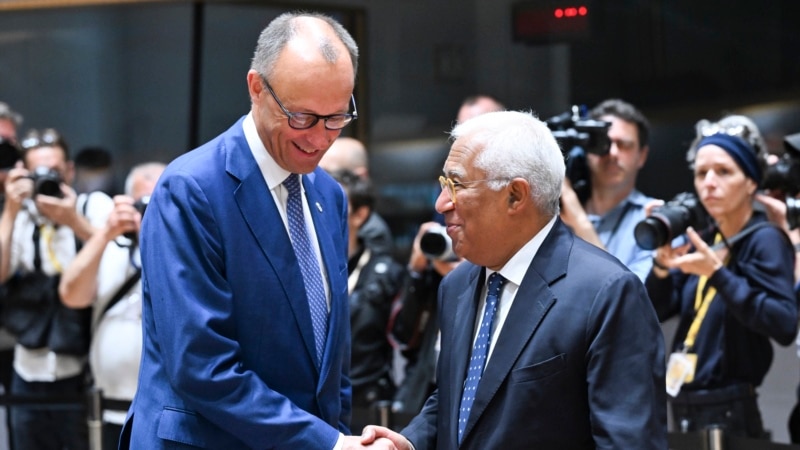
Chancellor Friedrich Merz of Germany stated that the current format for negotiations aimed at ending the conflict between Russia and Ukraine is not a primary concern, as Moscow has yet to agree to meaningful discussions. His remarks followed a press conference after the European Union summit on June 19.
Merz emphasized that before discussing who would represent Europe in potential negotiations, it is essential to secure Russia’s agreement to commence talks. He stated, “Achieving unity essentially means reaching an agreement with Russia to start negotiations. Only after that can we determine who will lead those discussions.”
The Chancellor asserted that Ukraine should decide who represents its interests at the negotiation table. He remarked, “Ukraine is the party directly affected by this war, and it must determine who stands alongside it in negotiations. The European Union is not a neutral third party or mediator; it is a party on Ukraine’s side.”
Regarding the E3 format, which includes Germany, France, and the United Kingdom, Merz noted that it was established at Ukraine’s request. He explained, “The E3 format was created at Ukraine’s clear request. There is a certain internal logic to this: the UK, Germany, and France collaborate as major European nations that also contribute significantly to military support for Ukraine.”
Merz’s comments came after EU leaders failed to reach a consensus on who should represent the Union in potential negotiations with Russia during the summit. Some leaders criticized European Council President António Costa for attempts to establish contacts with Moscow.
Despite the disagreements, Merz dismissed suggestions of conflict regarding EU representation in negotiations. He stated that Costa would play a crucial role when the negotiation process begins. “Who will speak on behalf of the European Union does not need to be decided today. We will make that decision when negotiations actually commence,” he said.
On the first day of the summit, discussions arose among EU leaders regarding Costa’s office’s efforts to initiate contact with Moscow. This initiative faced significant discontent from France, Germany, and the Baltic states, who deemed such contacts premature. Meanwhile, Italy and Poland expressed dissatisfaction over their exclusion from initial E3 discussions with Ukraine.
Chancellor Friedrich Merz of Germany highlighted the need for Russia's agreement before discussing the representation of Europe in negotiations with Ukraine. His comments followed disagreements among EU leaders regarding the negotiation format and representation during a recent summit.