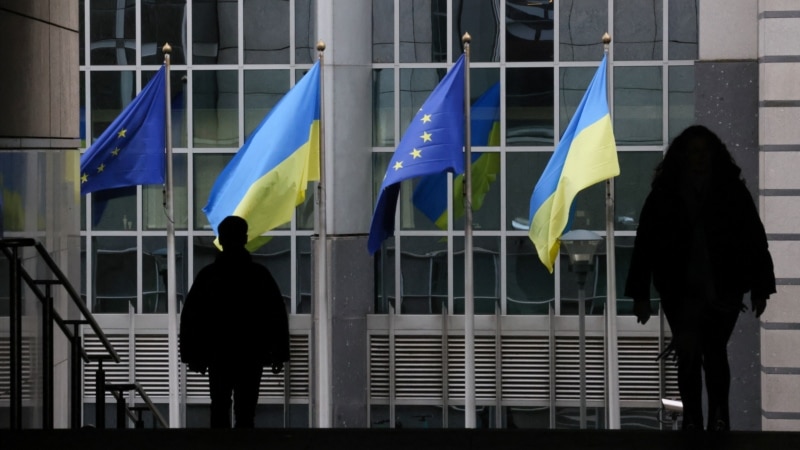
All European Union member states have agreed to initiate the first cluster of accession negotiations with Ukraine and Moldova, as announced on June 12 by European Commission President Ursula von der Leyen and European Council President António Costa.
The inaugural Intergovernmental Conference is set to take place on June 15, where the “Fundamentals” cluster will be officially opened. This cluster is crucial for the accession process, encompassing core values and principles that underpin the EU, including the rule of law and robust democratic institutions. This move acknowledges the determination and hard work both countries have demonstrated in advancing reforms despite significant challenges.
The Cypriot presidency of the EU confirmed the scheduling of these intergovernmental conferences, marking a significant step in the accession journey for both nations.
High-ranking EU diplomats, speaking anonymously, indicated that after the opening of the first negotiation cluster, the EU may consider separating the paths of Ukraine and Moldova in the accession talks, given Moldova’s more advanced reform progress. Following the June 15 conferences, both countries might proceed at different paces in the negotiation process.
One diplomat noted, “We expect Moldova to move faster,” attributing this to its smaller size, more streamlined governance structure, and the absence of ongoing conflict.
Discussions about differentiating the negotiation trajectories of Kyiv and Chișinău have been ongoing in Brussels. Some member states proposed this approach last year when Hungary blocked the opening of negotiation clusters for Ukraine. European Commissioner for Neighborhood and Enlargement Olivér Várhelyi also mentioned this possibility in interviews.
Previously, the European Commission had deemed both Ukraine and Moldova technically ready to open the first cluster. However, the decision was made to advance both candidates together due to Ukraine being stalled by Budapest’s position.
With Hungary’s blockade now effectively lifted, the EU is increasingly emphasizing a merit-based accession principle, promoting candidates based on their individual reform achievements.
During the accession process, candidate countries negotiate across 35 chapters of EU legislation, grouped into six thematic clusters covering all key areas of public policy, from the rule of law and governance to the internal market, energy, agriculture, and external relations.
The “Fundamentals” cluster is the first to open and the last to close in the negotiation process. It includes five negotiation chapters:
- Judiciary and Fundamental Rights
- Justice, Freedom, and Security
- Financial Control
- Public Procurement
- Statistics
These chapters focus on judicial independence, anti-corruption efforts, transparent public fund usage, fair competition in government tenders, and the quality of public statistics. The European Commission will evaluate Ukraine and Moldova’s readiness to advance in the negotiation process based on these criteria.
As the first cluster opens, the outcomes of reforms in these areas will significantly influence whether Ukraine and Moldova can progress towards EU membership at similar rates.
The EU has agreed to open the first cluster of accession negotiations with Ukraine and Moldova, recognizing their reform efforts. The initial discussions will focus on fundamental principles essential for EU membership, with potential differing paths for the two nations based on their reform progress.