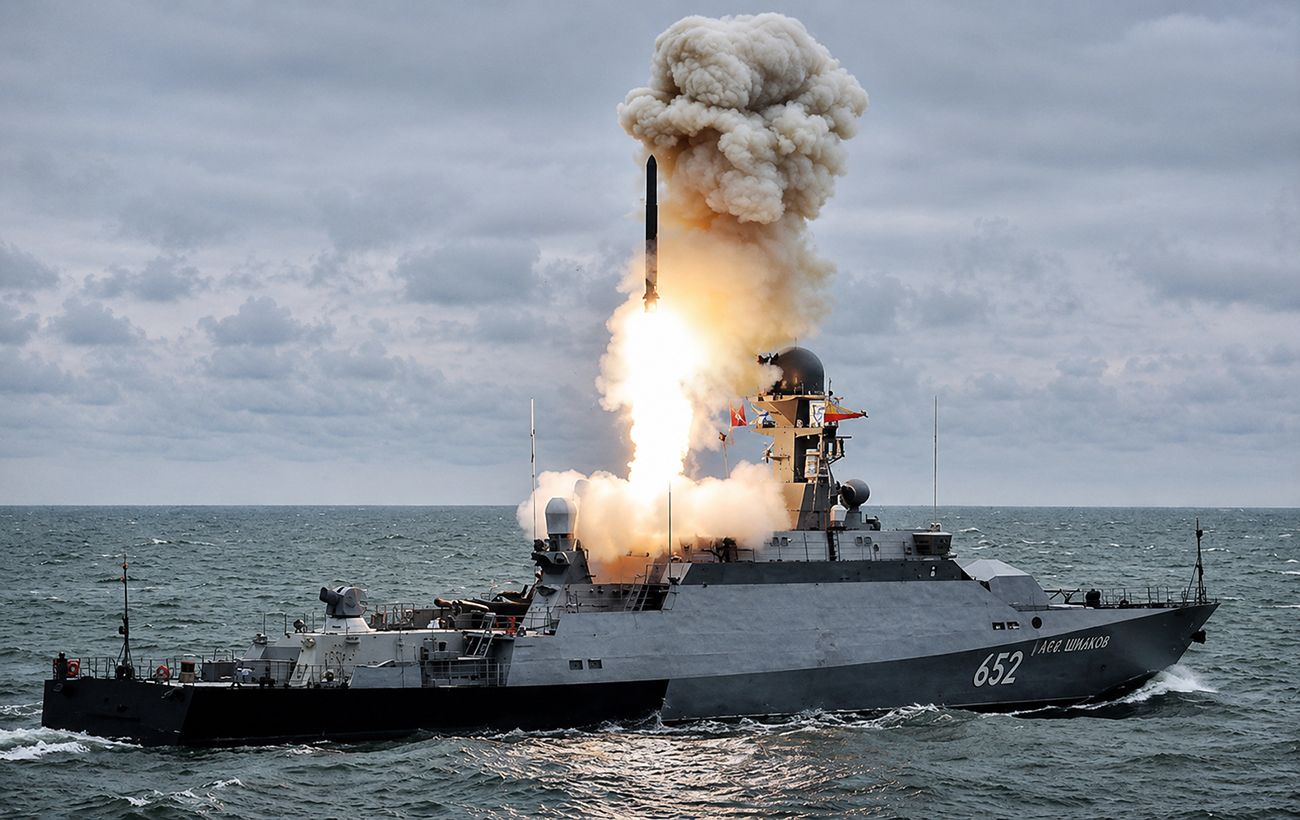
Ukrainian military engineers and scientists have conducted a thorough examination of several downed Kalibr 3M14 missiles, uncovering two notable modifications. This analysis involved disassembling the missiles to inspect all components and electronic systems, resulting in a comprehensive understanding of their operational mechanisms.
According to the Ukrainian Ministry of Defense, the missiles have undergone significant changes during the ongoing conflict. The two primary modifications identified are:
- The introduction of a cluster munition warhead.
- The reinstatement of imported electronic components.
Previously, Russian defense manufacturers aimed to rely on domestic electronic components. However, the recent missiles produced in 2025 have shown a considerable presence of foreign-made parts. The Ministry of Defense suggests that the Russian alternatives may have fallen short in quality and precision.
The shift to a cluster munition warhead marks a significant change in the missile’s design. In the spring of 2026, these warheads were first detected in downed Kalibr missiles. Historically, the missiles were equipped with high-explosive fragmentation warheads, containing approximately 3,600 metal fragments designed to disperse over a large area upon detonation. The new cluster design is expected to enhance the missile’s ability to target broader areas, potentially adapting it for strikes on airfields, open positions, and other dispersed targets. Ongoing research is focused on understanding the implications of this new warhead configuration.
The Kalibr missile comprises several key components:
- Launch engine;
- Flight engine;
- Equipment compartment;
- Warhead;
- Fuel tanks;
- Guidance system.
Depending on the modification, the missile’s length ranges from 6 to 8 meters, with the warhead weighing up to 450 kilograms. Production of the Kalibr missiles began in the early 2000s, yet Ukrainian experts have identified certain components marked with designs dating back to the 1980s.
The missile employs multiple systems for targeting, including:
- Satellite navigation;
- Inertial guidance;
- Radio altimeter;
- Radar homing head.
The flight path is pre-programmed to consider the terrain. Notably, the navigation system known as SN-99 was originally developed in the Ukrainian city of Smila in the 2000s before production was shifted to Russia.
Analysis has revealed that the guidance system’s electronics consist of over 80-90% foreign components. The Ministry of Defense has successfully identified these parts through their markings, establishing the manufacturers and designers involved in the Kalibr’s production. This information will be utilized for future sanction efforts.
The Kalibr missile is classified as a subsonic cruise missile, which is considered one of its primary vulnerabilities. During flight, the missile attempts to maintain a low altitude:
- 20 meters above water;
- Approximately 150 meters above land.
Despite its low altitude strategy, its subsonic speed allows Ukrainian air defense forces to intercept such targets effectively.
A detailed analysis of Russia's Kalibr missile has revealed significant modifications, including the adoption of cluster munitions and a return to imported electronics. These changes may impact the missile's operational effectiveness and targeting capabilities.