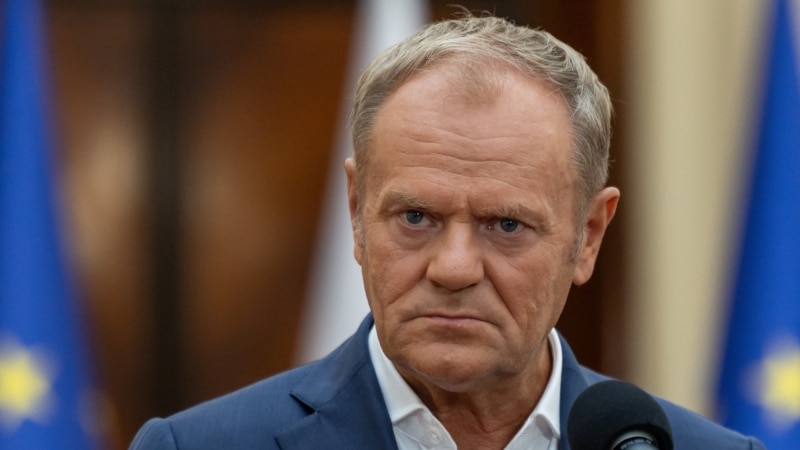
Poland’s Prime Minister Donald Tusk announced on June 24 that he will address escalating tensions between Warsaw and Kyiv during a meeting of the European “Five” (E5), which includes the United Kingdom, France, Germany, Italy, and Poland. Tusk aims to inform his counterparts about the situation on the Russian-Ukrainian front and a recent dispute stemming from Ukrainian President Volodymyr Zelensky’s decision to name a military unit after the Ukrainian Insurgent Army (UPA), a move Poland finds unacceptable.
In his remarks, Tusk emphasized that European partners are increasingly understanding Poland’s position on this matter. He also mentioned that discussions will take place on the sidelines of the Ukraine Reconstruction Conference (URC-2026) in Gdańsk, where a summit involving NATO’s eastern flank countries will be held.
Tusk highlighted the significance of this meeting, stating he will engage with the prime ministers and presidents of Lithuania, Latvia, Estonia, Finland, Sweden, and Romania regarding eastern flank security issues. He noted that these nations share similar concerns about security challenges posed by Russia.
On June 19, Polish President Karol Nawrocki announced the revocation of Zelensky’s Order of the White Eagle in response to the naming of the Ukrainian military unit. Nawrocki stated that for many in Poland, the UPA is associated with severe crimes against Polish citizens during World War II.
In a subsequent gesture, Zelensky returned the order via postal service, expressing gratitude for Poland’s support and a willingness to continue cooperation. In an interview, he characterized the Polish president’s decision as part of internal political dynamics, a claim Nawrocki denied.
The Ukrainian Insurgent Army (UPA) was a military-political formation active in Ukraine from 1942 to 1956, initially formed to unite various nationalist armed groups under the Organization of Ukrainian Nationalists (OUN). Its primary goal was to establish an independent Ukrainian state and prepare for an uprising in the aftermath of World War II.
Historically, the UPA fought against both Nazi Germany and later Soviet authorities. Its activities have been subject to varying interpretations, with some viewing it as a resistance movement and others as a group responsible for violence against Polish civilians. In 2016, the Polish parliament classified UPA actions against Polish populations in Volhynia as genocide.
Public sentiment towards the UPA in Ukraine has fluctuated since independence, with recent surveys indicating a growing recognition of its role in the struggle for independence. As of 2015, UPA veterans are officially recognized as fighters for Ukraine’s independence in the 20th century.
Poland's Prime Minister Donald Tusk is set to address tensions with Ukraine regarding the naming of a military unit after the UPA at an upcoming European summit. The dispute has implications for regional security and historical perceptions in both countries.