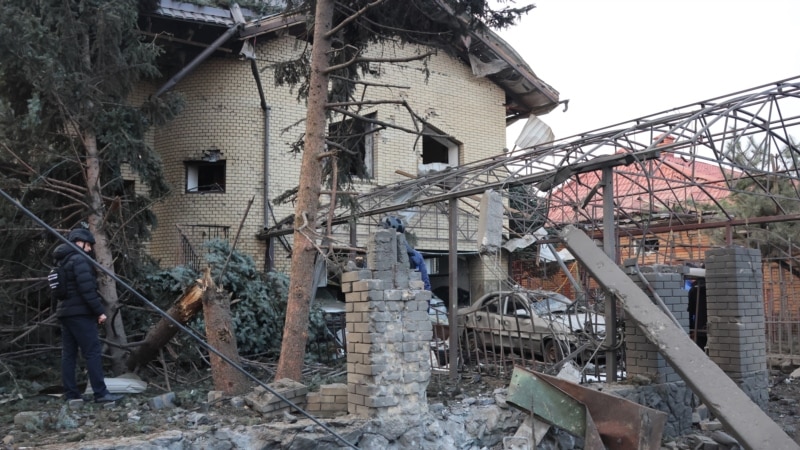
On Saturday, June 6, Russian military forces launched an attack on Zaporizhzhia, a city in southeastern Ukraine, according to Ivan Fedorov, the head of the regional military administration. The strike hit the roof of a supermarket, resulting in a fire that spread to an adjacent residential building.
Fedorov reported that a 10-year-old boy sustained injuries to his arm and was subsequently hospitalized. Additionally, the child’s father was also injured, and both individuals are receiving medical care. As the situation developed, the number of reported injuries rose to three.
Russian forces have been consistently targeting Ukrainian cities and civilian infrastructure using various types of weaponry, including drones, missiles, and multiple rocket launch systems. These attacks have raised significant concerns among Ukrainian authorities and international organizations, which classify them as war crimes committed by the Russian Federation.
Critics argue that the strikes are part of a broader strategy aimed at undermining essential services for civilians, including electricity, heating, water supply, and healthcare. Such actions are viewed as indicative of genocidal intent, as they deliberately aim to deprive the population of basic necessities for survival.
Legal experts and human rights advocates assert that the ongoing conflict has seen numerous actions that could meet the criteria for genocide. This includes public declarations by Russian officials questioning the existence of Ukrainians as a distinct ethnic group and calls for their destruction. Furthermore, there have been reports of systematic targeting of pro-Ukrainian individuals in occupied territories, as well as efforts to alter the cultural identity of children through educational reforms.
The 1948 United Nations Convention on the Prevention and Punishment of the Crime of Genocide defines genocide as actions intended to destroy, in whole or in part, a national, ethnic, racial, or religious group. It outlines various indicators of genocidal actions, such as killing members of a group, causing serious bodily or mental harm, and deliberately inflicting conditions calculated to bring about a group’s destruction.
Despite these allegations, the Russian government continues to deny that its military is intentionally targeting civilian infrastructure or causing civilian casualties. The ongoing conflict has raised serious questions about accountability and the protection of human rights in wartime.
The recent attack on Zaporizhzhia by Russian forces has resulted in civilian injuries and raised concerns about the targeting of essential infrastructure. Legal experts warn that such actions may constitute war crimes and potentially genocide under international law.