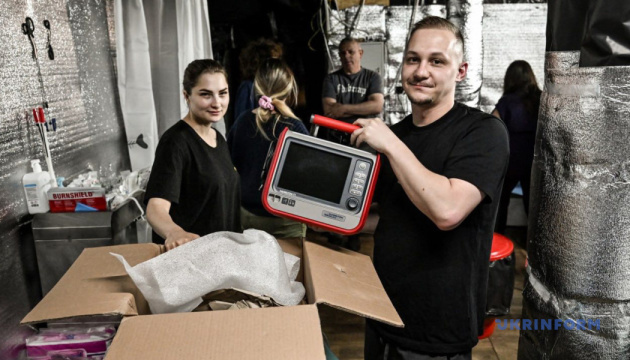
A newly established stabilization point in Zaporizhzhia is playing a vital role in the care of wounded soldiers. Operated by the 475th Separate Assault Regiment, this facility, known as “CODE 9.2,” has been in operation for just a few months, yet it is already crucial for saving lives in the heat of battle.
The stabilization point is the first stop for injured soldiers, where they receive immediate medical attention before being evacuated to hospitals. The facility, built in just six weeks despite challenging weather conditions, consists of three rooms: a shock room, an operating room, and a staff rest area. Due to security concerns, details about its operations are limited.
Leading the medical team is a 28-year-old officer known by the call sign “Cheri.” She joined the military in 2022, shortly after the onset of the full-scale invasion. “We created this stabilization point to assist not only our regiment but also neighboring units. We strive to provide the best possible care,” she explained.
“Cheri” noted that while she has served in various regions, including Kharkiv and Donetsk, the Zaporizhzhia front presents unique challenges. “The enemy’s strike zone is larger here, and we often have to wait for clear skies to transport the injured,” she said, underscoring the difficulties of evacuating wounded soldiers from active combat zones.
During a recent visit, a team of volunteers delivered a state-of-the-art ventilator, which was a welcome surprise for the medical staff. Anesthetist Kyrylo Mostovyi remarked, “This is a Hamilton ventilator, top-tier equipment. We frequently deal with severe cases that require intubation, and having this device is essential, especially since it can operate under extreme conditions.”
Mostovyi, who has been in the army for nearly seven years, shared that he has learned more in this environment than he could have in civilian life. “The conditions are extreme, and you must be decisive. My friends at home are surprised by my calmness in such situations, but I’ve seen it all before,” he said.
As the team works tirelessly, they also celebrate personal milestones. Nurse Olga recounted a creative birthday celebration for Mostovyi, where they fashioned decorations from medical supplies to honor him. “We’re like a big family here, and that bond is crucial since we spend every day together,” she said.
Captain Viacheslav, who leads the unit, emphasized the importance of their role. “We make critical decisions here about whether to amputate or save a limb. If a tourniquet is left on too long, we must act quickly. Unfortunately, some soldiers are reluctant to disclose how long a tourniquet has been in place, fearing immediate amputation, but that information is vital for their care,” he explained.
He recalled a recent case involving a soldier severely injured by an explosion. “His face was nearly unrecognizable. Without our stabilization point, he wouldn’t have made it to the hospital. That’s why we exist,” he said.
As the conflict continues, the medical team is witnessing an increase in drone-related and explosive injuries. “Every time we think we’ve seen it all, new cases arrive that challenge our preparedness,” Viacheslav noted.
Despite the harrowing nature of their work, he expressed a desire to return to civilian life one day, though he acknowledged the complexities of transitioning back. “I have gained invaluable experience, but I wish it were under different circumstances. There’s a significant difference between civilian and combat injuries, and my colleagues are performing surgeries I may never have the chance to do,” he reflected.
Before departing, the team shared their ongoing needs with the visiting volunteers, including supplies for surgical procedures and a portable device for automated chest compressions. “We need these tools to enhance our capabilities and save more lives,” Cheri stated, emphasizing the importance of continued support.
The 475th Separate Assault Regiment's stabilization point in Zaporizhzhia is crucial for providing immediate medical care to injured soldiers. Despite operating for only a few months, the team faces significant challenges in delivering care amid ongoing conflict, highlighting the urgent need for medical supplies and support.
