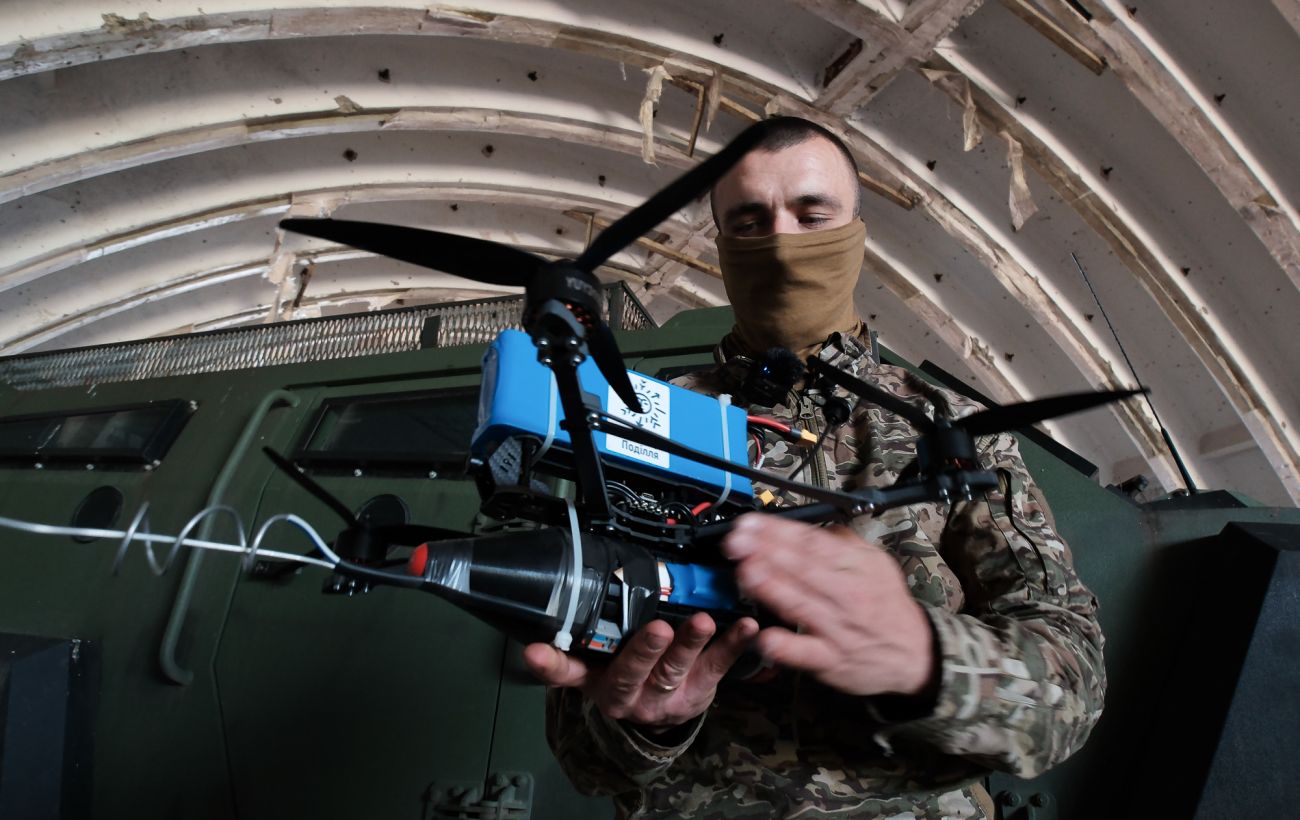
The Ukrainian Defense Forces have managed to decelerate the Russian military’s advance due to two significant factors: rising casualties among Russian troops and the extensive deployment of drones deep into Russian defenses.
Sources indicate that the tactics employed by Russian forces on the front lines remain consistent, characterized by the infiltration of small groups, accumulation of forces, and subsequent assaults. However, the recent slowdown in their offensive capabilities can be attributed to two main developments.
The first factor is the increased effectiveness of Ukrainian forces in inflicting casualties on the Russian side, with estimates suggesting that Russian losses have reached approximately 35,000 per month, including both fatalities and severe injuries.
Of these losses, around 60-62% are considered irrecoverable. Currently, the recruitment of contract soldiers by Russia barely compensates for these ongoing losses.
The second notable change in recent months is the substantial rise in drone usage by Ukrainian military units.
This has enabled ground forces to more effectively repel Russian assaults along the frontline, as drones patrol the skies, detect enemy movements, and strike targets before they reach Ukrainian positions.
Moreover, the widespread use of unmanned aerial vehicles (UAVs) by both sides has effectively expanded the ‘death zone’—the area under active fire.
Due to the persistent threat of drone strikes, Russian command has been compelled to relocate a significant portion of its logistics, personnel, and certain command elements 20 to 40 kilometers away from the frontline.
Approximately four months ago, Ukraine began systematically targeting this area on the Russian side, known as the operational depth, which lies between the frontline and the enemy’s strategic rear.
Ukrainian middle-strike drones have increasingly targeted Russian logistics routes, command posts, airfields, fuel and ammunition depots, and concentrations of personnel, as well as UAV operators and equipment.
Since the beginning of this year, Ukrainian forces have begun deploying more advanced drones, such as the Hornet from an American company founded by a former Google CEO, alongside their Ukrainian and German counterparts.
A year ago, such drones were reserved for striking significant and costly enemy targets. Now, their numbers have increased to the extent that even individual military trucks, fuel tankers, and support vehicles are coming under fire.
Numerous drone strikes by Ukrainian forces have been reported in the Gorlivka area and along the roads connecting Donetsk, Mariupol, and Crimea (N-20 and M-14), which serve as a land corridor to the occupied peninsula.
While Ukrainian strikes on the mid-rear have not yet resulted in a decisive shift on the battlefield, the Russian military is finding it increasingly challenging to assemble personnel for large operations and maintain continuous logistics.
If the Defense Forces continue this trend and gain air superiority near the frontline, it may compel Russian forces to reassess their ambitions and plans on the battlefield.
However, Russian forces are also adapting and seeking to implement similar technological solutions.
The Ukrainian Defense Forces have slowed the Russian military's advance through increased drone usage and rising casualties among Russian troops. This shift has complicated Russian logistics and personnel mobilization, potentially altering the dynamics of the conflict.