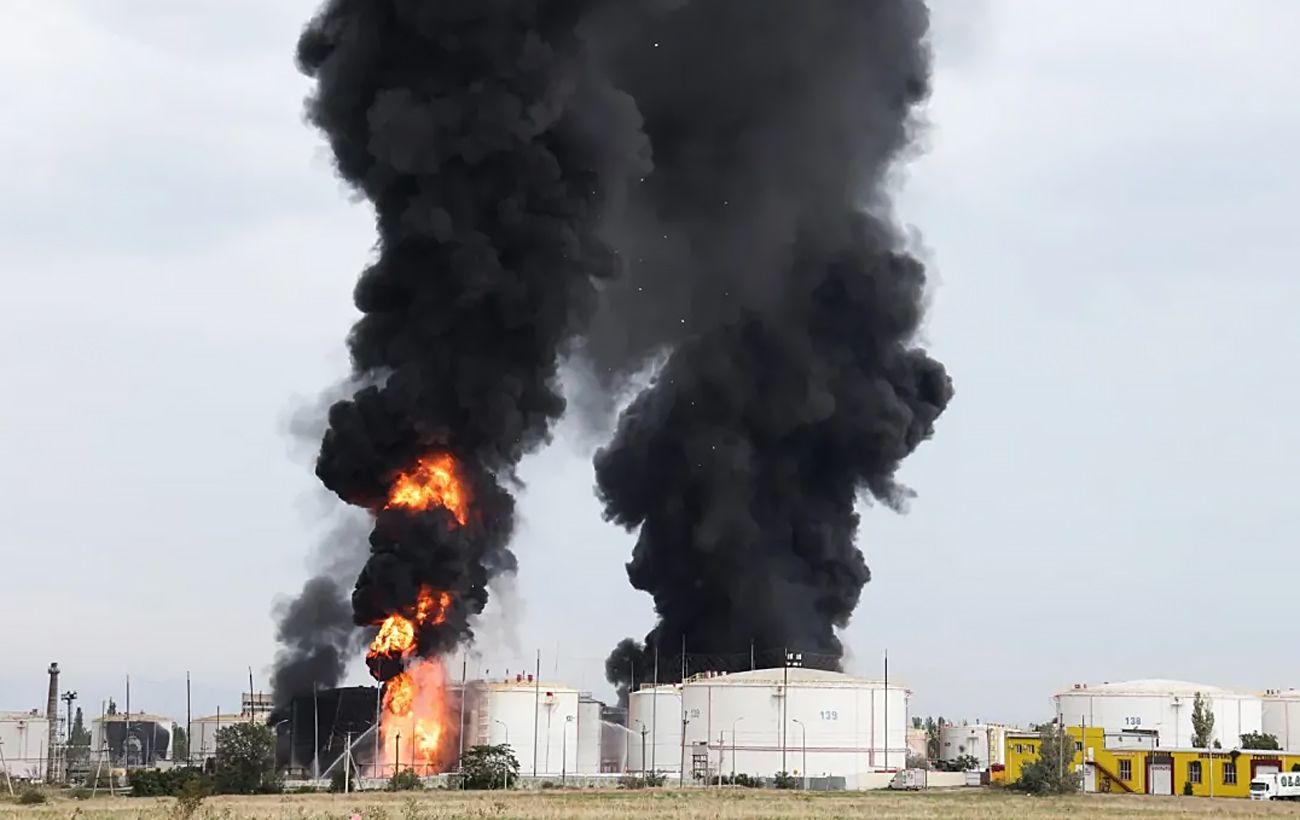
Ukrainian long-range drones are increasingly striking Russian oil infrastructure and arms production facilities with greater accuracy than their Russian counterparts, known as “Shaheds.” Reports indicate that Ukrainian drones achieve target hits in over 10-12% of attempts, compared to just 3-5% for the Russian drones.
The focus of these attacks includes facilities involved in the processing, storage, transportation, and export of Russian oil, as well as enterprises that manufacture precision weapons and explosives. This dual strategy aims to undermine two critical areas for the Kremlin: oil revenues and the capabilities of the Russian military-industrial complex.
Over the past year, Ukraine has not only increased the quantity and variety of its drone arsenal but has also improved the effectiveness of its strikes. According to sources, Ukraine is nearing parity with Russia in the number of long-range drones launched. Enhancements have been made in the number of drones deployed in salvos and the payloads they carry.
Similar to Russia, Ukraine has begun deploying a portion of decoy drones with minimal explosive payloads in its salvos. These drones serve to penetrate and exhaust the enemy’s air defense systems. Reports from Russian social media indicate that hundreds of drones are entering Russian territory almost nightly.
- Ukrainian long-range drones successfully hit targets in over 10-12% of cases.
- Undamaged Russian “Shaheds” achieve their targets in only 3-5% of instances.
The disparity in effectiveness is more than double, highlighting a significant shift in operational capabilities.
Ukrainian long-range drones are demonstrating improved precision in targeting Russian oil and arms facilities, achieving a success rate significantly higher than that of Russian drones. This shift reflects advancements in both the quantity and effectiveness of Ukraine's drone operations over the past year.