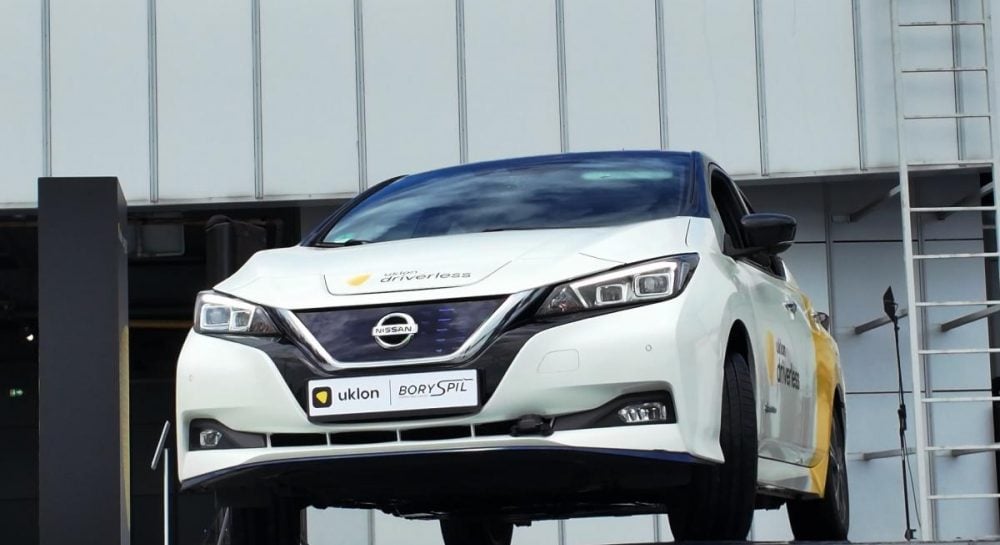
Ukraine is advancing in autonomous vehicle technology, as demonstrated by the recent presentation of a remote-controlled taxi at Boryspil Airport. This initiative reflects the country’s growing capabilities in innovative transportation solutions.
The event, organized by the Ukrainian taxi service Uklon, showcased a vehicle that operates without a driver, relying instead on a remote operator using advanced technology. Journalists were invited to witness the demonstration, highlighting Ukraine’s position in the global technological landscape.
Upon arrival at Boryspil Airport, attendees were greeted by friendly staff and guided through a registration process. The atmosphere was optimistic, reflecting a renewed sense of activity at the airport after years of conflict. Following standard security checks, the presentation began, featuring a sophisticated setup resembling a high-tech gaming simulator.
The remote operator controlled the vehicle from a central station equipped with multiple screens, cameras, and sensors. Alexander Chumak, Uklon’s Chief Technology Officer, explained the system’s components, which include six cameras and a computer from Nvidia. He emphasized that the technology allows for real-time data transmission with a latency of 30 to 200 milliseconds, which is significantly faster than human reaction times.
The potential for remote driving extends up to 4,500 kilometers, a feature that impressed attendees. However, the presentation was interrupted by an air raid alert, prompting a temporary evacuation to a secure area. After the alert subsided, the official portion of the event resumed, with speakers discussing the future of transportation and the role of automation.
Key figures from Boryspil Airport and Uklon expressed confidence that the infrastructure is ready for the implementation of such technologies. They highlighted the importance of regulatory support to facilitate the use of remote-controlled taxis in urban environments.
During the discussions, it was noted that the technology could also enhance accessibility for individuals with disabilities, allowing them to operate taxis remotely. This aspect was underscored by the presence of Dmitry Bikhovchenko, a war veteran who has adapted to the technology despite physical challenges.
Estonia’s experience with autonomous vehicles serves as a model for Ukraine, although local legislation will require adjustments to accommodate remote driving. Officials from the Ukrainian government expressed their commitment to streamlining regulations to support the deployment of these innovations.
As the event concluded, attendees were eager to see the technology in action. The demonstration involved a vehicle moving autonomously while monitored by the remote operator, showcasing the practical application of the technology.
While the implementation of remote-controlled taxis in Ukraine is still in its early stages, the event marked a significant step towards a future where such innovations could become commonplace. The collaboration between various stakeholders indicates a concerted effort to navigate the challenges of integrating advanced technologies into everyday life.
The recent presentation of a remote-controlled taxi in Ukraine highlights the country's advancements in autonomous vehicle technology. This initiative, led by Uklon, showcases the potential for innovative transportation solutions while emphasizing the need for regulatory support to facilitate implementation.