Diplomats from the European Union and the United States have reaffirmed their commitment to remain in Kyiv despite escalating threats from Russia. This comes as China has called for restraint from the aggressor, urging a halt to mass attacks.
On May 26, the European External Action Service summoned the Russian chargé d’affaires, demanding an end to attacks on civilians and the initiation of genuine peace talks, starting with an unconditional ceasefire. Anita Hipper, a representative of the European Commission, reported that U.S. Secretary of State Marco Rubio was informed by Russian Foreign Minister Sergey Lavrov of intentions to target Kyiv.
Katarina Maternova, the EU ambassador to Ukraine, confirmed that European diplomats would continue their work in Kyiv, emphasizing their solidarity with the Ukrainian people. Meanwhile, nearly 50 UN member states condemned Russia’s recent strikes on Kyiv and its assaults on civilian infrastructure.
Following the EU’s lead, Norway and Germany have also summoned Russian ambassadors to express their protest against Moscow’s threats. The Norwegian Foreign Ministry stated that such actions were unacceptable.
In a related development, Chinese Foreign Ministry spokesperson Mao Ning urged Russia to exercise restraint, though she did not comment on the potential evacuation of diplomats from Kyiv.
The Ukrainian Foreign Ministry has indicated that the overall security threat level from Russia remains unchanged compared to previous months, expressing gratitude to foreign diplomatic missions that continue to operate in Ukraine despite the ongoing conflict.
The UN Security Council is scheduled to convene on Thursday to discuss the escalation of Russian attacks on Ukrainian civilians, with the meeting set to begin at 3:00 PM Eastern Time (10:00 PM Kyiv time).
Ukrainian Foreign Minister Andrii Sybiha, speaking at the “Ukraine-Africa: Past, Present, and Future of Relations” forum, described Lavrov’s comments about continuing strikes on Kyiv as a blatant provocation that undermines diplomatic efforts. He stressed that ending the war requires U.S. leadership, while Europe must play a complementary role in peace initiatives.
- Sybiha highlighted the importance of African nations’ positions in achieving a just peace, noting that Russian aggression pertains to global principles of international law and requires broader international support.
- He mentioned Ukraine’s readiness to discuss various forms of ceasefire with partners, including “airport” or “energy” ceasefires, provided a practical case is developed to demonstrate effectiveness.
In Brussels, an EU General Affairs Council meeting discussed Ukraine’s membership prospects. Swedish Minister for European Affairs Jessica Rosencrantz asserted that no alternative to full EU membership exists for Ukraine. Ireland’s Minister of State for European Affairs, Thomas Byrne, emphasized the need for traditional methodologies in EU expansion, rejecting the notion of “associated membership.” Latvian Parliamentary Secretary Artjoms Urshulskis stated that EU membership should be based on merits and values.
Romania’s Foreign Minister Oana Cuzmiu called for stronger sanctions against Russia and stricter penalties for violations of the sanctions regime.
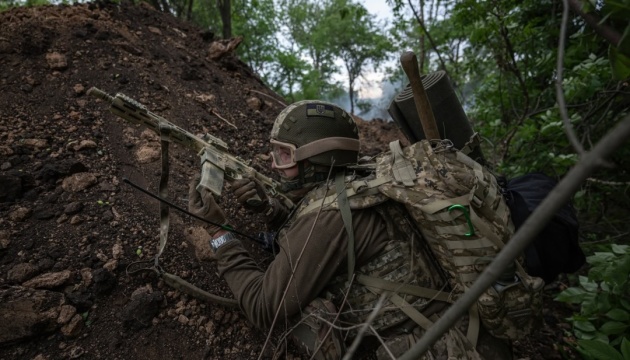
In military updates, the Ukrainian Armed Forces reported 47 clashes since the start of the day, primarily in the Pokrovsk and Huliaipole directions. Ukrainian forces have successfully regained control over several areas, including the village of Prymorske.
Reports indicate that Ukraine has identified 500 potential targets in Belarus in case of further involvement from President Lukashenko in the conflict. The General Staff of the Armed Forces confirmed the cessation of operations at the Sizyansk Oil Refinery following a recent strike.
In a separate incident, Russian forces attacked Zaporizhzhia, resulting in injuries to 15 civilians, including an infant. The attack damaged 11 residential buildings in the area.
As the conflict continues, the humanitarian situation remains dire, with significant casualties reported among both military personnel and civilians. The Ukrainian government continues to seek international support and solidarity in its efforts to counter Russian aggression.
Diplomatic tensions rise as EU and US diplomats remain in Kyiv despite Russian threats. China calls for restraint, while Ukraine prepares for potential escalations. The UN Security Council is set to discuss the situation amid ongoing military confrontations.
