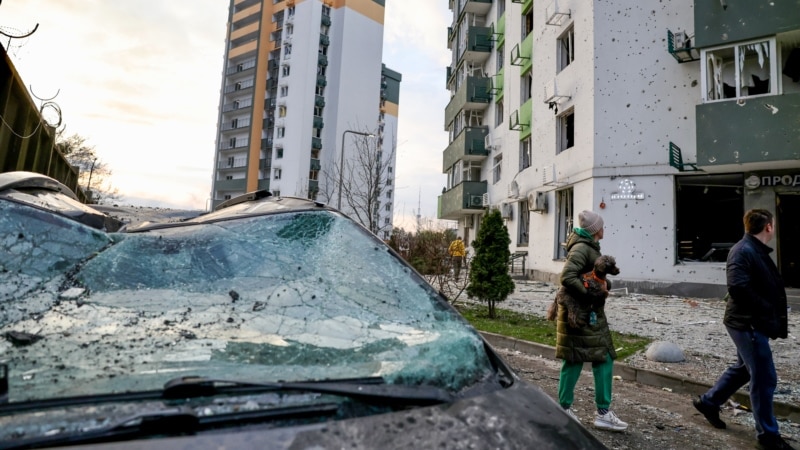
A series of coordinated assaults by Russian forces across Ukraine has led to at least 15 fatalities and over 100 injuries, according to the Office of the Prosecutor General. The attacks targeted major cities including Kyiv, Dnipro, Odesa, and Kharkiv.
In Kyiv, four individuals lost their lives, including a 12-year-old child. The attacks also left at least 54 people injured, comprising police officers, medical personnel, and foreign nationals. Significant damage occurred in the Podilskyi and Obolonskyi districts, where 17 apartment buildings, 10 private homes, a hotel, an office center, a car dealership, a gas station, and a shopping mall were impacted.
Odesa faced two nighttime assaults, first with drones and then with ballistic missiles, resulting in eight deaths, including women aged 20 to 56 and men aged 23 to 26. At least 19 others sustained injuries, with some in critical condition. The strikes damaged port infrastructure, administrative buildings, dormitories, and residential structures, including a partially destroyed apartment block.
On the evening of April 15 and into the night of April 16, Russian forces launched a combined missile and drone attack on Dnipro and its surrounding region, resulting in fatalities and 27 injuries, including children. In the Nikopol district, a man was killed, and three others were injured due to drone strikes.
In Kharkiv, Russian military drones reportedly struck the city on the night of April 16, targeting the Nemishlyanskyi district. This attack damaged residential buildings and injured at least two individuals.
According to the Ukrainian Air Force, from 7:00 AM on April 15 to 7:00 AM on April 16, Russian forces conducted two waves of combined attacks using 44 different types of missiles and 659 drones. Military sources confirmed hits from 12 missiles and 20 drones across 26 locations, with debris falling on 25 sites.
Ukrainian authorities and international organizations classify these attacks as war crimes, emphasizing their deliberate nature. The strikes on essential services and healthcare facilities are viewed as attempts to deprive civilians of electricity, heating, water, communication, and medical care, which some legal experts argue could constitute genocidal actions.
Legal scholars and human rights advocates assert that the ongoing conflict has seen Russia commit various acts that may fall under the definition of genocide, including public declarations aimed at the destruction of Ukrainians as an ethnic group, targeted attacks on essential services, and the persecution of pro-Ukrainian individuals in occupied territories.
The 1948 UN Convention on the Prevention and Punishment of the Crime of Genocide obligates its 149 member states to prevent and punish acts of genocide during both wartime and peacetime. The Convention defines genocide as actions intended to destroy, in whole or in part, a national, ethnic, racial, or religious group.
Signs of genocide include killing members of the group, causing serious bodily harm, deliberately inflicting conditions intended to destroy the group, and public incitement to commit such acts.
Russian leadership continues to deny that its military intentionally targets civilian infrastructure, claiming that it does not deliberately kill civilians or destroy hospitals, schools, and essential services.
Recent coordinated attacks by Russian forces across Ukraine have resulted in numerous casualties and extensive damage to civilian infrastructure. Major cities like Kyiv, Odesa, and Dnipro have been heavily impacted, prompting international condemnation and discussions of potential war crimes.