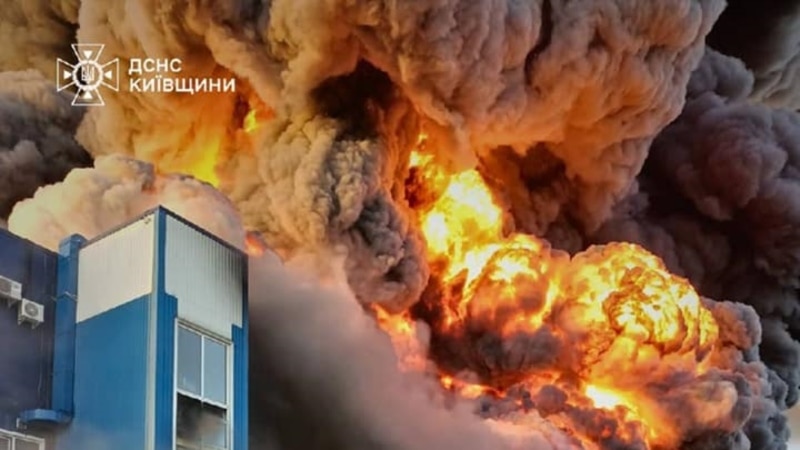
Ukrainian President Volodymyr Zelensky has confirmed a recent Russian missile attack on the city of Bila Tserkva, located in the Kyiv region. This incident is part of a broader wave of assaults that have resulted in significant civilian casualties and damage to infrastructure.
In a video address, Zelensky described the attack, which involved three Russian missiles targeting a water supply facility, as well as damaging a market and numerous residential buildings, including several schools. He criticized the Russian military’s actions, stating, “Putin can no longer even say ‘hurrah’ properly—he stutters—yet he continues to strike residential areas with his missiles.”
The President emphasized the importance of holding Russia accountable for these actions. He reported that the recent wave of attacks has injured at least 83 individuals across Ukraine, with fatalities confirmed.
On May 24, Ukraine faced a massive assault from Russian forces, who launched 600 drones and 90 missiles of various types, primarily targeting Kyiv. This attack resulted in two deaths and 44 injuries within the capital. Additionally, in the surrounding Kyiv region, two people died in the Bucha and Obukhiv districts, while nine others were injured, including an infant. In Cherkasy, a drone strike on a residential building injured 11 people, two of whom were children.
Prior to the attacks, President Zelensky had alerted the public to potential threats, urging residents to remain vigilant in response to air raid alerts. He noted that intelligence indicated preparations by Russian forces for a large-scale strike using the so-called “Oreshnik” weapon system.
Russian military operations have frequently targeted Ukrainian cities and critical infrastructure, employing a variety of weaponry, including drones and missiles. Ukrainian authorities and international organizations classify these strikes as war crimes, asserting that they are deliberate in nature.
Attacks on essential services and healthcare facilities, aimed at depriving civilians of electricity, heating, water supply, communication, and medical assistance, are considered indicative of genocidal actions. Legal experts and human rights advocates argue that these actions fall under the definition of genocide, as outlined in the 1948 UN Convention on the Prevention and Punishment of the Crime of Genocide.
The Convention obligates its 149 member states to prevent and punish acts of genocide during both wartime and peacetime. It defines genocide as actions intended to destroy, in whole or in part, a national, ethnic, racial, or religious group.
Indicators of genocide include the killing of group members, inflicting serious bodily harm, deliberately creating conditions aimed at the group’s destruction, preventing births, and forcibly transferring children from one group to another.
The Russian leadership has consistently denied that its military conducts targeted attacks on civilian infrastructure or harms non-combatants during the ongoing conflict.
The recent Russian missile attack on Bila Tserkva has resulted in casualties and significant damage, highlighting the ongoing conflict's toll on civilians. Ukrainian officials continue to call for accountability and classify these attacks as war crimes, raising concerns about potential genocidal actions.