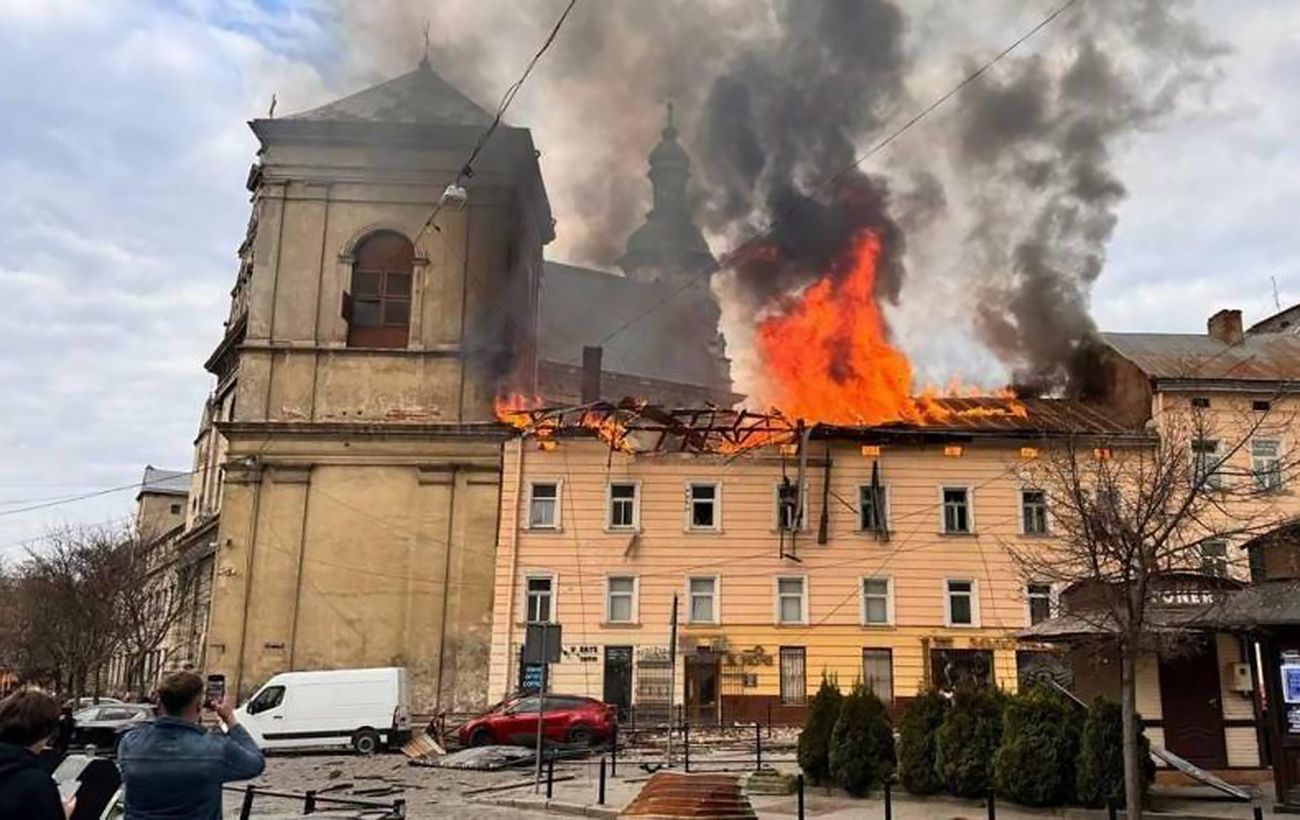
On March 23-24, Russia launched a significant and coordinated air assault on Ukraine, indicating a notable shift in its military strategy. This new approach allows for prolonged pressure on Ukrainian defenses and targets a broader range of regions across the country.
Analysts highlight that the recent attacks are not merely about scale; they reflect a systematic strategy. The strikes are spaced out over time and involve a combination of drones and missiles, aiming to overwhelm and expose vulnerabilities in Ukraine’s air defense systems.
Serhiy Flash Beskrestnov, an advisor to Ukraine’s Ministry of Defense, noted that the extended duration of these strikes likely aims to identify and exploit weaknesses in Ukrainian air defenses. Additionally, Andriy Kovalenko, head of the Center for Countering Disinformation, pointed out that Russian forces have been amassing resources for more intense and sustained strikes targeting civilian infrastructure across Ukraine.
The Institute for the Study of War (ISW) has observed that Russia is employing a tactic of “accumulation and strike.” This involves launching a limited number of missiles over several days, followed by massive attacks that utilize both missiles and a large number of drones simultaneously. Such a method aims to overload Ukrainian air defenses and enhance the destructive impact of the strikes.
Experts estimate that Russia is nearing the capability to deploy over 1,000 strike drones in a single wave of attacks. The events of March 23-24 serve as a recent example of this potential in action.
Moreover, the ISW emphasizes the political implications of these strikes. They often coincide with significant diplomatic events, suggesting an intention to exert pressure on Kyiv and its allies. Notably, the latest assault occurred shortly after U.S.-Ukrainian negotiations in Florida, which may indicate a strategic move by Moscow.
Analysts also warn that Russia could take advantage of the current shortage of air defense systems, including the Patriot system, and the shifting international focus towards the Middle East to intensify its aerial campaign against Ukraine.
During the night of March 24, Russia initiated a large-scale aerial attack across various regions of Ukraine. Hundreds of drones, along with ballistic and cruise missiles, were launched, targeting cities such as Kyiv, Poltava, and Zaporizhzhia.
The strikes resulted in devastating consequences across 11 regions, leading to the deaths of four individuals and injuries to dozens, including children. The attacks persisted throughout the day, with nearly all western regions of Ukraine subjected to drone strikes by the evening of March 24.
In Lviv, drone strikes hit residential buildings on Soborna Square and the streets of Brativ Rohatyntsiv and Chervonoi Kalyny. The attacks caused injuries and damaged sites listed as UNESCO World Heritage, with explosions also reported in Ternopil, Ivano-Frankivsk, and Vinnytsia.
For further details on the impact of these strikes in western Ukraine, refer to additional reports from local news sources.
The recent Russian airstrikes on Ukraine represent a strategic shift in military tactics, characterized by prolonged assaults and a combination of drones and missiles. This approach aims to exploit vulnerabilities in Ukraine's air defenses while coinciding with significant diplomatic events, raising concerns about the ongoing conflict's trajectory.