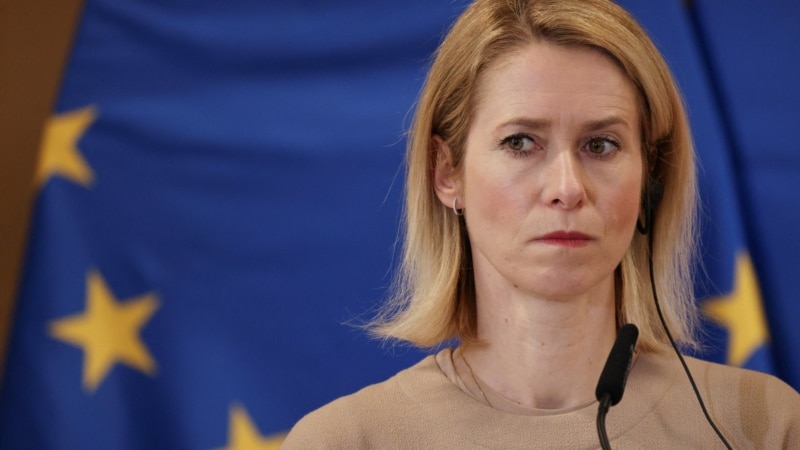
Kaja Kallas, the European Union’s High Representative for Foreign Affairs and Security Policy, expressed little surprise at Russia’s reported harsh response to a French delegation’s request for Europe to engage in peace negotiations regarding the ongoing conflict in Ukraine. Speaking to reporters in Brussels on March 16, Kallas emphasized that Russia has demonstrated a lack of genuine interest in negotiations.
“Russia has shown that it does not actually want to negotiate. It is intensifying its attacks on Ukraine to fulfill its maximalist objectives. Since Europeans are not willing to meet these demands, why should they engage in talks with us?” Kallas remarked.
She underscored the necessity of increasing pressure on Russia, which includes enforcing a strict price cap on oil, combating the so-called shadow fleet that transports resources in violation of sanctions, and finalizing a €90 billion loan for Ukraine. “All of this is crucial for pushing Russia from pretending to negotiate to engaging in real negotiations,” she added.
Kallas also warned that any easing of U.S. sanctions on Russian oil could set a dangerous precedent, as it is essential to reduce the funds available to Russia for its military operations rather than increase them.
Meanwhile, the Financial Times reported that U.S. efforts to mediate peace talks between Russia and Ukraine have stalled, with President Donald Trump reportedly losing interest in negotiations. European diplomats noted that American officials recently informed their EU counterparts that no new sanctions against the Russian oil industry would be forthcoming.
Additionally, Russian presidential aide Yuri Ushakov reportedly rebuffed French representatives who sought to persuade the Kremlin to allow European involvement in peace discussions. A senior European diplomat revealed that French advisors Emmanuel Bonne and Bertrand Bouchard visited Moscow in February to negotiate with Ushakov, who responded with a vulgar dismissal.
“Sorry, actually, no we don’t, f*** you,” Ushakov allegedly told the French officials, according to the Financial Times.
Kremlin spokesperson Dmitry Peskov commented on the meeting, stating that European countries “do not wish to assist the peace process.” He claimed that the French representative did not bring any positive signals and accused Europeans of exerting pressure on Ukraine to continue the conflict, while asserting that Russia is confident in its military success.
In a separate interview with NBC News, President Trump remarked that Ukrainian President Volodymyr Zelensky’s stance is a barrier to reaching a peace agreement. “I’m surprised that Zelensky doesn’t want to make a deal. Tell Zelensky to make a deal because Putin is willing to make a deal. It’s much harder to negotiate with Zelensky,” Trump stated.
President Zelensky, however, has called on the U.S. to focus more on pressuring Russia rather than him. “We do not trust Russia, but I believe that Americans genuinely want to end this war. I hope they will help us, but more pressure needs to be applied to Russia, not to me,” he said in an interview with Politico.
Trump also indicated that any temporary easing of sanctions on Russian oil is linked to the energy crisis following the closure of the Strait of Hormuz. “I want the world to have oil,” he said, adding that sanctions would be reinstated once the crisis related to Iran is resolved. Trump noted that while Iran wants to reach an agreement, the White House is not currently planning negotiations with Tehran due to insufficiently favorable conditions.
The initial rounds of negotiations involving Russia, Ukraine, and the U.S. took place on January 23-24 and February 4-5 in the United Arab Emirates, with a third round occurring on February 17-18 in Switzerland. A subsequent meeting was scheduled for early March but was disrupted by ongoing military actions in the Middle East.
Kaja Kallas, the EU's foreign policy chief, commented on Russia's refusal to engage in peace talks with Ukraine, emphasizing the need for increased pressure on Moscow. As U.S. mediation efforts stall, both Kallas and President Zelensky call for a stronger stance against Russia.
Source: Radio Free Europe