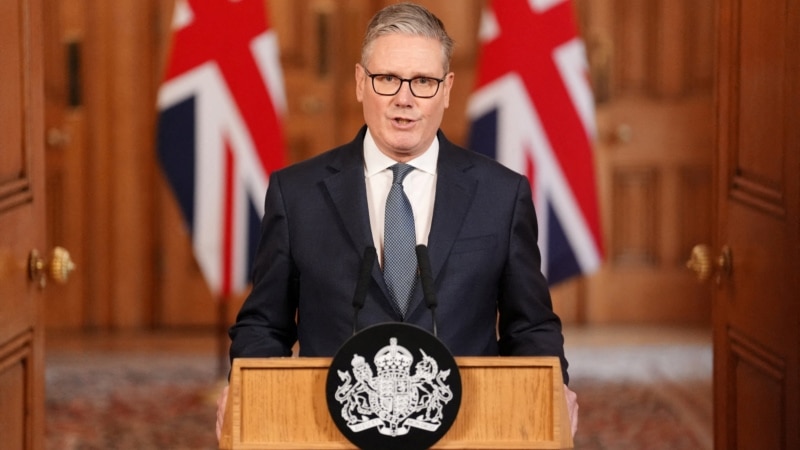
The United Kingdom has announced plans to involve Ukrainian specialists in efforts to combat Iranian drone threats in the Middle East. This decision follows a recent attack by Iranian forces on a military base in Bahrain, which narrowly missed British personnel stationed there.
Prime Minister Keir Starmer emphasized that the UK has deliberately chosen not to participate in U.S. strikes against Iran, advocating instead for diplomatic resolutions to regional tensions. He stated, “We believe that the best way forward for the region and the world is through negotiation,” highlighting the necessity for Tehran to abandon any ambitions related to nuclear weapon development.
Despite this stance, Starmer noted that Iranian actions pose risks to British interests and allies in the region. He mentioned that partners in the Gulf have requested increased support from the UK for their defense.
British aircraft are currently involved in defensive operations, with Starmer asserting that the most effective means to mitigate threats is to neutralize missiles at storage sites or launch platforms. The UK government has agreed to a U.S. request to utilize its bases for this specific defensive purpose.
“We are not joining these strikes, but we will continue our defensive actions in the region. We will also engage experts from Ukraine alongside our own specialists to assist Gulf partners in intercepting Iranian drones that threaten them,” Starmer stated.
He reiterated that the UK has learned from the Iraq War and does not intend to engage in offensive operations against Iran. However, he acknowledged the aggressive tactics employed by Iran, stating, “Iran is pursuing a scorched earth strategy, and we support the collective self-defense of our allies and our people in the region. This is our duty to the British public.”
The Ukrainian command has not directly commented on the UK’s announcement regarding the involvement of air defense experts. Meanwhile, Ukrainian President Volodymyr Zelensky praised the joint operation by Israel and the U.S. against the Iranian regime, stressing the importance of seizing the opportunity for change in Iran.
The initial wave of strikes conducted by the U.S. and Israel on February 28 resulted in the death of Iran’s Supreme Leader, Ayatollah Ali Khamenei, along with numerous other high-ranking officials of the Iranian regime. In retaliation, Iranian military forces launched missile and drone attacks not only against Israel and U.S. military installations in the region but also targeted several neighboring countries perceived as U.S. allies. These strikes affected both military and civilian sites, including residential buildings, hotels, and airports, as well as European military forces present in the Middle East.
The UK has decided to engage Ukrainian experts to assist in countering Iranian drone threats in the Middle East, following recent Iranian attacks that endangered British personnel. Prime Minister Keir Starmer emphasized a commitment to defensive operations while advocating for diplomatic solutions to regional tensions.