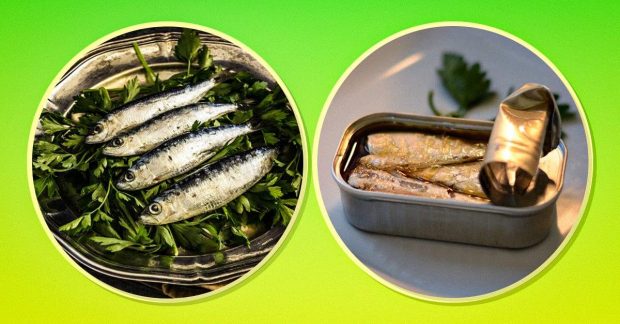
In recent years, sardines have gained attention for their health benefits, leading to increased imports into Ukraine from various countries. The State Service of Ukraine for Food Safety and Consumer Protection has provided insights into the sources of these imports, the regulatory framework governing their safety, and the measures taken to ensure compliance with health standards.
Countries Supplying Sardines
According to the State Service, between January 1, 2025, and March 31, 2026, sardines, including canned varieties, were imported into Ukraine from a range of countries. These include Greece, Ireland, Spain, Italy, China, Latvia, Lithuania, Mauritania, Morocco, Mexico, Norway, Poland, Portugal, the United States, Thailand, Turkey, the Faroe Islands, France, Croatia, and the Czech Republic.
Import Volumes
During the specified period, Ukraine imported a total of 2,989.28 tons of sardines, with the largest quantities coming from Mauritania (1,420.06 tons), followed by Morocco (772.37 tons) and Ireland (134.8 tons).
Quality Control Authorities
The State Service oversees the safety and quality of imported sardines. This includes verifying accompanying documents and ensuring compliance with established safety standards. In certain cases, physical inspections of the products may also be conducted.
Producers and importers share responsibility for the safety of food products, ensuring they meet quality standards, are properly labeled, and can be traced throughout the supply chain.
Safety Standards for Sardines
Quality and safety requirements for sardines in Ukraine are defined by state standards and regulations from the Ministry of Health. The products must meet microbiological safety criteria, meaning they should not contain harmful microorganisms. Additionally, there are limits on the permissible levels of hazardous substances, including heavy metals such as mercury, lead, and cadmium.
- Mercury: maximum 0.5 mg/kg of fish
- Lead: maximum 0.25 mg/kg for sardines and certain other fish types
Inspection Statistics
From January 1, 2025, to March 31, 2026, a total of 284 compliance checks, 47 physical inspections, and 6 laboratory tests of sardines were conducted upon their importation into Ukraine. However, due to the ongoing war, routine inspections have been largely suspended to alleviate administrative burdens on businesses.
Since the onset of the full-scale invasion, inspections of sardine production and sales entities have not been conducted, as per the Cabinet of Ministers’ decree No. 303. There have been no complaints or inquiries regarding sardine products during this period.
One unplanned inspection occurred in Vinnytsia, initiated by the market operator, which found no violations.
Quality Issues
During the inspection period, only one instance of non-compliance was reported, involving a sardine shipment weighing 0.0575 tons that lacked an international veterinary certificate.
Criteria for Quality and Safety
The assessment of sardine quality and safety in Ukraine is based on several factors, including compliance with declared composition, appearance, color, odor, taste, and texture. The absence of foreign contaminants and adherence to microbiological norms are also critical. Furthermore, the levels of pollutants, including heavy metals, must not exceed established limits, and products must be accurately labeled and stored under appropriate conditions throughout the supply chain.
The importation of sardines into Ukraine has increased significantly, with stringent checks conducted by the State Service for Food Safety. These measures ensure compliance with health standards, focusing on safety and quality during the ongoing conflict.