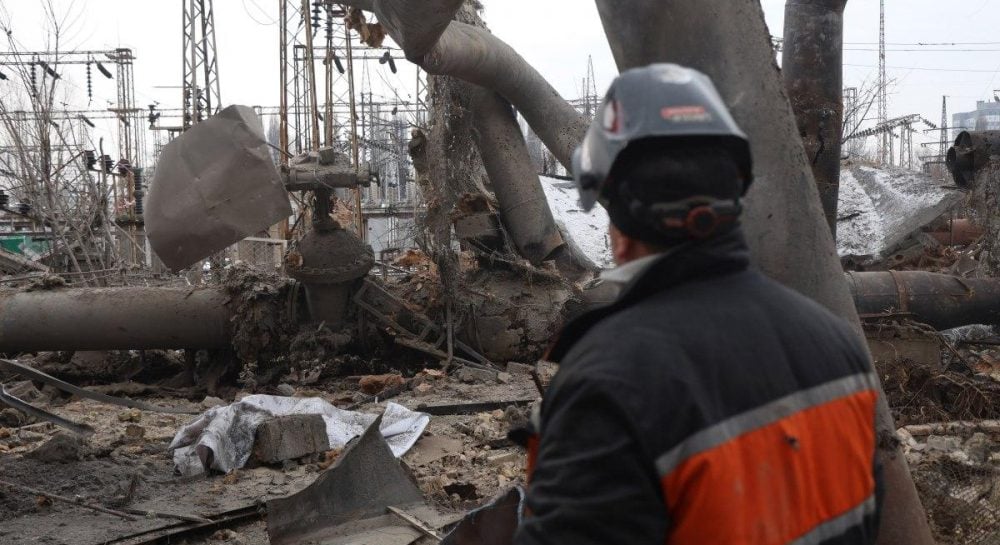
As Kyiv gears up for the upcoming winter, the city confronts one of its most significant challenges since the onset of the full-scale war. The focus is not merely on repairing specific heating plants or addressing budget shortfalls; it centers on ensuring that millions of residents have access to heat, especially in light of potential new Russian strikes on the energy infrastructure.
This winter, Kyiv transforms from a frontline city into a battleground for survival, where the outcome could influence the broader conflict, similar to the situation in the Donbas region.
Russian forces are acutely aware of this vulnerability, employing advanced ballistic missiles and drones to target Kyiv’s heating systems. Recent comments from Mayor Vitali Klitschko reveal not only a critical funding deficit for winter preparations but also a concerning lack of effective collaboration between the Kyiv City State Administration (KCSA) and the national government.
Public estimates indicate that a comprehensive energy resilience plan for Kyiv requires over 60 billion hryvnias. The situation surrounding TPP-5 is particularly dire, with approximately 9 billion hryvnias needed for equipment and backup heating systems, while an urgent funding gap of about 3 billion hryvnias remains.
This issue transcends political blame games between the government and the KCSA.
It is a matter of national security, the resilience of the capital, and public trust in the government.
Failure to act promptly could lead to discussions this fall not about budget deficits but about real risks to the heating season.
The primary mistake to avoid is conflating all needs into a single large figure. The complete modernization of Kyiv’s energy resilience is a long-term strategic task, but the critical minimum for the winter of 2026/2027 must be financed, contracted, and executed as swiftly as possible.
What needs to be done? Political ambitions should be set aside to create a unified action plan involving the government, KCSA, Kyivenergo, the Ministry of Finance, the Ministry of Energy, the Ministry of Development, the National Energy and Utilities Regulatory Commission, and the State Agency for Restoration.
The problem should be divided into three levels:
- critical minimum for winter;
- restoration and backup for TPP-5;
- long-term modernization of Kyiv’s energy resilience from 2026 to 2028.
Each level requires distinct costs, funding sources, and timelines.
The government must document which funds are allocated, for which projects, timelines, and who is responsible for results. General promises are no longer sufficient.
A financial schedule approved by the Cabinet is essential.
Simultaneously, the KCSA must present a clear readiness matrix: project – technical solution – cost – funding source – contractor – contract date – launch date – responsible individual. Without such a framework, tracking real progress becomes impossible.
The priority should not be the perfect restoration of all old infrastructure but ensuring minimal heating in homes, even amid renewed Russian attacks. What is needed? Gas cogeneration units, mobile boilers, backup power for pumping stations, interconnections between heating networks, and localized solutions for the most vulnerable areas. Additionally, bureaucratic processes must be streamlined: rapid allocation of sites, technical conditions, connections to gas, electricity, and heating networks, expedited procurement, and strict delivery timelines.
Before the heating season begins, tangible capabilities must be established: backup heating for the most vulnerable areas, modular boilers, cogeneration units, backup power for pumps, protection for critical components, and prepared connections to networks. This segment must receive 100% guaranteed funding.
Addressing heating needs in homes is paramount. Other issues that do not affect the upcoming winter can be planned in a medium-term package.
Kyiv requires not a “war of statements” but a race against time. Each week lost now increases the risks for winter. However, ensuring warmth in Kyiv is no longer just a municipal service; it is a matter of state resilience.
Kyiv is facing unprecedented challenges in preparing for winter amidst ongoing conflict, with critical funding gaps and urgent needs for energy resilience. The city's leadership emphasizes the necessity for a coordinated response to ensure heating for residents amid potential Russian attacks.