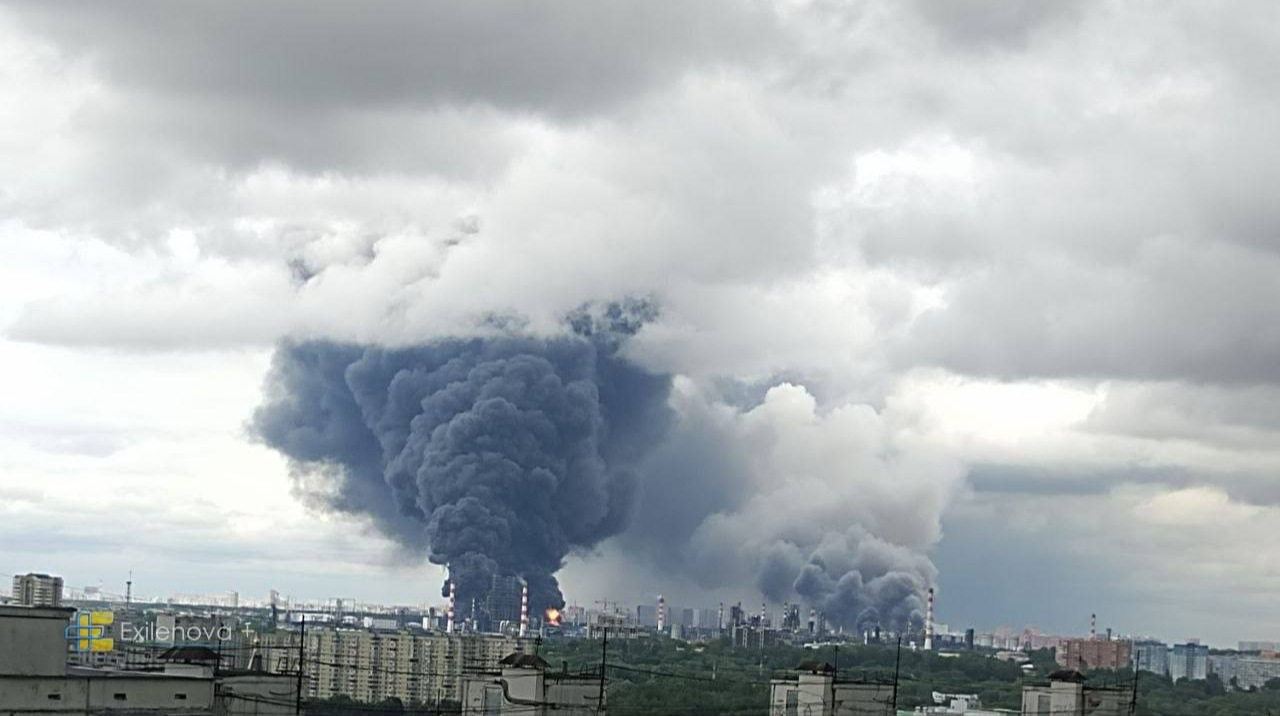
A Ukrainian drone strike on the Gazpromneft oil refinery in Moscow on June 18 has resulted in extensive damage to processing facilities and multiple fires. This marks the second such attack within a week, according to sources familiar with the situation.
The strike specifically targeted the Euro+ combined oil processing unit, which was commissioned in 2020 as part of the refinery’s modernization efforts. This unit accounts for 47% of the refinery’s total capacity, processing approximately 140,000 barrels per day.
In addition to the Euro+ unit, auxiliary equipment, fuel storage tanks, pipelines, and secondary processing units were also damaged. Earlier, on June 16, a primary processing unit known as AVT-6, which has a nominal capacity of around 160,000 barrels per day and represents 53% of the refinery’s output, was also struck and caught fire.
Sources indicate that the refinery had planned to restart the Euro+ unit mid-week and was preparing to operate at about half capacity while repairs were conducted on the AVT-6 unit.
Background:
- The Ukrainian drones breached the layered air defense systems protecting the Russian capital, leading to a significant fire at the Moscow oil refinery in Kapotnya. Russian media have described this attack as the most extensive in the last two years.
A recent Ukrainian drone strike on the Gazpromneft oil refinery in Moscow has caused substantial damage, impacting key processing units. This incident follows a prior attack just days earlier, marking a notable escalation in hostilities.
Source: Reuters