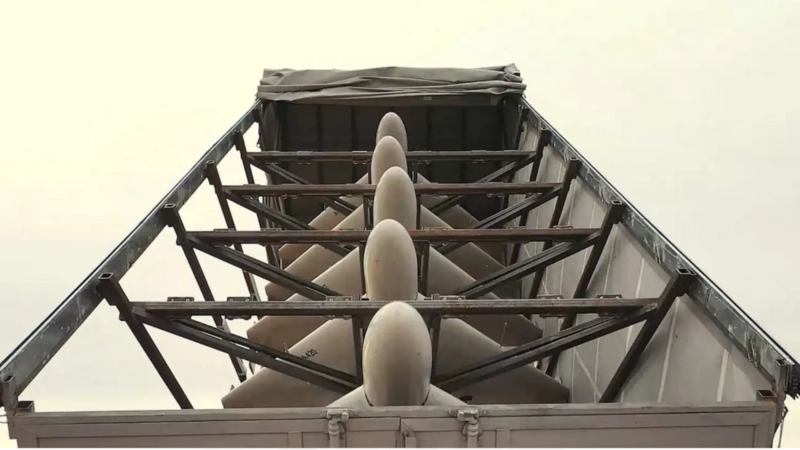
Ukrainian air defense forces successfully intercepted 89 drones during a nighttime assault by Russian military forces on May 6. The attacks, which began at 6 PM on May 5, involved multiple types of weaponry, including ballistic missiles and guided aerial missiles.
According to the Ukrainian Air Force, the Russian military launched two Iskander-M ballistic missiles from the Rostov region, along with an X-31 guided missile from the Kursk airspace. Additionally, 108 strike drones, including Shahed, Gerbera, Italmas, and imitation drones known as “Parody,” were deployed from various locations, including Bryansk, Kursk, and occupied territories in Donetsk and Crimea.
In a separate incident on the evening of May 5, Russian forces targeted the city of Dnipro, resulting in the deaths of four individuals and injuries to 19 others. This attack is part of a broader pattern where Russian military operations frequently target Ukrainian cities and civilian infrastructure.
Ukrainian authorities and international organizations have condemned these attacks as war crimes, emphasizing their deliberate nature. The strikes on critical infrastructure aim to deprive civilians of essential services like electricity, heating, water supply, and medical care, which some experts classify as genocidal actions.
Legal scholars and human rights advocates have pointed out that the ongoing conflict has seen various forms of violence against Ukrainian citizens, including public calls for their destruction and targeted assaults on essential services. These actions are viewed as part of a systematic effort to undermine Ukrainian identity and culture.
The 1948 United Nations Convention on the Prevention and Punishment of the Crime of Genocide obligates signatory nations to prevent and punish acts of genocide in both wartime and peacetime. The convention defines genocide as actions intended to destroy, in whole or in part, a national, ethnic, racial, or religious group.
Indicators of genocide include the killing of group members, inflicting serious bodily harm, and deliberately creating living conditions aimed at the destruction of a group. The Russian government, however, denies that its military targets civilian infrastructure or causes civilian casualties during the ongoing conflict.
Ukrainian air defenses intercepted numerous drones amid a series of Russian attacks, which included missile strikes and drone assaults. The attacks have drawn international condemnation as potential war crimes, highlighting the ongoing conflict's devastating impact on civilians.