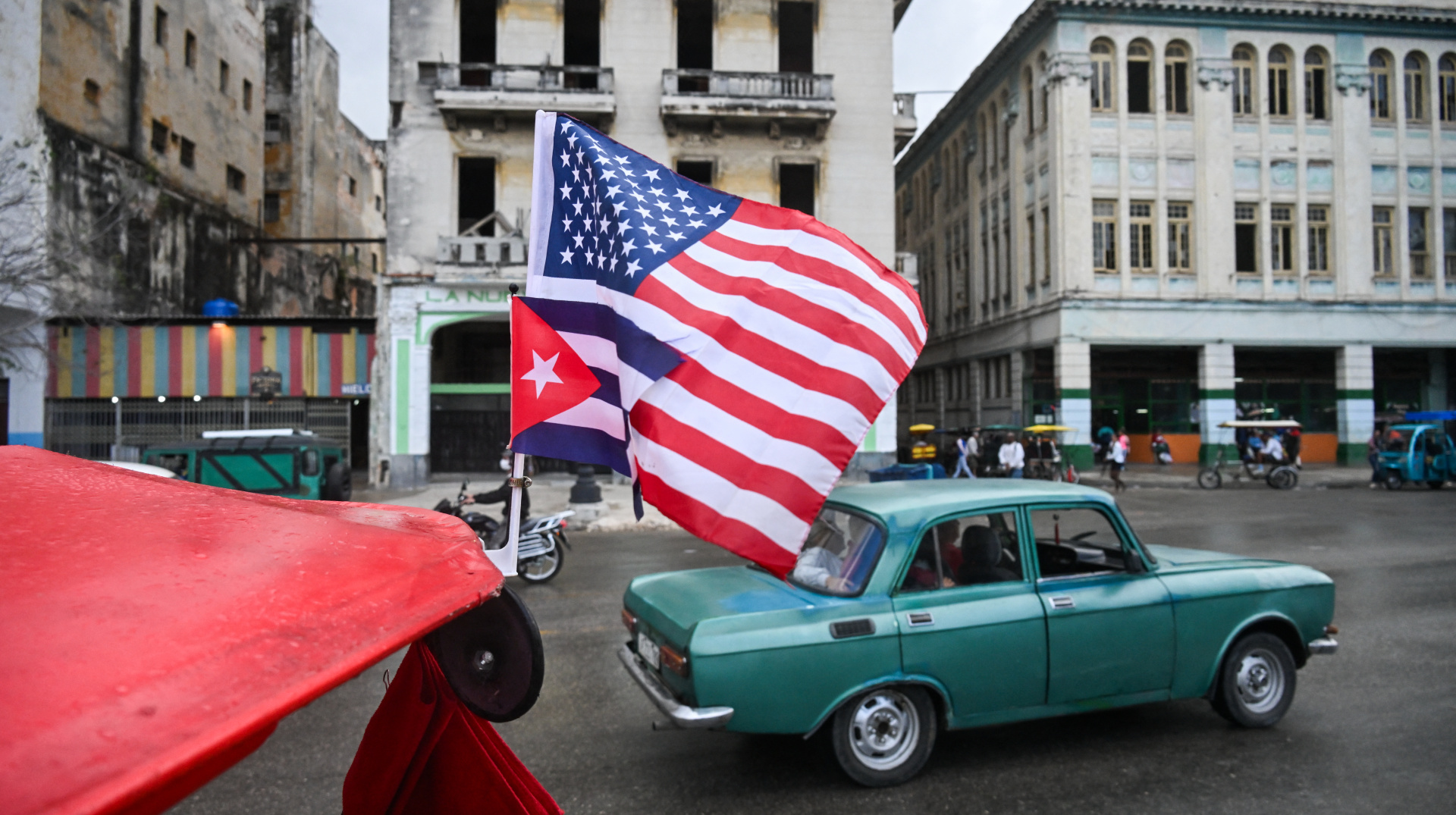
The United States has enacted sanctions against eleven high-ranking officials in Cuba, including the Minister of Communications and key members of the National Assembly. This move comes as part of a broader strategy to counter the Cuban government, which Washington accuses of prioritizing its communist ideology over the welfare of its citizens.
Among those targeted are Maura Arevich Marin, the Minister of Communications, Juan Esteban Lazo Hernandez, the head of the National Assembly, and General Joaquin Quintas Sola, the Deputy Minister of the Revolutionary Armed Forces. The sanctions also extend to the Cuban Directorate of Intelligence (DI), the Ministry of Interior, and the National Revolutionary Police (PNR), the latter of which has been accused by the U.S. of employing mobile jails and suppressing protests.
“For over 60 years, the Cuban regime has placed its communist ideology and self-enrichment above the well-being of its citizens, while allowing Cuba to be used for foreign intelligence, military, and terrorist operations,” stated a representative from the U.S. Department of State.
Recent reports indicated that Cuba acquired over 300 military drones, reportedly from Russia and Iran, and discussed plans to use them against U.S. military installations in Guantanamo Bay and naval vessels in Key West, Florida. In response, Cuban Foreign Minister Bruno Rodriguez accused the U.S. of fabricating threats to justify economic sanctions and potential military intervention.
This latest round of sanctions is part of a campaign by the U.S. aimed at regime change in Cuba. Washington is also attempting to disrupt oil supplies from Venezuela, which has led to fuel shortages and power outages on the island. On May 1, President Donald Trump signed an executive order to expand sanctions against key sectors of the Cuban economy, allowing for secondary sanctions against foreign banks that engage with the Cuban government.
Additionally, the U.S. Department of Justice is preparing to file criminal charges against 94-year-old former Cuban leader Raul Castro related to the downing of two planes belonging to the humanitarian organization Brothers to the Rescue in 1996. Historically, the U.S. has utilized criminal cases against foreign politicians as a pretext for military actions, raising concerns about potential escalations in the region.
The U.S. has sanctioned eleven Cuban officials, including high-ranking ministers, as part of its ongoing efforts to counter the Cuban regime. This follows reports of Cuba acquiring military drones and discussions of their potential use against U.S. assets, further heightening tensions between the two nations.