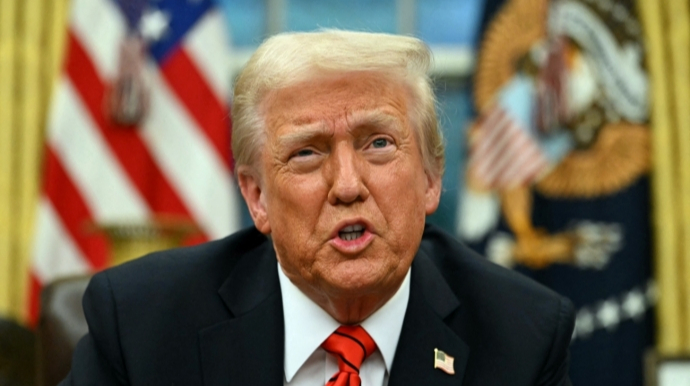
Former U.S. President Donald Trump announced a potential escalation of military actions against Iran, citing insufficient progress in negotiations aimed at ending hostilities. During a press briefing in the Oval Office, Trump emphasized that the United States would respond strongly to recent provocations, including the downing of an American Apache helicopter.
“We will attack them, attack them very hard,” Trump stated, referring to the incident involving the helicopter, which he described as a justification for renewed military strikes. He expressed frustration over the slow pace of discussions with Tehran regarding a peace agreement, asserting that the negotiations had been ongoing for several months.
Trump criticized Iran for not signing a proposed deal, calling it a “good agreement” that he believes should be finalized. He indicated that the U.S. had already conducted significant military operations against Iran, suggesting that further actions would follow if the situation did not improve.
In his remarks, Trump did not rule out targeting civilian infrastructure, including power plants and bridges, as part of a broader military strategy. This statement reflects a shift in rhetoric, highlighting his administration’s willingness to escalate military responses in the face of diplomatic stagnation.
The comments came shortly after reports confirmed that an American Apache helicopter, which was conducting patrols in the Strait of Hormuz, had been shot down by Iranian forces. This incident has heightened tensions in the region and raised concerns about the potential for conflict.
As the situation develops, the international community is closely monitoring the U.S.-Iran relationship, particularly in light of Trump’s aggressive stance and the implications for regional stability.
Donald Trump has threatened renewed military action against Iran following the downing of an Apache helicopter and slow progress in peace negotiations. His statements reflect a potential escalation in U.S. military involvement in the region amid ongoing diplomatic challenges.
Source: CNN