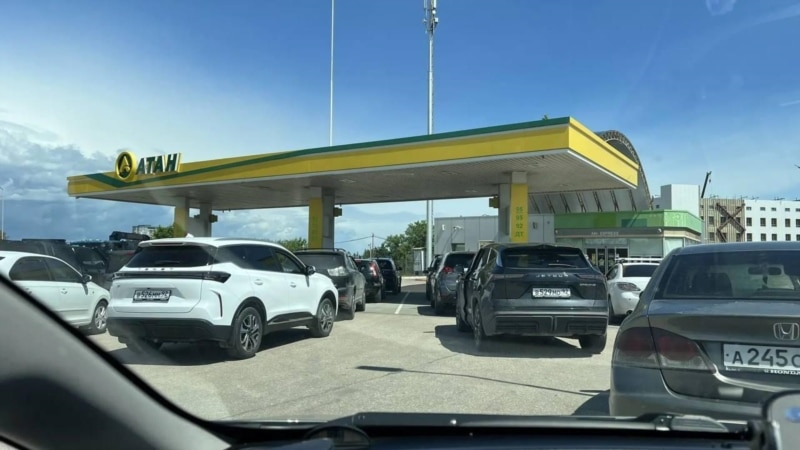
Authorities in annexed Crimea are implementing stricter fuel sales regulations due to ongoing supply challenges. Sergey Aksyonov, the Russian-installed head of Crimea, announced that starting May 31, the sale of AI-95 gasoline will be prioritized for public and social transport, and will require coupons for purchases without volume limits.
Aksyonov also noted that AI-92 gasoline will now be limited to 20 liters per vehicle, with sales in canisters prohibited. He indicated that the situation is expected to normalize within 30 days.
In Sevastopol, Mayor Mikhail Razvozhayev confirmed similar issues, stating that the daily limit for gasoline was quickly reached at local stations. He mentioned that both AI-92 and AI-95 gasoline would only be available via coupons as a temporary measure to replenish fuel supplies.
Razvozhayev attributed the crisis to the need for enhanced security measures and the optimization of fuel delivery routes. He refrained from disclosing specific operational details to avoid alerting adversaries.
These restrictions follow earlier measures enacted on May 30 concerning AI-95 gasoline sales. The situation has been exacerbated by recent Ukrainian military strikes targeting oil terminals in Feodosia and ferry transport facilities in Kerch, along with successful drone attacks on logistical routes leading to Crimea.
Ukrainian President Volodymyr Zelensky acknowledged that these military actions have contributed to a fuel crisis in Crimea. He expressed gratitude to Ukrainian forces for their efforts in targeting Russian military and fuel logistics along the Azov Sea coast, stating that the impact is increasingly felt in Crimea.
As the Russian authorities grapple with logistical challenges, they have introduced restrictions on traffic along the ‘Novorossiya’ highway leading to Dzhankoy.
Stricter fuel sales regulations are being enforced in Crimea as authorities respond to supply shortages. Recent Ukrainian military actions have intensified these issues, leading to limits on gasoline purchases and logistical challenges for Russian officials.
Source: Radio Free Europe/Radio Liberty