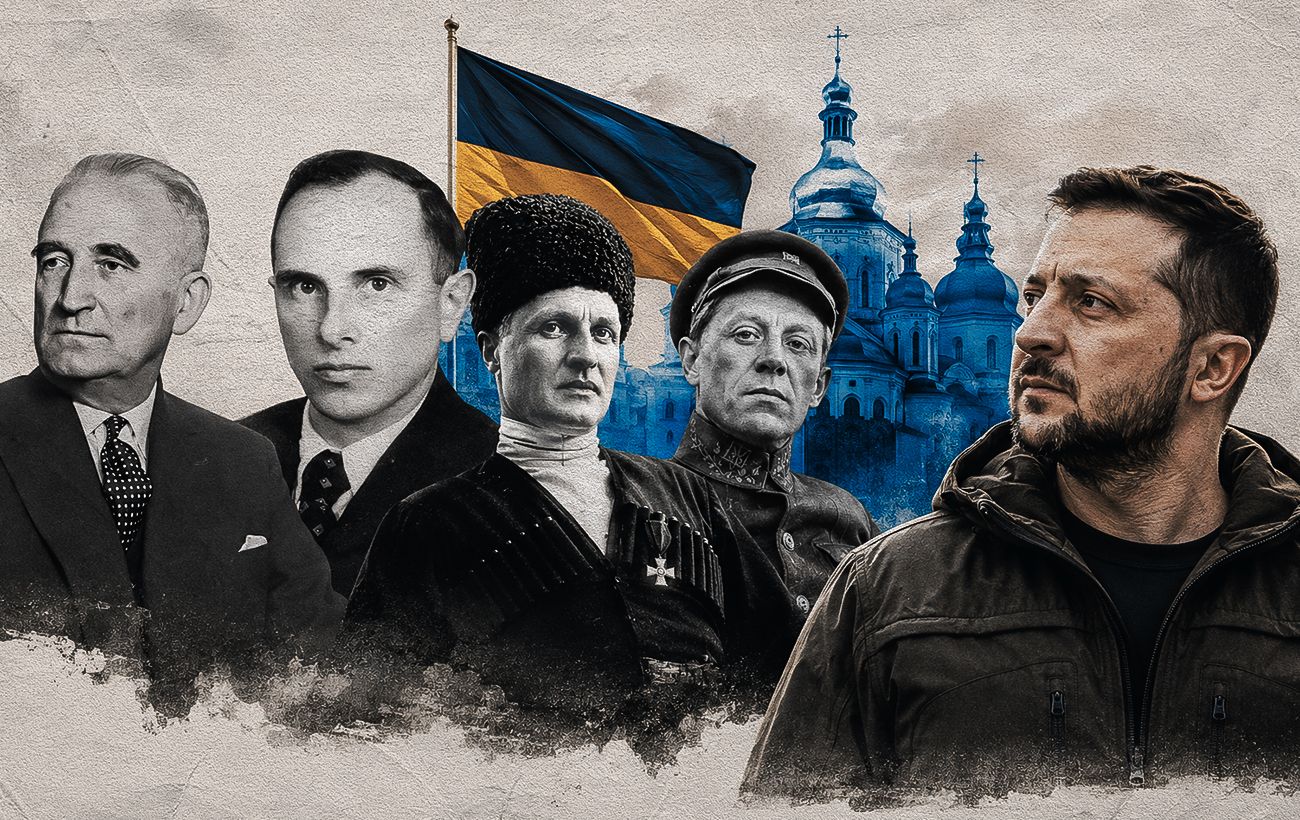
Ukraine has commenced the reburial of prominent national figures, coinciding with legislative preparations for the establishment of a National Pantheon. This initiative aims to honor historical leaders and consolidate national identity.
The reburial efforts gained momentum with the recent interment of Andriy Melnyk, a leader of the Organization of Ukrainian Nationalists (OUN), and his wife Sofia, at the National Military Memorial Cemetery. The ceremony was attended by high-ranking officials, including President Volodymyr Zelensky, who has expressed strong support for the initiative.
Historically, discussions about a National Pantheon have surfaced intermittently since the presidency of Leonid Kuchma, but concrete plans failed to materialize due to various challenges, including funding and political will. The situation worsened during Viktor Yanukovych’s presidency, which was marked by pro-Russian policies. However, following the Revolution of Dignity, there was renewed interest in reforming national memory, although legislative and infrastructural hurdles continued to impede progress.
Currently, the Ministry of Foreign Affairs is working to repatriate the remains of several military leaders, with a focus on those who played significant roles in Ukraine’s liberation struggles. The reburial process is being coordinated by a diverse group of stakeholders, including historians, government officials, and leaders from the Ukrainian diaspora.
Legal frameworks for the Pantheon are being developed, with a draft bill expected to be registered in the Parliament soon. The proposed legislation incorporates elements from the Portuguese model, which recognizes not only political and military leaders but also cultural figures. A preliminary list of about 40 candidates for inclusion in the Pantheon has been compiled, emphasizing individuals who have significantly contributed to the formation of the Ukrainian state.
To ensure the integrity of the Pantheon, strict legal criteria are being established to exclude pro-Russian figures and collaborators. The reburial of individuals will only be permitted 20 years after their death, allowing for a more objective evaluation of their historical significance.
Despite the progress, some families of historical figures have requested that reburials be postponed until after the conclusion of the ongoing war, citing security concerns regarding potential Russian attacks on memorial sites. Nevertheless, the location for the future Pantheon has been identified, and an official announcement is anticipated from President Zelensky.
Efforts to repatriate Ukrainian leaders are complicated by various legal, organizational, and communication challenges. The Ukrainian diaspora plays a crucial role in facilitating these processes, having historically maintained the graves of prominent figures abroad. For instance, the remains of Yevhen Konovalets, founder of the OUN, are currently in the Netherlands, where local Ukrainians have cared for his grave.
As discussions about the Pantheon continue, the government is mindful of public sentiment, recognizing that historical memory is a sensitive issue. Recent surveys indicate a growing pro-Ukrainian consensus, although divisions remain regarding certain figures. The success of the Pantheon will depend not only on the number of reburials but also on the ability to unite the nation around its heroes.
Ukraine is actively reburial prominent historical figures as part of a broader initiative to establish a National Pantheon, aimed at consolidating national identity. This process involves complex legal and organizational challenges, with significant input from the diaspora and ongoing public discourse about historical memory.